1. Introduction and History
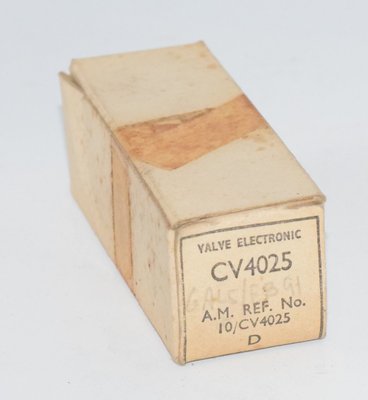
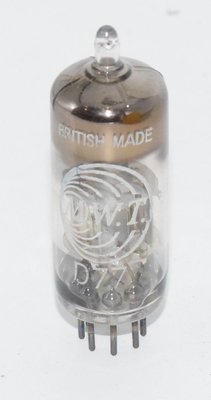
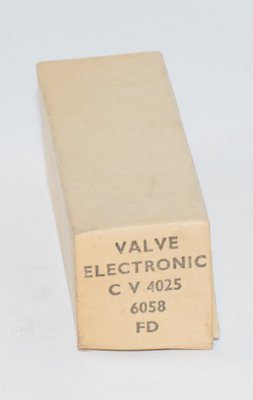
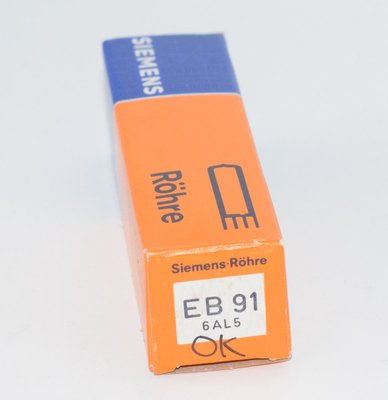
The CV4025 is a British military-specification (CV = Common Valve) miniature double diode vacuum tube, belonging to the well-known EB91/6AL5 family. Developed under the UK's rigorous military valve standardization program, the CV4025 represents a specially selected and tested version of the commercial EB91 type, manufactured to tighter tolerances and subjected to more demanding quality control procedures than its civilian counterparts.
The CV numbering system was established by the UK Ministry of Defence (originally the Ministry of Supply) to create a unified catalogue of approved electronic components for military and government use. Tubes bearing CV designations were required to meet stringent specifications for reliability, consistency, and longevity — qualities that have made them highly prized among audio enthusiasts decades after their original production ceased.
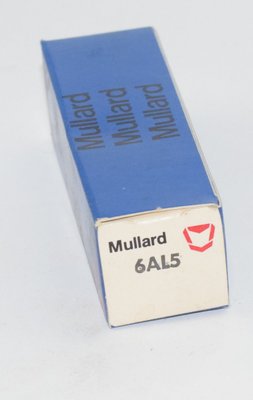
The CV4025 was manufactured by several prominent British valve makers, most notably Mullard at their famous Mitcham factory in Surrey, and STC/Brimar at their Rochester facility in Kent. These factories were among the finest valve production plants in the world, and their output during the 1950s and 1960s is considered by many collectors and engineers to represent the pinnacle of vacuum tube manufacturing quality.
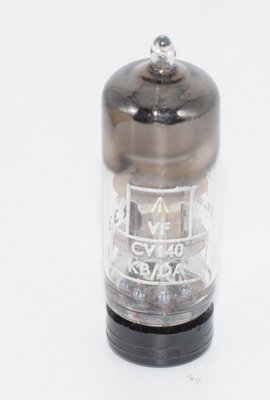
As a double diode, the CV4025 contains two independent diode sections within a single miniature glass envelope. This configuration was originally designed for use in signal detection, automatic gain control (AGC), and demodulation circuits in military communications receivers, radar equipment, and instrumentation. However, its exceptional build quality and consistent performance have given it a second life in high-fidelity audio applications.
2. Technical Specifications and Design
Heater / Filament Ratings
| Parameter | Value |
|---|---|
| Heater Voltage (Vh) | 6.3 V |
| Heater Current (Ih) | 0.3 A |
| Heater Configuration | Series or parallel (indirectly heated cathode) |
Capacitances
| Parameter | Section 1 | Section 2 |
|---|---|---|
| Anode-to-Cathode Capacitance (Cak) | 3.2 pF | 3.2 pF |
Maximum Ratings (per section, typical for the EB91/6AL5 family)
| Parameter | Value |
|---|---|
| Peak Inverse Voltage (PIV) | 330 V * |
| Maximum DC Output Current (per section) | 9 mA * |
| Maximum Peak Plate Current (per section) | 54 mA * |
| Maximum AC Voltage per Plate (RMS) | 117 V * |
* These values are drawn from standard EB91/6AL5 family datasheets. The CV4025 military specification may impose tighter derating. Users should confirm exact maximum ratings against the specific CV4025 military specification document or the manufacturer's datasheet for the precise variant in use.
Note: As a double diode, the CV4025 does not have conventional triode or pentode parameters such as amplification factor (μ), transconductance (gm), plate resistance (rp), or grid bias range. These parameters are not applicable to diode-type valves. The tube has no control grid — each section consists simply of an anode (plate) and a cathode.
Physical Construction
| Parameter | Detail |
|---|---|
| Base Type | Miniature 7-pin (B7G / Noval sub-type) |
| Envelope Type | Miniature glass (T-6½ style) |
| Mounting Position | Any (designed for military use in all orientations) |
| Overall Length | Approximately 55 mm * |
| Maximum Diameter | Approximately 19 mm * |
* Physical dimensions are approximate and may vary slightly between manufacturers. Confirm against specific manufacturer drawings if critical.
Pin-Out (B7G Base, Bottom View)
| Pin | Connection |
|---|---|
| Pin 1 | Plate (Anode) 1 |
| Pin 2 | Cathode 1 |
| Pin 3 | Heater |
| Pin 4 | Heater |
| Pin 5 | Cathode 2 |
| Pin 6 | Plate (Anode) 2 |
| Pin 7 | Internal Shield / No Connection (varies by manufacturer) |
Note: The two cathodes are internally separate, allowing each diode section to be used independently. In some applications, the cathodes may be externally connected together. Pin 7 usage can vary — some manufacturers connect it to an internal shield, while others leave it unconnected. Always verify with the specific manufacturer's datasheet.
3. Applications and Usage
The CV4025 was originally designed and specified for demanding military and government applications where reliability and consistency were paramount. Its primary applications include:
Original Military and Industrial Applications
- AM Detection / Demodulation: The most common application for the EB91/6AL5 family. The double diode configuration allows for efficient envelope detection in AM radio receivers and communications equipment.
- Automatic Gain Control (AGC): One diode section handles signal detection while the second provides AGC voltage generation, maintaining consistent output levels across varying signal strengths.
- FM Ratio Detection: Used in Foster-Seeley discriminator and ratio detector circuits for FM demodulation in military communications receivers.
- Noise Limiting / Clamping: The fast response of the diode sections makes them suitable for noise clipping and signal clamping circuits in radar and communications systems.
- DC Restoration: In video and pulse circuits, the CV4025 provides reliable DC level restoration.
- Meter Rectification: Used in precision test equipment for AC-to-DC conversion in measurement circuits.
- Power Supply Rectification: For low-current, precision power supply applications where the tight tolerances of the CV specification are beneficial.
Audio Applications
- Tube Rectification in Preamplifiers: Used as a signal-path rectifier in certain high-end preamplifier designs.
- DAC Output Stage Clamping: Some boutique DAC designs use double diodes for signal clamping and level setting.
- Vintage Receiver Restoration: Essential for restoring classic British military and civilian receivers to original specification.
- Guitar Amplifier Bias Circuits: Occasionally used in bias supply rectification in boutique amplifier designs.
4. Sound Characteristics
While the CV4025 is a diode and does not amplify signals in the traditional sense, its role in audio circuits — particularly in detection, rectification, and clamping stages — does influence the overall sonic character of equipment in which it is used. Audiophiles and engineers who have worked with the CV4025 and compared it to commercial-grade equivalents report the following characteristics:
General Sonic Qualities
- Precision and Neutrality: The CV4025's tighter manufacturing tolerances translate to more accurate signal handling. Users report a cleaner, more precise sound compared to standard commercial 6AL5 or EB91 tubes, with less "hash" or noise floor contribution.
- Low Noise: Military-grade selection means lower microphonic noise and reduced hum. In sensitive detection circuits, this manifests as a blacker background and improved low-level detail retrieval.
- Matched Sections: The two diode sections in CV4025 tubes tend to be more closely matched than in commercial equivalents. In circuits that rely on balanced diode operation (such as ratio detectors or balanced demodulators), this results in lower distortion and improved stereo imaging when used in stereo applications.
- Smooth Recovery: Engineers note that the CV4025 exhibits clean, predictable recovery characteristics in clamping and AGC circuits, contributing to a natural, unforced dynamic quality in audio applications.
Manufacturer-Specific Observations
- Mullard Mitcham CV4025: Mullard-manufactured examples are particularly sought after. They are described as having an exceptionally smooth and refined character, with a slightly warm tonal balance that complements the typically analytical nature of diode detection circuits. The Mitcham factory's quality control was legendary, and these tubes are considered among the finest examples of the type.
- STC/Brimar Rochester CV4025: Brimar examples are noted for their robustness and consistency. Sonically, they are described as slightly more neutral and analytical than the Mullard equivalents, with excellent transient response and a very low noise floor. Some users prefer them in test equipment and precision applications for their measured accuracy.
It should be noted that the sonic differences between CV4025 variants and standard commercial equivalents are subtle and most apparent in high-resolution systems or precision measurement contexts. In many practical applications, the differences may be negligible. However, in critical listening environments and high-end audio equipment, the superior consistency and quality of the CV4025 can contribute meaningfully to overall system performance.
5. Equivalent and Substitute Types
Close / Identical Substitutes (Direct Drop-In Replacements)
The following types are considered electrically identical or very closely matched to the CV4025 and can generally be used as direct replacements without circuit modification:
| Type | Notes |
|---|---|
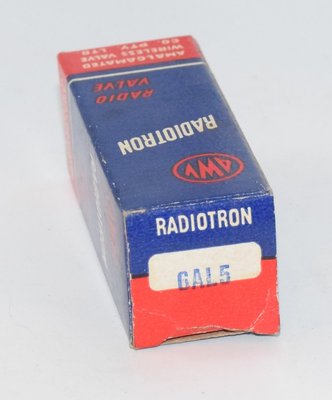
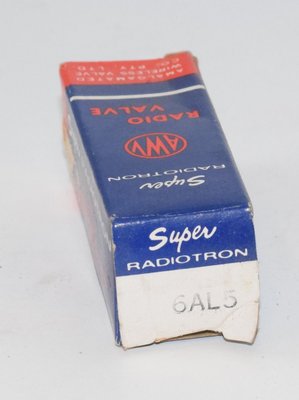
| 6AL5 | American commercial equivalent; the most widely available substitute. Identical pinout and ratings. |
| EB91 | European (Mullard/Philips) commercial designation. Electrically identical. |
| EAA91 | Alternative European designation for the same type. |
| 6D2 | Equivalent designation used in some markets. |
| D77 | Equivalent designation. |
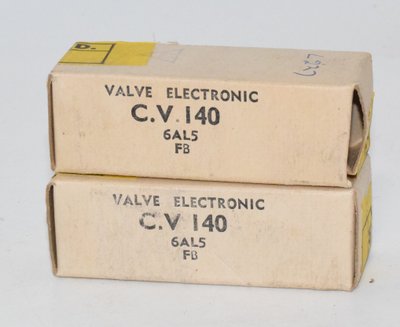
| CV140 | Earlier CV designation for the same basic type. |
| CV283 | Another CV designation covering this type. |
| CV8200 | CV designation variant. |
| CV10324 | CV designation variant. |
| CV10328 | CV designation variant. |
Different Rating Substitutes (NOT Direct Drop-In)
The following types are related but have different ratings, heater specifications, or other variations that may require circuit modifications. They should not be used as direct replacements without careful verification:
| Type | Key Difference |
|---|---|
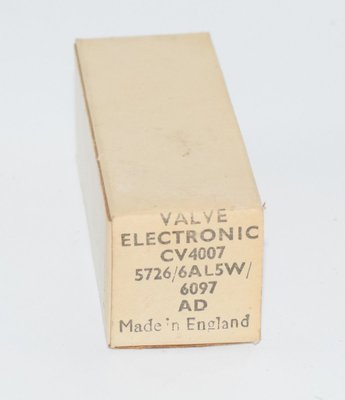
| 5726 / 6AL5W | Ruggedized military version of the 6AL5. May have different maximum ratings or mechanical specifications. Often sold alongside CV4025 as near-equivalents. |
| 6058 | Special-quality selected version. May have tighter specifications. Often referenced alongside CV4025 (e.g., STC/Brimar 6058). |
| CK5726 | Raytheon designation for the ruggedized 5726 type. |
| CV5189 | Different CV specification with potentially different ratings. |
| CV8224 | Different CV specification variant. |
| CV8311 | Different CV specification variant. |
| E91AA | Philips special-quality designation. Different selection criteria. |
| ED2 | Related type with potential differences. |
| M8212 | Mullard special-quality designation. Premium selected version. |
| 12AL5 | 12.6V heater version — NOT a drop-in replacement in 6.3V heater circuits. |
| 3AL5 | 3.15V heater version — NOT a drop-in replacement in 6.3V heater circuits. |
Important: While the 5726/6AL5W and 6058 are very closely related to the CV4025 and are often sold interchangeably, they are technically different specifications. In non-critical applications, they will generally work fine as substitutes. In military or precision applications where the specific CV4025 specification is called out, only genuine CV4025-marked tubes should be used. The 12AL5 and 3AL5 have different heater voltages and must never be substituted directly.
6. Notable Characteristics
- Military-Grade Quality: The CV4025 designation guarantees that each tube has passed rigorous testing beyond what commercial equivalents undergo. This includes extended burn-in testing, tighter parameter matching between sections, enhanced vibration and shock resistance testing, and more stringent leakage and emission standards.
- Exceptional Longevity: Military-specification tubes were designed for extended service life in demanding environments. CV4025 tubes that have been properly stored (NOS — New Old Stock) can be expected to perform to specification decades after manufacture, a testament to the quality of materials and construction.
- Matched Diode Sections: One of the key advantages of the CV4025 over commercial equivalents is the closer matching between the two internal diode sections. This is particularly important in balanced detector circuits and applications where section-to-section consistency affects performance.
- Low Microphonics: The internal construction of CV4025 tubes features more robust element support structures than commercial equivalents, resulting in significantly reduced microphonic sensitivity — an important characteristic in sensitive receiver front-end circuits and audio applications.
- Consistent Manufacturing: Whether produced by Mullard, Brimar/STC, or other approved manufacturers, CV4025 tubes were built to a common specification. While subtle sonic differences exist between manufacturers (as noted in the Sound Characteristics section), the electrical parameters are tightly controlled across all sources.
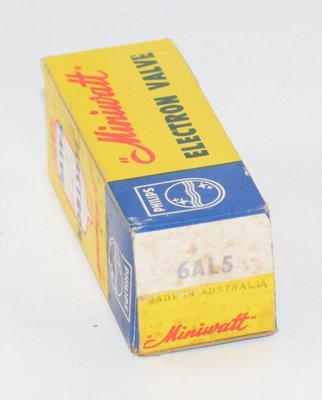
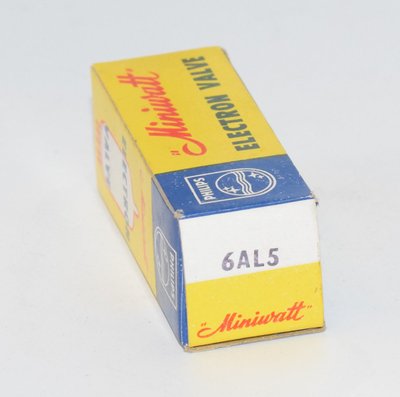
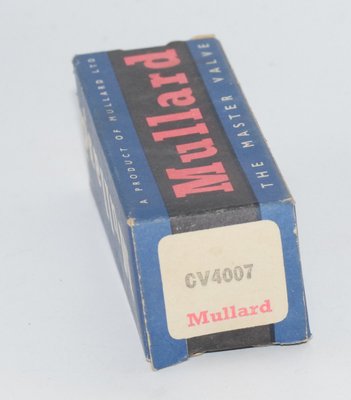
- Collector Appeal: The CV4025 has become a sought-after collector's item, particularly examples from the Mullard Mitcham and Brimar Rochester factories. Original boxes, military packaging, and factory test data sheets add significant value to NOS examples.
- Compact Form Factor: The B7G miniature base and small glass envelope make the CV4025 easy to incorporate into compact equipment designs. The 7-pin miniature socket is widely available and inexpensive.
7. Usage in the Audio Community
The CV4025 occupies an interesting niche in the audio community. While double diodes are not the most glamorous of tube types — they lack the mystique of power triodes like the 300B or signal tubes like the 12AX7 — the CV4025 has nonetheless earned a dedicated following among discerning audiophiles and equipment designers.
Vintage Receiver Restoration
Perhaps the most common audio-related use of the CV4025 is in the restoration of classic British and European radio receivers and tuners. Many high-quality FM and AM tuners from the 1950s and 1960s — including models from Leak, Rogers, Armstrong, and others — used EB91-type double diodes in their detector and AGC circuits. Restorers seeking the best possible performance from these vintage units often specify CV4025 tubes as replacements, knowing that the military-grade quality will ensure optimal detection performance and low noise.
High-End Tuner Upgrades
Audiophiles who use vintage valve tuners as serious source components in high-end systems frequently upgrade the standard EB91 or 6AL5 tubes to CV4025 specification. The improvement in noise floor and detection accuracy can be meaningful in the context of a revealing audio system, particularly when listening to high-quality FM broadcasts or archived recordings.
Boutique Audio Equipment
A small number of boutique audio manufacturers and DIY designers have incorporated the CV4025 into original designs. Applications include:
- Tube-rectified power supplies for low-current preamplifier stages, where the CV4025's consistent forward voltage drop and low noise contribute to clean, stable power delivery.
- Signal clamping and protection circuits in high-end preamplifiers and phono stages.
- Experimental DAC designs that use vacuum tube diodes in the output stage for a specific tonal character.
The Collector's Market
In the broader audio tube collecting community, the CV4025 is valued both for its practical utility and its historical significance. NOS examples from Mullard Mitcham and Brimar Rochester command premium prices, particularly when accompanied by original military packaging or factory test documentation. The tubes are not as expensive as rare audio triodes or power tubes, but they represent excellent value for collectors seeking genuine military-specification British valves.
Practical Advice for Audio Users
For audio enthusiasts considering the CV4025, the following practical points are worth noting:
- Availability: NOS CV4025 tubes are still available from specialist valve dealers, though stocks are finite and diminishing. Prices are generally reasonable compared to more sought-after audio tube types.
- Testing: When purchasing NOS CV4025 tubes, look for dealers who test on calibrated equipment and can provide emission readings for both diode sections. Matched sections are desirable for balanced detector applications.
- Storage: Like all NOS tubes, CV4025s should be stored in a cool, dry environment, ideally in their original packaging. The military packaging used for these tubes was designed for long-term storage and provides excellent protection.
- Substitution: If genuine CV4025 tubes are unavailable, the 5726/6AL5W or 6058 types offer the closest alternative in terms of quality, though they are technically different specifications. Standard commercial 6AL5 or EB91 tubes will work electrically but may not offer the same level of consistency and low noise.
The CV4025 stands as a fine example of British military valve engineering — a humble double diode elevated to exceptional quality through rigorous specification and manufacturing standards. While it may never achieve the fame of iconic audio tubes, it remains a valued component among those who appreciate precision, quality, and the enduring appeal of vacuum tube technology.