1. Introduction and History
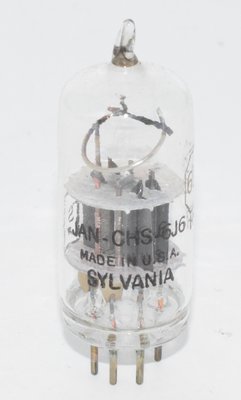
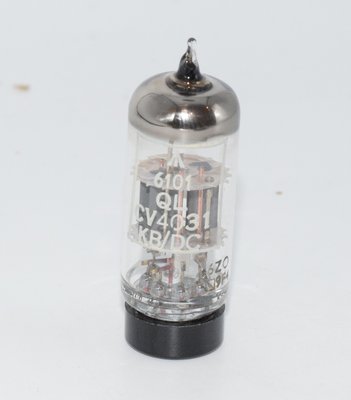
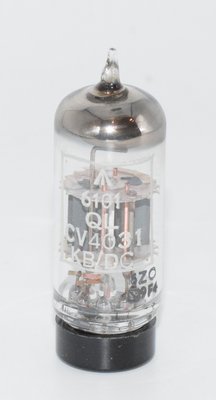
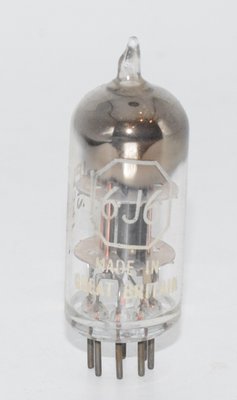
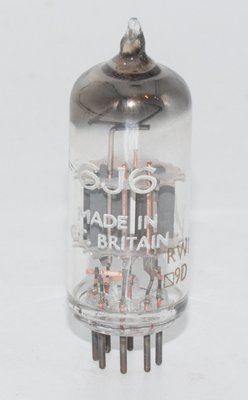
The CV4031, known by its American designation as the 6J6, is a dual triode vacuum tube that represents a significant development in mid-20th century tube technology. Originally developed during the post-World War II era, the 6J6 became widely adopted in both military and commercial applications throughout the 1950s and 1960s.
The CV4031 designation is the British military specification equivalent of the 6J6, with the 'CV' prefix indicating it meets Commonwealth standards. Mullard, one of Britain's premier tube manufacturers, produced exceptional examples of this tube type, particularly during the 1960s and early 1970s when manufacturing standards were at their peak. The 1969 Mullard specimens referenced here represent some of the finest examples of this tube type ever produced, making them highly sought after by tube enthusiasts and audio professionals.
The tube's development coincided with the rise of consumer electronics, and it found particular favor in applications requiring compact, reliable dual triode functionality. Its popularity has endured, with the 6J6/CV4031 remaining a preferred choice among audio engineers and vintage equipment restorers.
2. Technical Specifications and Design
Basic Parameters
Tube Type: Dual Triode
Designations: 6J6 (American), CV4031 (British military), ECC91 (European)
Heater Voltage: 6.3V AC or DC
Heater Current: 1.3A (total for both triodes)
Maximum Plate Voltage: 330V
Maximum Plate Dissipation: 2.75W per triode
Base Type: Noval (9-pin)
Physical Dimensions: Approximately 2.75\" (70mm) in height
Electrical Characteristics
Amplification Factor (μ): Approximately 20
Plate Resistance (rp): Approximately 7,700 ohms
Transconductance (gm): Approximately 2,600 micromhos
Grid Bias for Zero Signal Plate Current: Approximately -2V
Typical Plate Current: 30-40mA per triode at rated conditions
Design Features
The CV4031/6J6 features a robust dual triode design with two independent, identical triode sections housed within a single envelope. Each triode can be operated independently or in parallel for increased current handling capability. The tube employs a directly heated cathode design and features excellent shielding characteristics, making it ideal for low-noise applications.
The internal construction utilizes high-quality materials, with the Mullard versions particularly noted for their superior electrode geometry and careful manufacturing tolerances. The tube's mechanical design provides excellent microphonic characteristics compared to earlier triode designs, an important consideration for audio applications.
The Noval base configuration provides reliable electrical connections and has become the standard for this tube type. The pinout is as follows: pins 1 and 8 (grid), pins 2 and 7 (plate), pins 3 and 4 (cathode), pin 5 (no connection), pin 6 (heater), and pin 9 (heater).
3. Applications and Usage
Original Applications
The CV4031/6J6 was originally designed for use in:
- Military Communications Equipment: The CV designation indicates military specification use, particularly in British and Commonwealth armed forces equipment
- Professional Audio Equipment: Mixing consoles, microphone preamplifiers, and broadcast equipment
- Instrumentation: Oscilloscopes, test equipment, and precision measurement devices
- Consumer Electronics: High-end amplifiers and audio receivers
- Radio Frequency Applications: VHF/UHF amplifiers and frequency converters
Audio Community Usage
The CV4031/6J6 holds a special place in the audio enthusiast and professional community. Today, it is primarily valued for:
Preamplifier Stages: The tube's low noise characteristics and moderate gain make it ideal for microphone preamp and line-level preamplifier applications. Many boutique audio manufacturers specify the 6J6 for critical first-stage amplification.
Phono Preamps: The tube's excellent signal-to-noise ratio and natural frequency response characteristics make it particularly suited to vinyl playback systems. Vintage and modern tube phono preamps frequently employ 6J6 triodes.
Headphone Amplifiers: The dual triode configuration allows for compact, efficient headphone amplifier designs with minimal component count. The tube's moderate current capability matches well with headphone impedances.
Restoration and Vintage Equipment: The CV4031/6J6 remains the standard replacement tube for countless vintage audio devices, professional recording equipment, and broadcast apparatus. NOS (New Old Stock) examples command premium prices due to their scarcity and superior performance characteristics.
DIY Audio Projects: The tube's availability, reasonable cost (compared to rarer types), and well-documented characteristics make it a favorite among tube audio hobbyists and DIY amplifier builders. Numerous reference designs and circuit topologies employ the 6J6.
Tube Rolling and Experimentation: Audio enthusiasts frequently experiment with different manufacturers' 6J6 variants to optimize system characteristics. Mullard examples are particularly prized for their warm, musical presentation.
4. Sound Characteristics
Tonal Qualities
The CV4031/6J6, particularly in Mullard manufacture, exhibits distinctive sonic characteristics that have made it a favorite among discerning audio professionals:
Midrange Presence: The tube demonstrates a naturally forward midrange presentation, bringing vocals and instruments into clear focus. This characteristic makes it particularly effective in preamplifier applications where clarity and presence are desired.
Harmonic Richness: The 6J6 adds subtle harmonic coloration that many listeners describe as "warm" or "musical." This is not excessive distortion but rather a gentle enhancement of harmonic content that adds dimensionality and body to reproduced sound.
Bass Response: The tube exhibits well-controlled bass characteristics with good definition. It neither emphasizes nor diminishes low frequencies unduly, providing a balanced foundation for the overall frequency response.
Treble Character: The upper midrange and treble presentation is smooth and refined, without harshness or brittleness. The tube does not impart the fatiguing qualities sometimes associated with certain solid-state designs.
Noise Floor: Mullard examples are renowned for their exceptionally low noise floor, making them ideal for sensitive applications. This characteristic is particularly valuable in phono preamps and microphone preamplifiers.
Dynamic Characteristics
The 6J6 demonstrates excellent dynamic range and transient response. The tube reacts quickly to signal changes without overshoot or ringing, contributing to a sense of immediacy and liveliness in musical reproduction. The dynamic presentation is neither compressed nor exaggerated, providing accurate representation of the source material's dynamic structure.
Manufacturer Variations
Mullard 6J6/CV4031 tubes from the 1969 era are particularly valued for their balanced sonic signature. They exhibit the company's characteristic warmth and musicality while maintaining excellent technical performance. Other manufacturers' examples (RCA, GE, Telefunken) may exhibit subtle variations in character, with some emphasizing different aspects of the frequency spectrum.
5. Notable Characteristics
Reliability and Longevity
The CV4031/6J6 is renowned for its exceptional reliability and long operational life. Well-maintained examples regularly achieve 10,000+ hours of service. The tube's robust construction and conservative design margins contribute to this longevity. NOS (New Old Stock) examples, such as the 1969 Mullard specimens, often exhibit virtually unchanged performance characteristics even after decades of storage.
Microphonic Characteristics
While early triode designs suffered from microphonic sensitivity, the 6J6 represents a significant improvement in mechanical stability. The tube's internal structure is relatively immune to mechanical vibration, making it suitable for applications where microphonics might be problematic. This characteristic is particularly important in sensitive audio applications.
Thermal Stability
The tube demonstrates good thermal stability, with minimal parameter drift as it reaches operating temperature. This stability contributes to consistent performance and reduced need for bias adjustments in operational amplifier circuits.
Dual Triode Flexibility
The presence of two independent triode sections provides design flexibility. Triodes can be operated in parallel for increased current handling, in cascade for higher gain, or independently for stereo applications. This versatility has contributed to the tube's enduring popularity in circuit design.
Availability and Cost
Unlike many vintage tube types, the 6J6/CV4031 remains relatively available, with both NOS and current production examples accessible to enthusiasts. However, premium examples from respected manufacturers like Mullard command higher prices, reflecting their superior performance and sonic characteristics. The 1969 Mullard examples represent the pinnacle of this tube type's production quality.
Compatibility and Substitution
The 6J6 is compatible with several equivalent types, though performance characteristics may vary. This compatibility has ensured the tube's continued relevance in equipment repair and restoration work.
6. Equivalent or Substitute Types
ECC91: The European equivalent designation, functionally identical to the 6J6. European-manufactured examples (Telefunken, Mullard) may exhibit subtle sonic differences.
6AK6: A similar dual triode with slightly different characteristics, sometimes used as a substitute, though not electrically identical.
12AX7/ECC83: A higher-gain dual triode used in some applications where the 6J6 might be employed, though with different operational parameters.
6N6P/6H6P: Soviet-era equivalents with similar characteristics, sometimes used as substitutes, though build quality varies significantly.
6J6GT: A glass envelope variant of the same tube type, with identical electrical characteristics but different physical form factor.
Conclusion
The CV4031/6J6 vacuum tube represents a mature, well-engineered design that has earned its place in audio history through reliable performance and musical characteristics. The 1969 Mullard examples exemplify the manufacturing excellence achieved during the tube era's final years. Whether employed in vintage equipment restoration, contemporary audio designs, or experimental projects, the CV4031/6J6 continues to deliver the warmth, clarity, and reliability that have made it a favorite among audio professionals and enthusiasts for over six decades. Its combination of technical excellence, sonic musicality, and practical versatility ensures that the 6J6 will remain relevant to audio applications for years to come.