1. Introduction and History
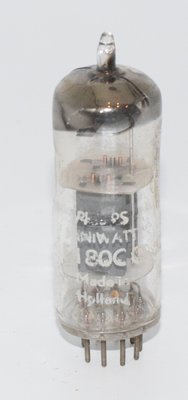
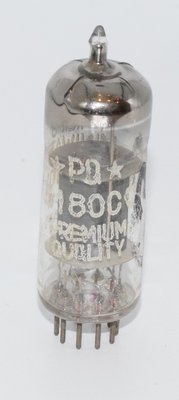
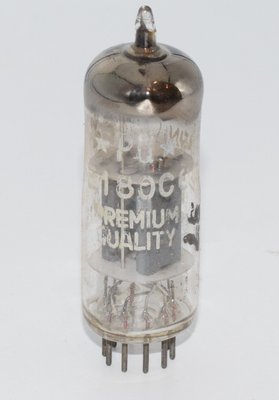
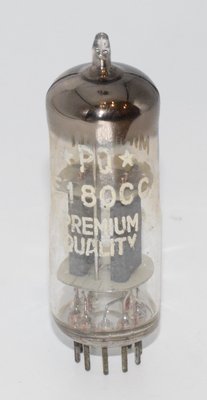
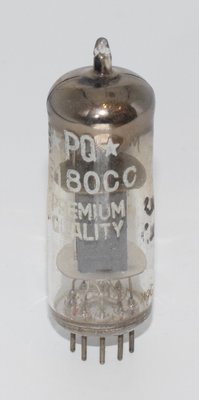
The E180CC is a dual-triode vacuum tube that represents a significant achievement in miniaturized tube design. Introduced in the 1950s by Philips (under their Miniwatt brand), the E180CC was developed as a compact, low-noise alternative to earlier dual-triode designs. The tube's designation follows the European naming convention, where "E" indicates a European tube type, and "180" refers to its specific design parameters and heater voltage (180mA series).
The E180CC emerged during a period of innovation in audio electronics, when manufacturers sought to reduce equipment size while maintaining or improving performance characteristics. Philips, based in the Netherlands, became renowned for producing some of the finest examples of this tube type. The "Miniwatt" designation indicates Philips' emphasis on low-power consumption and compact design. Notable variants from this era include the "pinched waist" construction (recognizable by its distinctive narrowed glass envelope at the base) and examples produced for IBM, which were manufactured to exacting specifications for computer applications.
2. Technical Specifications and Design
Physical Characteristics
- Tube Type: Dual-triode (two independent triode sections in one envelope)
- Base Type: Noval (9-pin)
- Envelope Material: Glass with pinched waist design (premium versions)
- Heater Voltage: 6.3V AC/DC
- Heater Current: 180mA per triode section (360mA total)
Electrical Specifications
- Maximum Plate Voltage: 330V
- Maximum Plate Dissipation: 1.5W per triode
- Amplification Factor (μ): Approximately 20
- Plate Resistance (rp): Approximately 4,000 ohms
- Transconductance (gm): Approximately 5mA/V
- Grid-to-Plate Capacitance: Approximately 1.4pF (very low)
- Input Capacitance: Approximately 2.8pF
Design Features
The E180CC incorporates several advanced design features that distinguish it from earlier dual-triode designs:
- Low Noise Design: The tube's construction emphasizes low microphonic noise and low shot noise, making it ideal for preamplifier and audio input stages. The carefully designed electrode geometry minimizes noise generation.
- Excellent Frequency Response: The low plate resistance and moderate amplification factor provide good frequency response characteristics without excessive gain, reducing the need for negative feedback.
- Symmetrical Triode Design: Both triode sections are identical, allowing for balanced circuit configurations and push-pull or differential amplifier applications.
- Rugged Construction: The pinched waist design (found in premium versions) provides mechanical rigidity and reduced microphonic feedback from external vibration.
- Compact Footprint: The Noval 9-pin base reduces physical size compared to earlier octal-based tubes, enabling more compact equipment design.
3. Applications and Usage
Primary Applications
The E180CC has been employed in numerous professional and consumer applications:
- Microphone Preamplifiers: The tube's low noise characteristics and moderate gain make it ideal for microphone input stages in professional recording equipment and mixing consoles.
- Line-Level Preamplifiers: Used in audio preamplifiers for phono cartridges, tuners, and line-level sources.
- Instrumentation: The low-noise characteristics and stable performance made the E180CC valuable in precision measurement equipment and oscilloscopes.
- Computer Applications: IBM-branded versions were used in early computer equipment where reliability and precise specifications were critical.
- Broadcast Equipment: Professional broadcast studios utilized the E180CC in audio distribution amplifiers and mixing equipment.
- Military and Aerospace: The tube's stability and low-noise characteristics made it suitable for military communication and navigation equipment.
Circuit Configurations
The E180CC's symmetrical dual-triode design allows for several circuit topologies:
- Differential Amplifier: Both triodes can be configured as a balanced differential pair, common in professional audio equipment.
- Cascaded Amplifier: The two triodes can be configured in series for higher overall gain with controlled frequency response.
- Push-Pull Configuration: The triodes can drive complementary output stages or balanced line drivers.
- Cascode Configuration: One triode can be used as a common-cathode amplifier with the second triode as a cascode element for improved gain and bandwidth.
4. Sound Characteristics in Audio Applications
Tonal Qualities
The E180CC has developed a reputation among audio enthusiasts for specific sonic characteristics that have made it highly valued in tube audio equipment:
- Neutral Midrange: The tube exhibits a relatively neutral midrange response without significant coloration. This transparency in the midrange makes it particularly valued in microphone preamplifiers where accurate signal reproduction is critical.
- Clean, Low-Distortion Character: The E180CC produces relatively low levels of harmonic distortion, particularly low-order distortion products. This results in a "clean" sound that doesn't add significant character or warmth compared to some other dual-triode designs.
- Extended Frequency Response: The tube's design provides good extension at both frequency extremes. Bass response is tight and well-defined, while treble remains clear without excessive harshness.
- Low Noise Floor: Perhaps the most defining characteristic, the E180CC's exceptionally low noise floor allows subtle details and quiet passages to be reproduced without background noise interference.
- Smooth Transient Response: The tube responds quickly to signal changes without ringing or overshoot, contributing to natural-sounding transient reproduction.
Comparison with Other Dual-Triodes
When compared to other dual-triode designs:
- vs. 12AX7/ECC83: The E180CC has lower gain and lower noise but less color than the 12AX7. The 12AX7 is more commonly found in guitar amplifiers, while the E180CC is preferred for transparent audio applications.
- vs. 6922/ECC88: Both tubes share similar low-noise characteristics. The E180CC has slightly lower heater current draw, while the 6922 offers marginally higher transconductance.
- vs. 12AU7/ECC82: The E180CC has higher gain and lower noise than the 12AU7, making it more suitable for preamplifier applications.
5. Usage in the Audio Community
Audiophile and Professional Recognition
The E180CC has achieved cult status among certain segments of the audio community:
- Vintage Microphone Preamplifiers: Audiophiles and recording engineers actively seek vintage microphone preamps containing E180CC tubes, particularly Philips examples from the 1950s-1960s. These tubes are considered essential components in highly regarded vintage equipment.
- Tube Rolling: Modern tube audio equipment designers and enthusiasts engage in "tube rolling" (experimenting with different tube brands and examples) with the E180CC. Vintage Philips Miniwatt examples command premium prices due to their reputation for superior sound quality.
- Restoration and Preservation: Audio equipment restorers prioritize finding original E180CC tubes when restoring vintage professional audio equipment, recognizing that original components contribute to maintaining the equipment's intended sound character.
- High-End Audio Design: Some contemporary high-end audio manufacturers continue to design equipment around the E180CC, valuing its low-noise characteristics and neutral sonic signature.
Collector Interest
The E180CC has become a sought-after collectible:
- Vintage Philips Examples: Philips Miniwatt E180CC tubes, particularly those with pinched waist construction and Holland or IBM markings from the late 1950s and 1960s, are highly prized by collectors and command significant prices.
- Condition and Packaging: Tubes with original boxes, test data, and minimal use are particularly valuable. The distinctive Philips Miniwatt packaging has become iconic in audio circles.
- Rarity Factor: Certain production runs and variants have become scarce, increasing collector interest and value.
Modern Applications
Despite being introduced over 60 years ago, the E180CC remains relevant:
- DIY Audio Projects: Audio enthusiasts and hobbyists continue to design preamplifiers and audio circuits around the E180CC, valuing its well-documented characteristics and availability.
- Boutique Equipment Manufacturers: Small-scale audio equipment makers incorporate the E180CC into high-end preamplifiers and microphone preamps.
- Audio Repair and Restoration: Professional audio technicians stock E180CC tubes for repairing and maintaining vintage equipment.
6. Equivalent or Substitute Types
Direct Equivalents
- ECC80 (European designation): Functionally identical to the E180CC in most applications, though some vintage examples may have slightly different characteristics.
- 6N1P (Soviet/Russian): Similar specifications and characteristics, though generally considered slightly more colored in sound.
Close Substitutes
- 6922/ECC88: Higher transconductance and slightly higher noise, but can substitute in many applications.
- 7062/E180CC: A variant with improved specifications, sometimes used as an upgrade.
- 12AX7/ECC83: Higher gain but also higher noise; suitable for applications where gain is limited by circuit design rather than tube capability.
Important Considerations for Substitution
While some tubes may be physically compatible, careful attention must be paid to:
- Heater current requirements (E180CC draws 360mA total)
- Maximum plate voltage ratings
- Gain characteristics and their impact on circuit performance
- Noise specifications and their effect on signal-to-noise ratio
- Frequency response and overall sonic character
7. Notable Characteristics
Manufacturing Excellence
Philips Miniwatt examples of the E180CC represent some of the finest tube manufacturing of the era. Key characteristics include:
- Precision Construction: Tight tolerances in electrode spacing and alignment resulted in consistent, predictable performance.
- Superior Materials: Philips used high-purity materials and careful processing to minimize contamination and ensure long tube life.
- Rigorous Testing: Tubes were extensively tested before shipment, with test data often included with the tube.
Longevity and Reliability
The E180CC demonstrates exceptional longevity:
- Well-maintained examples from the 1950s-1960s continue to function perfectly today, over 60 years later.
- The tube's moderate plate dissipation (1.5W per triode) and careful design contribute to long operational life.
- Failure rates were low compared to many other tube types, contributing to its reputation for reliability.
Microphonic Characteristics
The E180CC exhibits relatively low microphonic noise:
- The pinched waist construction provides mechanical rigidity.
- Careful electrode support minimizes mechanical vibration transmission to the signal.
- This makes the tube suitable for high-gain preamplifier applications where microphonic noise would otherwise be problematic.
Conclusion
The E180CC represents a pinnacle of vacuum tube design, combining low noise, neutral sonic characteristics, and exceptional reliability in a compact package. Whether valued by audio professionals seeking transparent signal reproduction, by vintage equipment restorers maintaining classic designs, or by audio enthusiasts pursuing the highest fidelity, the E180CC continues to demonstrate the enduring value of well-engineered vacuum tube technology. Particularly prized examples from Philips Miniwatt's Dutch manufacturing facilities remain highly sought after, commanding premium prices and serving as reference standards in the tube audio community. For those seeking a low-noise, neutral-sounding dual-triode with proven longevity, the E180CC remains an excellent choice, whether in restored vintage equipment or in contemporary audio designs.