1. Introduction and History
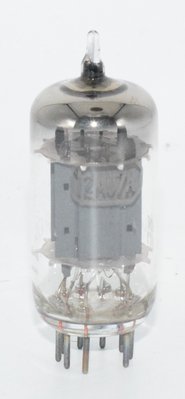
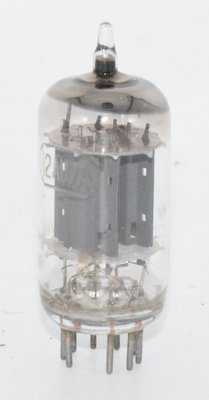
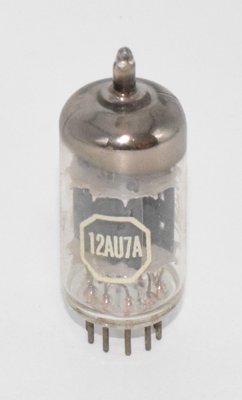
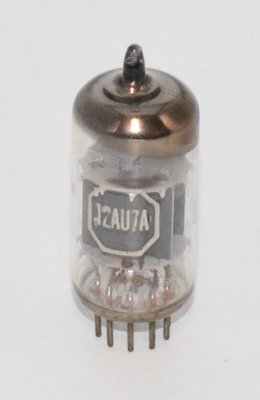
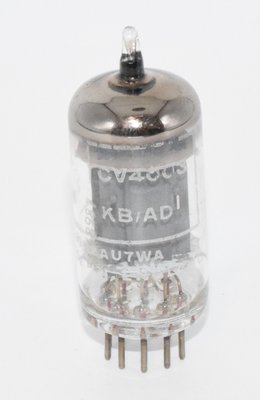
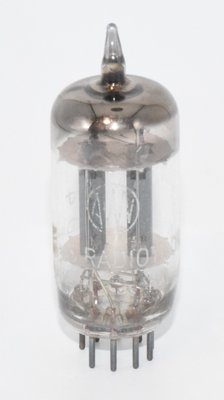
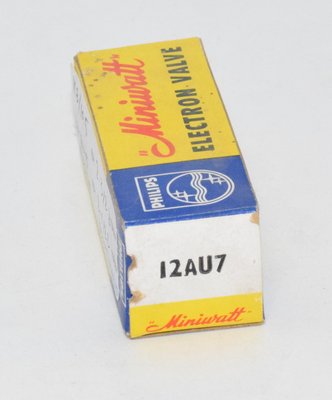
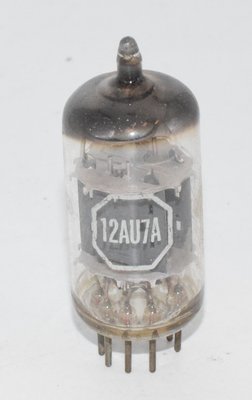
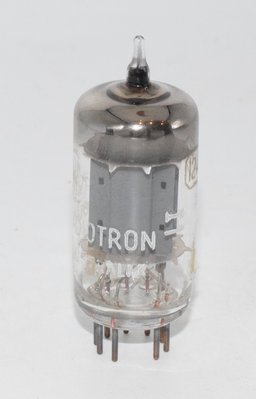
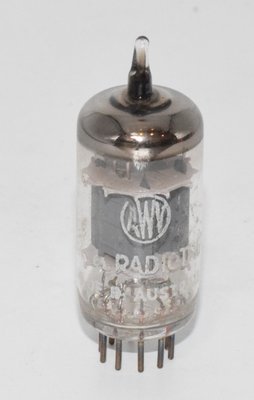
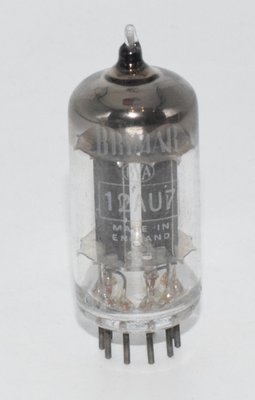
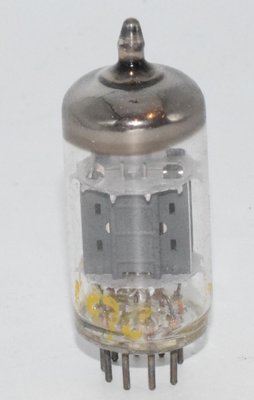
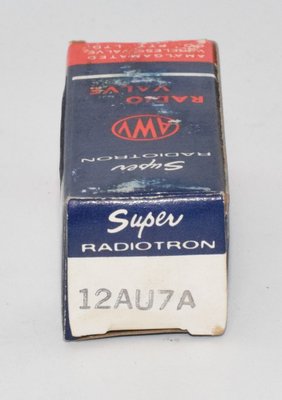
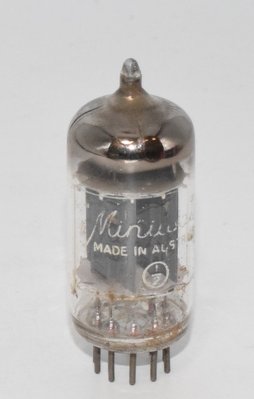
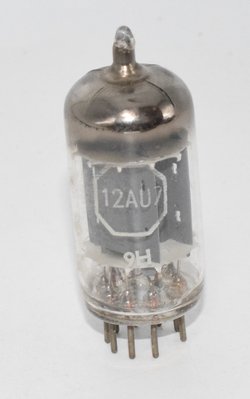
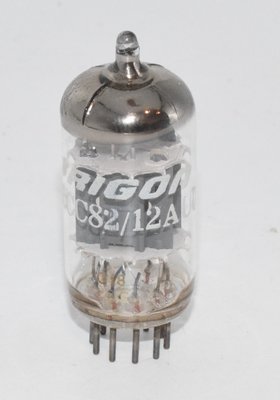
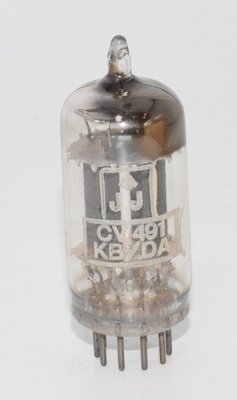
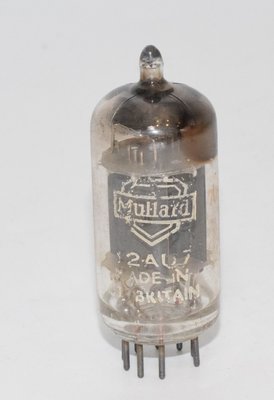
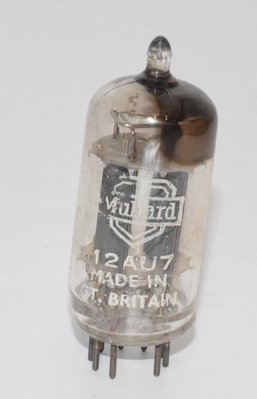
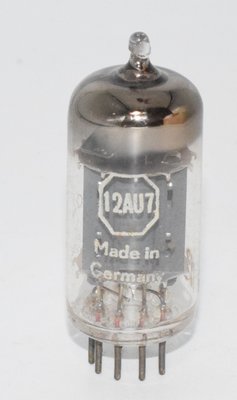
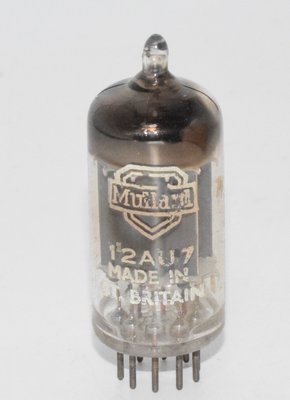
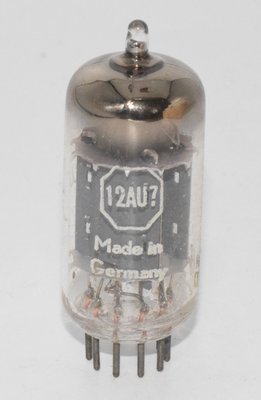
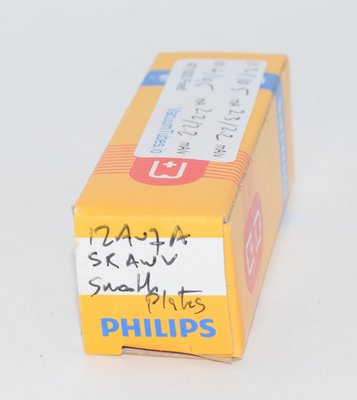
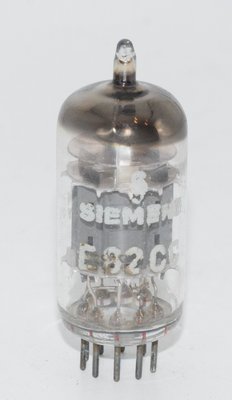
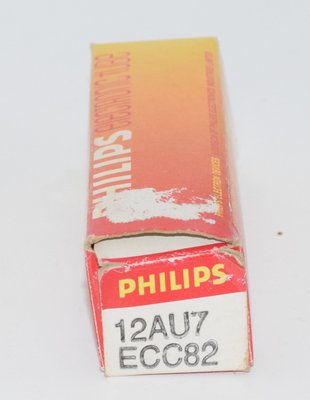
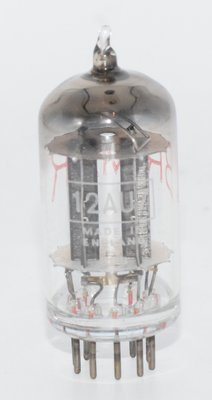
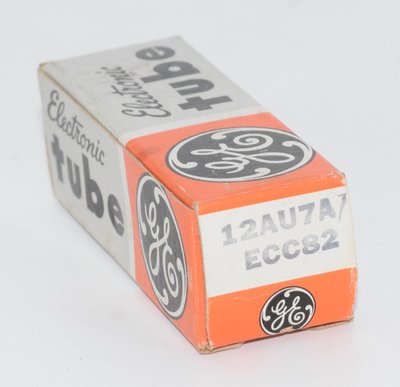
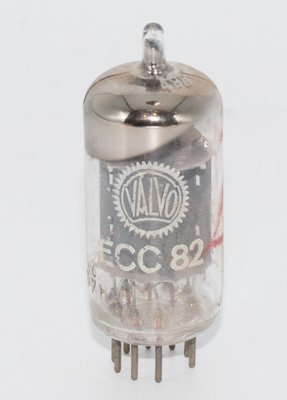
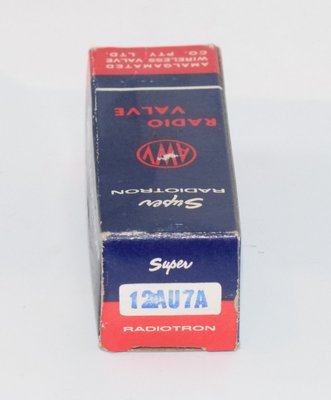
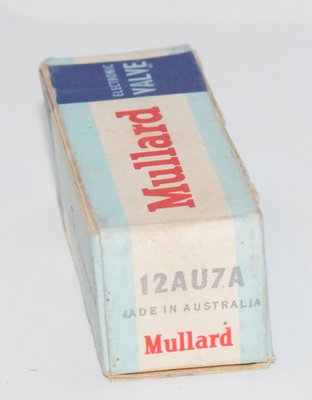
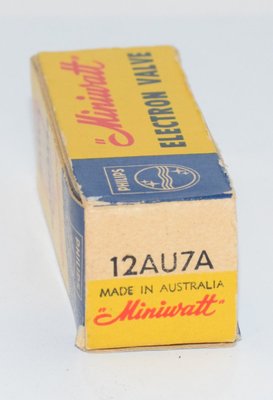
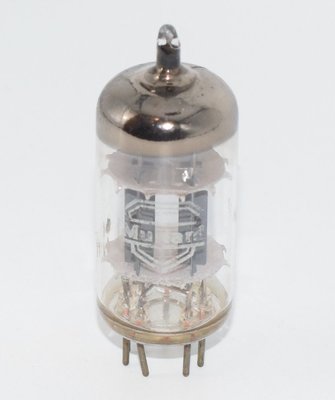
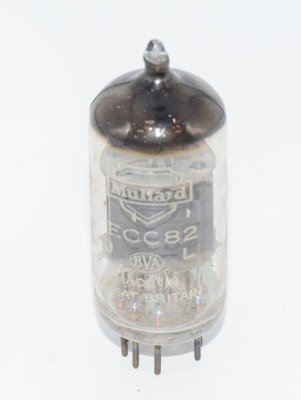
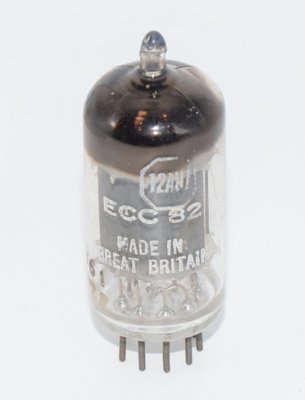
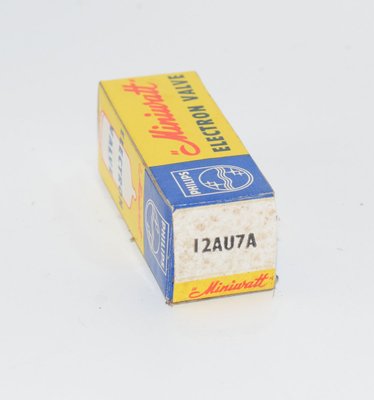
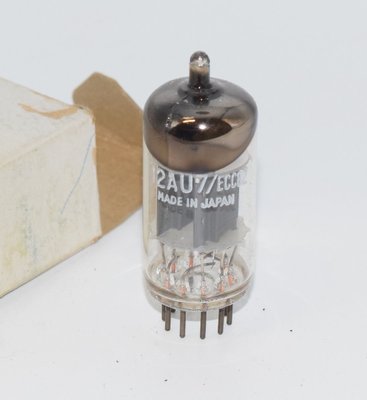
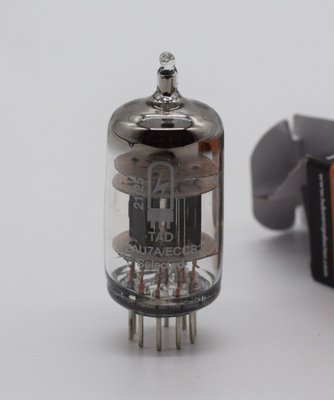
The ECC82 is a medium-mu dual triode vacuum tube (valve) that has earned its place as one of the most versatile and widely used signal tubes in audio electronics history. Developed in the late 1940s as part of the Philips/Mullard ECC series of miniature nine-pin (noval) dual triodes, the ECC82 was designed to serve as a low-frequency amplifier, oscillator, phase inverter, and general-purpose voltage amplifier. Its American designation is the 12AU7, and it was manufactured by virtually every major tube producer worldwide, including Mullard (UK), Philips (Netherlands), Telefunken (Germany), Amperex (Netherlands/USA), RCA, GE, Sylvania (USA), Tesla (Czechoslovakia), and many others.
The ECC82 sits in the middle of the famous ECC triode family: the ECC81 (12AT7) offers higher transconductance for RF applications, the ECC83 (12AX7) provides higher gain for preamp stages, while the ECC82 offers a moderate amplification factor of approximately 17–20 combined with relatively low plate resistance and good linearity. This balance of characteristics made it the tube of choice for driver stages, phase splitters, cathode followers, and low-level power output stages. The Tesla datasheet used as the primary reference for this article is dated 1 August 1959, reflecting the mature production era of this design.
The ECC82 was widely adopted in professional audio equipment, hi-fi amplifiers, broadcast equipment, test instruments, and early computer circuits. Its robust construction, predictable characteristics, and excellent reliability ensured its continued popularity well into the solid-state era, and it remains one of the most sought-after tubes in modern audio applications.
2. Technical Specifications and Design
2.1 General Description
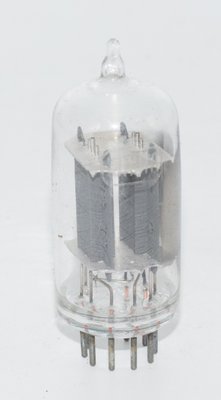
The ECC82 is a double triode ("dvojitá trioda" in Czech, as noted in the Tesla datasheet) with separate cathodes for each section. It is constructed as an all-glass miniature tube with a nine-pin noval (B9A) base. Both triode systems are independent of each other, with the heater filament center-tapped to the socket, allowing the heater circuits of both systems to be connected either in parallel or in series.
2.2 Heater Data
| Parameter | Parallel Operation | Series Operation | Unit |
|---|---|---|---|
| Heater Voltage (Uf) | 6.3 | 12.6 | V |
| Heater Current (If) | 0.3 | 0.15 | A |
| Warm-up Time (tf) | 16 | s | |
The heater is of the indirectly heated oxide-coated cathode type. When operating the heaters in series with other tubes, a current limiter must be used to restrict inrush current at switch-on.
2.3 Interelectrode Capacitances (Each System)
| Parameter | Symbol | Value | Unit |
|---|---|---|---|
| Input Capacitance (grid to cathode + heater) | Cg1/k+f | 1.8 | pF |
| Output Capacitance (anode to cathode + heater) | Ca/k+f | 0.6 | pF |
| Transfer Capacitance (grid to anode) | Ca/g1 | < 1.7 | pF |
| Grid to Heater Capacitance | Cg1/f | < 0.23 | pF |
Between Systems
| Parameter | Symbol | Value | Unit |
|---|---|---|---|
| Grid I to Grid II | Cg1I/g1II | < 0.008 | pF |
| Anode I to Anode II | CaI/aII | < 0.3 | pF |
| Grid I to Anode II | Cg1I/aII | < 0.03 | pF |
| Grid II to Anode I | Cg1II/aI | < 0.03 | pF |
The extremely low inter-system capacitances (particularly the grid-to-grid figure of less than 0.008 pF) confirm the excellent isolation between the two triode sections, making the ECC82 well-suited for use as a phase inverter or in cascaded amplifier stages where crosstalk must be minimized.
2.4 Characteristic Values (Each System)
| Parameter | Symbol | Va=100V | Va=170V | Va=200V | Va=250V | Unit |
|---|---|---|---|---|---|---|
| Anode Voltage | Ua | 100 | 170 | 200 | 250 | V |
| Grid Bias Voltage | Ug1 | 0 | −4 | −5.5 | −8.5 | V |
| Anode Current | Ia | 11.8 | 10 | 11 | 10.5 | mA |
| Transconductance | S (gm) | 3.2 | 2.5 | 2.5 | 2.2 | mA/V |
| Amplification Factor | μ | 20 | 18 | 18 | 17 | — |
| Penetration Factor | D | 5 | 5.4 | 5.6 | 5.9 | % |
| Internal Resistance (Plate Resistance) | Ri (rp) | 6.25 | 7.2 | 7.2 | 7.7 | kΩ |
The amplification factor (μ) varies from approximately 17 to 20 depending on operating point, with the higher values occurring at lower plate voltages. The transconductance ranges from 2.2 to 3.2 mA/V, and the plate resistance from 6.25 to 7.7 kΩ. These relationships follow the fundamental tube equation: μ = gm × rp.
2.5 Maximum Ratings
| Parameter | Symbol | Max Value | Unit |
|---|---|---|---|
| Anode Voltage (cold, no signal) | Uao | 550 | V |
| Anode Voltage (operating) | Ua | 300 | V |
| Anode Dissipation (per section) | Wa | 2.75 | W |
| Cathode Current | Ik | 20 | mA |
| Peak Cathode Current | Ik sp | 250 | mA |
| Negative Grid Voltage | −Ug1 | −50 | V |
| Cathode-to-Heater Voltage | Uk/f | 180 | V |
| Grid Resistor (with automatic bias) | Rg1 | 1 | MΩ |
| Grid Resistor (with fixed bias) | Rg1 | 0.25 | MΩ |
| External Cathode-to-Heater Resistance | Rk/f | 20 | kΩ |
| External Cathode-to-Heater Resistance (phase inverter) | Rk/f | 150 | kΩ |
| Grid Voltage for Grid Current Onset (Ig1 ≤ 0.3 μA) | Ug1i | −1.3 | V |
Note: The peak cathode current of 250 mA is permitted for a maximum of 10% of the period, not exceeding 2 ms duration.
2.6 Operating Conditions — Class A Single-Ended Power Amplifier (One System)
| Parameter | Symbol | Value | Unit |
|---|---|---|---|
| Anode Voltage | Ua | 250 | V |
| Cathode Resistor | Rk | 1 | kΩ |
| Anode Load Resistor | Ra | 13 | kΩ |
| AC Grid Drive Voltage | Ug1 ef | 5.9 | V |
| Quiescent Anode Current | Ia0 | 9.2 | mA |
| Anode Current (at full drive) | Ia | 9.6 | mA |
| Output Power | Po | 0.27 | W |
| Distortion | k | 10 | % |
2.7 Operating Conditions — Class AB Push-Pull Power Amplifier (Both Systems)
| Parameter | Symbol | Value | Unit |
|---|---|---|---|
| Anode Voltage | Ua | 250 | V |
| Cathode Resistor (common) | Rk | 800 | Ω |
| Anode-to-Anode Load Resistance | Ra/a | 30 | kΩ |
| AC Grid Drive Voltage | Ug1/g1 ef | 16.3 | V |
| Quiescent Anode Current | Ia0 | 2 × 6.6 | mA |
| Anode Current (at full drive) | Ia | 2 × 7.2 | mA |
| Output Power | Po | 0.715 | W |
| Distortion | k | 4 | % |
2.8 Operating Conditions — RC-Coupled Voltage Amplifier (One System)
| Parameter | Symbol | Value | Unit |
|---|---|---|---|
| Grid Leak Resistor | Rg1 | 1 | MΩ |
| Coupling Capacitor (anode circuit) | Cv | 10 | kpF (nF) |
| Coupling Capacitor (grid circuit) | Cv | 10 | kpF (nF) |
| Cathode Bypass Capacitor | Ck | 50 | μF |
The Tesla datasheet provides extensive RC-coupled amplifier data for three different operating points:
| Ub (V) | Ra (kΩ) | Rg1' (kΩ) | Rk (kΩ) | Ia at 250V (mA) | Uo ef at 250V (V) | Gain at 250V | Distortion at 250V (%) |
|---|---|---|---|---|---|---|---|
| 100–400 | 47 | 150 | 1.2 | 3.02 | 34 | 13.5 | 6.4 |
| 100–400 | 100 | 330 | 2.2 | 1.63 | 32 | 14 | 5.9 |
| 100–400 | 220 | 680 | 3.9 | 0.82 | 28 | 14.5 | 4.8 |
The voltage gain in RC-coupled amplifier service ranges from approximately 13.5 to 14.5 depending on the load resistance chosen, with distortion decreasing as the load resistance increases.
2.9 Cascaded Amplifier (Both Systems in Cascade)
| Parameter | Symbol | Ub=250V | Ub=350V | Unit |
|---|---|---|---|---|
| Anode Current (both systems) | IaI+IaII | 1.66 | 2.33 | mA |
| AC Output Voltage | Uo ef | 15 | 25 | V |
| Voltage Gain | Uo/Ug1 | 178 | 178 | — |
| Total Distortion | k | 2 | 2 | % |
The cascaded configuration achieves a voltage gain of 178 with only 2% distortion — a remarkable figure that demonstrates the ECC82's suitability for high-gain, low-distortion amplifier chains.
2.10 Phase Inverter Operation
| Parameter | Symbol | Ub=250V | Ub=350V | Unit |
|---|---|---|---|---|
| Anode Current (System I) | IaI | 0.7 | 1.0 | mA |
| Anode Current (System II) | IaII | 0.68 | 0.93 | mA |
| AC Output Voltage | Uo ef | 15 | 24 | V |
| Voltage Gain | Uo/Ug1 | 11 | 11 | — |
| Total Distortion | k | 1 | 1 | % |
A second phase inverter circuit variant is also documented:
| Parameter | Symbol | Ub=250V | Ub=350V | Unit |
|---|---|---|---|---|
| Anode Current (System I) | IaI | 0.82 | 1.16 | mA |
| Anode Current (System II) | IaII | 4.5 | 6.3 | mA |
| AC Output Voltage | Uo ef | 13 | 20 | V |
| Voltage Gain | Uo/Ug1 | 11 | 11 | — |
| Total Distortion | k | 1.5 | 1.5 | % |
2.11 Physical Characteristics
- Base: Noval (B9A), 9-pin miniature — Socket designation S 9/12 ČSN 35 8904
- Envelope: All-glass miniature (T-6½ style), maximum diameter 22.2 mm
- Overall height: Approximately 56.3 mm (from base to top of envelope), seated height approximately 42–49.2 mm
- Weight: Maximum 10 g
- Mounting position: Any
2.12 Pin Configuration (Noval B9A Base, Bottom View)
| Pin | Function |
|---|---|
| 1 | Anode I (aI) |
| 2 | Grid I (g1I) |
| 3 | Cathode I (kI) |
| 4 | Heater (f) |
| 5 | Heater (f) — center tap for series/parallel connection |
| 6 | Anode II (aII) |
| 7 | Grid II (g1II) |
| 8 | Cathode II (kII) |
| 9 | Heater (f) — center tap |
Pin 9 serves as the heater center-tap, enabling parallel (6.3V) or series (12.6V) heater operation. The internal shield is typically connected to pin 9 on some variants.
3. Applications and Usage
The ECC82 was designed as a versatile dual triode for low-frequency applications. Its moderate gain, low plate resistance, and good linearity make it suitable for a wide range of circuit functions:
3.1 Voltage Amplification
As an RC-coupled voltage amplifier, a single ECC82 triode section delivers a voltage gain of approximately 13.5 to 14.5 depending on the operating point and load resistance. While this is modest compared to the ECC83's gain of approximately 100, the ECC82 offers significantly lower distortion and better linearity. When both sections are cascaded, a total gain of 178 is achievable with only 2% total harmonic distortion.
3.2 Phase Inverter / Phase Splitter
The ECC82 excels as a phase inverter, a critical function in push-pull amplifier designs. The Tesla datasheet documents several phase inverter configurations achieving a gain of 11 with distortion as low as 1%. The excellent balance between the two triode sections and the low inter-section capacitances make it ideal for cathodyne (split-load), long-tailed pair, and floating paraphase phase inverter topologies.
3.3 Cathode Follower
With its relatively low plate resistance (6.25–7.7 kΩ), the ECC82 makes an excellent cathode follower, providing unity voltage gain with low output impedance. This makes it useful as a buffer stage between high-impedance sources and low-impedance loads.
3.4 Low-Power Output Stage
In Class A single-ended operation, one section can deliver 0.27 W of output power. In Class AB push-pull configuration using both sections, the ECC82 can produce 0.715 W — sufficient for driving headphones or small loudspeakers. These power levels, while modest, are achieved with the simplicity of a single tube.
3.5 Oscillator
The ECC82's moderate gain and good stability characteristics make it suitable for use in audio oscillators, including Wien bridge and phase-shift oscillator circuits.
3.6 Driver Stage
Perhaps the most common application for the ECC82 in power amplifier designs is as a driver stage for power output tubes. Its ability to deliver relatively high voltage swings with low distortion, combined with its low output impedance, makes it ideal for driving the grids of power pentodes and beam tetrodes such as the EL34, KT88, 6L6, and 6V6.
3.7 Professional and Industrial Applications
Beyond audio, the ECC82 found extensive use in television receivers (as vertical oscillator and sync separator), instrumentation, regulated power supplies, and early computing equipment. Its high cathode-to-heater voltage rating of 180V made it particularly useful in circuits where the cathode operates at elevated DC potentials.
4. Sound Characteristics
The ECC82 / 12AU7 has a distinctive sonic signature that has been extensively characterized by audiophiles, recording engineers, and amplifier designers over decades of use. Its sound character is largely a consequence of its electrical properties: moderate gain, low plate resistance, and relatively linear transfer characteristics.
4.1 General Tonal Character
The ECC82 is widely regarded as producing a warm, smooth, and musically natural sound. Compared to the higher-gain ECC83/12AX7, the ECC82 tends to sound more relaxed and less "edgy," with a presentation that many listeners describe as organic and three-dimensional. The moderate amplification factor of 17–20 means that the tube operates with greater headroom in most circuit positions, contributing to a sense of ease and dynamic freedom.
4.2 Frequency Response Character
The ECC82 is known for a well-balanced tonal presentation with a slightly warm midrange. The bass response is typically described as full and controlled, without the looseness that can characterize some higher-gain triodes. The midrange — often considered the tube's greatest strength — is rich, detailed, and harmonically complex, with excellent vocal reproduction. The treble is smooth and extended, though some listeners note it can be slightly rolled off compared to the more forward-sounding ECC81/12AT7.
4.3 Harmonic Distortion Profile
Like all triodes, the ECC82 produces predominantly even-order harmonics (primarily 2nd harmonic), which are perceived as musically consonant and pleasant. The distortion profile is gentle and progressive — the tube clips softly when overdriven, producing a gradual increase in harmonic content rather than an abrupt transition. This characteristic is highly valued in both hi-fi and guitar amplifier applications. The Tesla datasheet confirms distortion figures as low as 1% in phase inverter service and 2% in cascaded amplifier configurations.
4.4 Dynamics and Transient Response
The ECC82's relatively low plate resistance (6.25–7.7 kΩ) gives it excellent current delivery capability, which translates to strong dynamic performance and crisp transient response. The tube handles dynamic peaks with authority, maintaining composure during complex musical passages. This is one reason it is preferred over the ECC83 in driver and phase inverter positions where current delivery matters.
4.5 Manufacturer-Specific Sound Variations
Significant sonic differences exist between ECC82 tubes from different manufacturers and production eras:
- Mullard (Blackburn, UK): Renowned for a lush, warm midrange with excellent harmonic richness. Long-plate versions from the 1950s and early 1960s are particularly prized. Mullard ECC82s are often described as having a "golden" tonal quality.
- Telefunken (Germany): Known for exceptional clarity, detail retrieval, and a more neutral tonal balance. The smooth-plate versions with diamond-bottom markings are among the most sought-after.
- Amperex (Heerlen, Netherlands): Bugle Boy and orange-globe labeled versions offer a balance between Mullard warmth and Telefunken clarity, with particularly good imaging and soundstage.
- RCA (USA): Clear-top and black-plate versions are valued for their dynamic punch and slightly forward presentation.
- Tesla (Czechoslovakia): Offer good value with a warm, slightly dark tonal character and solid reliability.
- GE (USA): Known for a clean, detailed sound with good extension at both frequency extremes.
4.6 Microphonics and Noise
Standard ECC82 tubes exhibit moderate microphonic sensitivity. In critical applications such as phono preamplifiers, selected low-noise variants (such as the E82CC, ECC802S, or CV4003) are preferred. These premium versions feature enhanced internal construction with additional damping to reduce microphonic pickup and lower residual noise floors.
5. Equivalent and Substitute Types
5.1 Close/Identical Substitutes (Direct Drop-In Replacements)
The following types are electrically identical or very closely matched to the ECC82 and can be used as direct replacements without circuit modifications:
- 12AU7 — American RETMA designation, electrically identical
- B329 — Philips designation
- CV491 — UK military (CV) designation for the standard ECC82
- CV10323 — UK military designation
- CV10666 — UK military designation
- CV4003 — UK military selected/ruggedized version, direct replacement
- CV8155 — UK military designation
- CV8221 — UK military designation
The Tesla datasheet specifically lists the 12AU7, B329, and CV491 as equivalent foreign types.
5.2 Different Rating Substitutes (Not Direct Drop-In — Verify Before Use)
The following types are related to the ECC82 but may have different ratings, tighter specifications, or modified characteristics. They are generally usable in ECC82 circuits but should be verified for compatibility in specific applications:
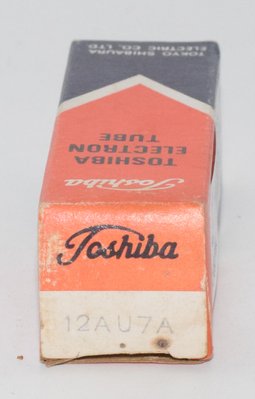
- 12AU7A — Improved version with controlled heater warm-up characteristics
- 12AU7WA — Ruggedized military version with enhanced vibration resistance
- 5814 / 5814A / CK5814 — Military-grade versions with tighter tolerances and ruggedized construction
- 5963 — Computer-grade version with controlled characteristics; lower maximum plate voltage in some specifications
- 6067 — Related type with modified ratings
- 6189 — Premium industrial version (equivalent to 12AU7A)
- 6680 — Premium version with tighter specifications
- 7489 / 7730 — Special-quality versions
- E82CC — Philips/Mullard special-quality, long-life version with tighter tolerances and 10,000-hour rated life
- ECC802 / ECC802S — Special-quality version with frame-grid construction for improved performance
- M8136 — UK military special-quality designation (equivalent to CV4003/E82CC)
- 6CC40 — Philips designation for a related type
- B749 — Philips designation
- CV3900 / CV4016 / CV9092 — Various UK military designations for related types
- E2163 — Telefunken designation
Important Note: While the above types are generally interchangeable with the ECC82 in most audio circuits, some (particularly the 5963) may have lower maximum voltage ratings. Always verify the specific datasheet for the substitute type against your circuit's operating conditions before substitution.
6. Notable Characteristics
6.1 Exceptional Versatility
The ECC82 is arguably the most versatile of the ECC8x family. While the ECC83 is primarily a voltage amplifier and the ECC81 is optimized for RF/high-frequency applications, the ECC82 can serve effectively as a voltage amplifier, power amplifier, cathode follower, phase inverter, oscillator, and driver stage. This versatility stems from its balanced combination of moderate gain, low plate resistance, and good current capability.
6.2 High Cathode-to-Heater Voltage Rating
The maximum cathode-to-heater voltage of 180V is notably generous and allows the ECC82 to be used in circuits where the cathode operates at significantly elevated DC potentials — a common requirement in series-connected heater strings and in circuits with high cathode bias voltages.
6.3 High Cold Anode Voltage Rating
The cold (non-operating) anode voltage rating of 550V provides a substantial safety margin during power supply transients at turn-on and turn-off, contributing to the tube's excellent reliability record.
6.4 Low Inter-Section Coupling
The grid-to-grid capacitance between sections of less than 0.008 pF is exceptionally low, ensuring minimal crosstalk between the two triode halves. This is critical for phase inverter applications where signal balance between the two outputs must be maintained.
6.5 Linearity
The ECC82's transfer characteristics, as shown in the Ia = f(Ug1) curves in the Tesla datasheet, demonstrate good linearity over a wide operating range. The penetration factor (D) of 5–5.9% indicates a well-designed grid structure with consistent amplification characteristics. The comprehensive graphs of S, D, Ri, and μ as functions of anode current at various plate voltages (100V, 170V, 200V, 250V) show that the tube's parameters remain reasonably stable across a wide range of operating conditions.
6.6 Robust Construction
The ECC82 was designed for long service life in professional equipment. Military and premium versions (CV4003, E82CC, 5814A) feature enhanced construction with additional mica spacers, getter shields, and ruggedized electrode assemblies. Even standard commercial versions typically exhibit excellent longevity, with many original tubes from the 1950s and 1960s still testing within specification today.
7. Usage in the Audio Community
7.1 Hi-Fi Amplifiers
The ECC82 is one of the most commonly encountered tubes in high-fidelity amplifier designs. Its primary roles include:
- Phase Inverter/Splitter: This is perhaps the single most common application for the ECC82 in hi-fi amplifiers. Classic designs from Mullard, Leak, Quad, Dynaco, Fisher, Scott, and McIntosh all employ the ECC82 in various phase inverter topologies. The long-tailed pair phase inverter using an ECC82 became virtually standard practice in British amplifier design.
- Driver Stage: The ECC82's low output impedance and ability to deliver adequate voltage swing make it an excellent driver for power output tubes. It is commonly found driving EL34, KT66, KT88, 6L6, and 6550 output stages.
- Buffer/Cathode Follower: Used as an impedance-matching stage between preamp and power amp sections, or as a line-stage output buffer in preamplifiers.
- Line-Stage Amplifier: In preamplifier designs where the high gain of the ECC83 is not required, the ECC82 provides a more linear and lower-noise alternative for line-level signal amplification.
7.2 Guitar Amplifiers
The ECC82 / 12AU7 is widely used in guitar amplifiers, though less commonly than the ECC83/12AX7. Its applications include:
- Phase Inverter: Many classic guitar amplifier designs use the ECC82 as a phase inverter, including various Fender, Marshall, and Vox models.
- Reverb Driver/Recovery: The ECC82's moderate gain and good current delivery make it well-suited for driving spring reverb tanks and recovering the reverb signal.
- Effects Loop Buffer: Used as a buffer stage in series and parallel effects loops.
- Gain Reduction Substitution: Guitar players sometimes substitute an ECC82 for an ECC83 in preamp positions to reduce gain and achieve a cleaner, more dynamic tone. While this substitution is electrically safe (the pinout is identical), the different bias requirements mean the tube will operate at a non-optimal bias point, which some players find musically desirable.
7.3 Headphone Amplifiers
The ECC82 has become extremely popular in the headphone amplifier community. Its ability to deliver 0.27W in single-ended Class A or 0.715W in push-pull Class AB from a single tube makes it capable of driving most headphones to adequate listening levels. Numerous commercial and DIY headphone amplifier designs are based on the ECC82, including designs from Bottlehead, Woo Audio, Schiit, and many others. The tube's warm, musical character is particularly appreciated in this application, where the intimate listening experience of headphones reveals the tube's tonal qualities.
7.4 DAC Output Stages
Modern hybrid audio designs frequently employ the ECC82 as an analog output stage following a digital-to-analog converter. The tube serves as a buffer and provides the harmonic richness and spatial qualities that many listeners find lacking in purely solid-state DAC implementations.
7.5 Phono Preamplifiers
While the higher-gain ECC83 is more commonly used in phono stages, the ECC82 finds application in phono preamplifier designs that use multiple gain stages or that employ step-up transformers for moving-coil cartridges. The lower noise floor achievable with the ECC82 (due to its lower gain) can be advantageous in these applications. Premium low-noise versions such as the E82CC or CV4003 are preferred for phono stage use.
7.6 Tube Rolling
The ECC82 / 12AU7 is one of the most popular tubes for "tube rolling" — the practice of swapping different brands and vintages of compatible tubes to alter the sound character of an amplifier. The wide variety of manufacturers and production variants, combined with the significant sonic differences between them, makes tube rolling with ECC82s a rewarding pursuit for audiophiles. New Old Stock (NOS) tubes from Mullard, Telefunken, Amperex, and other premium manufacturers command significant prices on the vintage tube market, with rare variants such as the Mullard long-plate ECC82 or Telefunken smooth-plate ECC802S reaching prices of several hundred dollars per tube.
7.7 Current Production
The ECC82 / 12AU7 continues to be manufactured by several companies, including JJ Electronic (Slovakia), Electro-Harmonix/Sovtek/Tung-Sol (Russia — New Sensor Corp.), Shuguang and Psvane (China), and others. While opinions vary on how current-production tubes compare to vintage NOS examples, modern manufacturing has improved significantly, and current-production ECC82s from reputable manufacturers offer good performance and reliability at accessible prices.
7.8 Notable Amplifier Designs Using the ECC82
The ECC82 features prominently in many legendary amplifier designs:
- Mullard 5-20: Uses ECC82 as phase inverter driving EL34 output tubes
- Leak Stereo 20: ECC82 phase inverter in one of the most celebrated British amplifiers
- Dynaco ST-70: Uses a 12AU7 in the driver/phase inverter board
- McIntosh MC275: Employs 12AU7 tubes in the driver circuit
- Marantz Model 8B: Uses 12AU7 as phase inverter
- Quad II: ECC82 as phase inverter in this iconic British design
- Fender Twin Reverb: 12AU7 in the reverb driver circuit
- Marshall JTM45: 12AU7 phase inverter in early versions
The enduring popularity of the ECC82 / 12AU7 in the audio community is a testament to its exceptional design balance. More than seven decades after its introduction, it remains an essential component in both vintage and contemporary audio equipment, valued equally by engineers for its reliable performance and by audiophiles for its musical qualities.