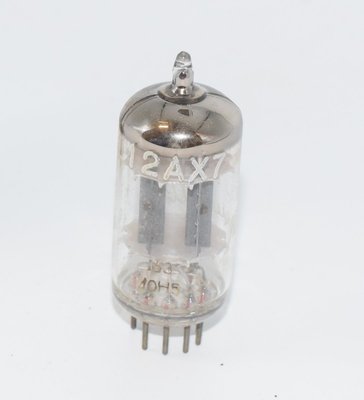
1. Introduction and History
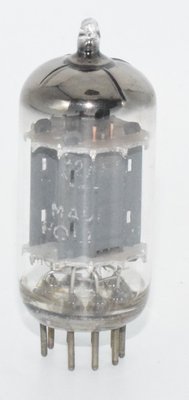
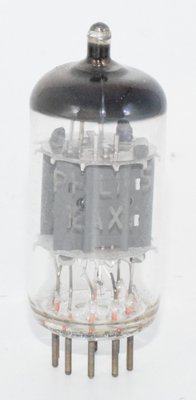
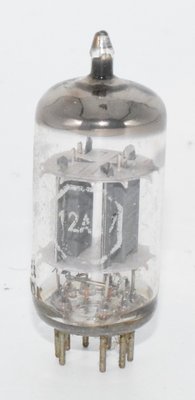
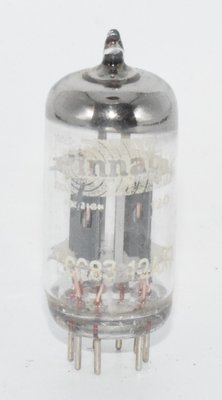
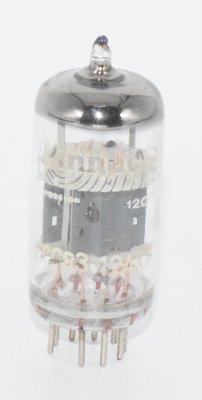
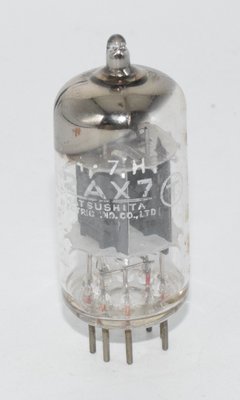
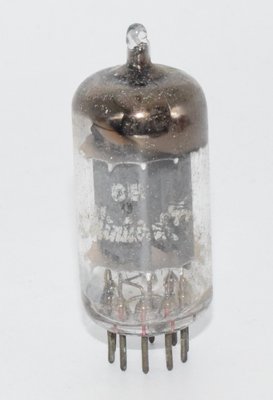
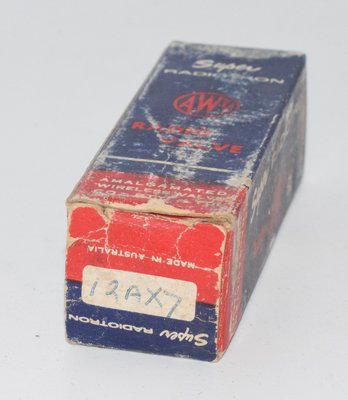
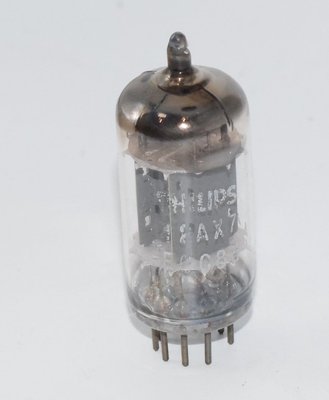
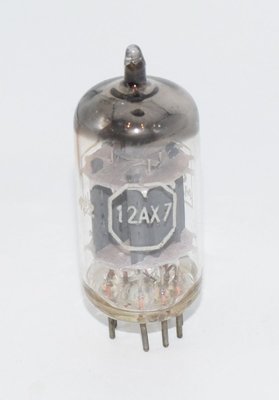
The ECC83 is a high-mu (high gain) dual triode vacuum tube that has earned its place as arguably the most important small-signal valve in the history of audio electronics. Developed in the early 1950s under the Philips/Mullard European Pro-Electron designation system, the ECC83 was designed specifically as a low-frequency voltage amplifier and phase inverter. Its American equivalent, the 12AX7, was introduced by RCA around the same time, and the two designations have become virtually synonymous in the audio world.
The designation "ECC83" follows the Pro-Electron naming convention: E = 6.3V heater, CC = double triode, and 83 = the specific type number. The tube was manufactured by virtually every major valve producer worldwide, including Mullard (UK), Philips (Netherlands), Telefunken and Valvo (Germany), Amperex (USA/Netherlands), Tesla (Czechoslovakia), Tungsram (Hungary), GE, RCA, and Sylvania (USA), and numerous others.
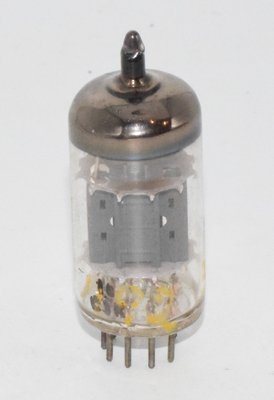
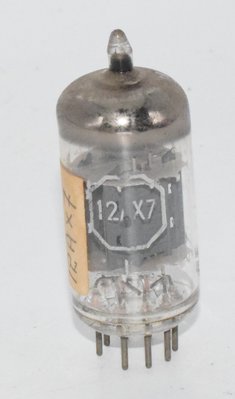
The Tesla ECC83 datasheet from August 1, 1959, which forms the primary reference for this article, describes it as a "dvojitá trioda" (double triode) with separate cathodes, intended for use as a low-frequency voltage amplifier and phase inverter. The tube was produced in an all-glass miniature construction with a nine-pin (noval) base.
From its inception, the ECC83/12AX7 became the standard preamplifier tube in virtually all guitar amplifiers, hi-fi preamplifiers, and recording equipment. More than seven decades after its introduction, it remains in continuous production and is the single most sought-after small-signal tube in the audio industry.
2. Technical Specifications and Design
2.1 General Construction
The ECC83 is an all-glass miniature (miniaturní) envelope tube with a nine-pin noval base (B9A), designated as socket S 9/12 per ČSN 35 8904. The two triode systems are completely independent of each other, with separate cathodes. The heater filament has a center-tap brought out to the base, allowing the heaters of both systems to be connected either in parallel or in series.
- Envelope: All-glass miniature (T-6½ style)
- Base: Noval (B9A), 9-pin miniature
- Maximum diameter: 22.2 mm
- Maximum seated height: approximately 56.3 mm (total height approximately 49.2 mm above socket, with 42 mm glass envelope)
- Weight: max 10 g
2.2 Pinout
Viewed from the bottom of the tube (pin side), the standard noval B9A pinout is:
| Pin | Function |
|---|---|
| 1 | Anode I (a1) |
| 2 | Grid I (g1) |
| 3 | Cathode I (k1) |
| 4 | Heater (center-tap) — should be grounded when first system is used |
| 5 | Heater |
| 6 | Anode II (a2) |
| 7 | Grid II (g2) |
| 8 | Cathode II (k2) |
| 9 | Heater |
Pin 4 (heater center-tap) should always be grounded, and when operating the ECC83 in series heater chains with other tubes, a current limiter must be used to limit inrush current at switch-on. The first system (System I) should always be used first.
2.3 Heater Ratings
| Parameter | Parallel Operation | Series Operation |
|---|---|---|
| Heater Voltage (Uf) | 6.3 V | 12.6 V |
| Heater Current (If) | 0.3 A | 0.15 A |
| Warm-up Time (tf) | 16 s | |
The heater is indirectly heated with an oxide-coated cathode. AC or DC heating is permissible.
2.4 Characteristic Values (Each Section)
The Tesla datasheet provides characteristic values at two operating points:
| Parameter | Symbol | Condition 1 | Condition 2 | Unit |
|---|---|---|---|---|
| Anode Voltage | Ua | 100 | 250 | V |
| Grid Voltage (Bias) | Ug1 | −1 | −2 | V |
| Anode Current | Ia | 0.5 | 1.2 | mA |
| Transconductance | S (gm) | 1.25 | 1.6 | mA/V |
| Amplification Factor | μ | 100 | 100 | — |
| Plate Resistance | Ri (rp) | 80 | 62.5 | kΩ |
2.5 Maximum Ratings (Each Section)
| Parameter | Symbol | Max Value | Unit |
|---|---|---|---|
| Anode Voltage (cold/no signal) | Uao | 550 | V |
| Anode Voltage (operating) | Ua | 300 | V |
| Anode Dissipation | Wa | 1 | W |
| Cathode Current | Ik | 8 | mA |
| Grid Resistor (cathode bias) | Rg1 | 2.2 | MΩ |
| Grid Resistor (grid-leak bias) | Rg1 | 22 | MΩ |
| Negative Grid Voltage | −Ug1 | −50 | V |
| Cathode-to-Heater Voltage | Uk/f | 180 | V |
| External Cathode-Heater Resistance | Rk/f | 20 | kΩ |
| Cathode-Heater Resistance (phase inverter) | Rk/f | 120 | kΩ |
| Grid Voltage for Grid Current Onset (Ig1 ≤ 0.3 μA) | Ug1i | −1.3 | V |
2.6 Interelectrode Capacitances
System I and II (each section):
| Parameter | Symbol | Value | Unit |
|---|---|---|---|
| Input Capacitance (Grid-Cathode) | Cg1 | 1.5 | pF |
| Output Capacitance (Anode-Cathode) | Ca | 0.45 | pF |
| Transfer Capacitance (Grid-Anode) | Ca/g1 | 1.7 | pF |
| Grid-to-Heater Capacitance | Cg1/f | <0.15 | pF |
Note: The verified reference data lists Cgk = 1.6 pF, Cak = 0.48/0.34 pF, and Cga = 1.7/1.8 pF, which are consistent with the Tesla datasheet values (minor variations between manufacturers are normal).
Between Systems:
| Parameter | Symbol | Value | Unit |
|---|---|---|---|
| Grid I to Grid II | Cg1I/g1II | ≤ 0.01 | pF |
| Anode I to Anode II | CaI/aII | ≤ 0.2 | pF |
| Grid I to Anode II | Cg1I/aII | ≤ 0.03 | pF |
| Grid II to Anode I | Cg1II/aI | ≤ 0.03 | pF |
The extremely low inter-section capacitances (≤ 0.03 pF grid-to-anode between sections) are a key design feature, enabling both triode sections to be used in cascaded gain stages with minimal crosstalk and parasitic feedback.
2.7 Voltage Amplifier Operating Data
The Tesla datasheet provides extensive tables of operating conditions for RC-coupled voltage amplifier service. A selection of representative conditions (cathode bias, one system) is shown below:
RC-Coupled Amplifier with Cathode Bias Resistor (Rg1 = 1 MΩ, Cv = 10 kpF, Ck = 50 μF):
| Ub (V) | Ra (kΩ) | Rg1' (kΩ) | Rk (kΩ) | Gain (Uo/Ug1) |
|---|---|---|---|---|
| 100 | 100 | 100 | 1.7 | 33 |
| 100 | 100 | 250 | 2.0 | 40 |
| 100 | 250 | 250 | 3.5 | 44 |
| 100 | 500 | 1000 | 8 | 55 |
| 200 | 100 | 100 | 1.0 | 41 |
| 200 | 250 | 250 | 2.0 | 55 |
| 200 | 500 | 1000 | 5.0 | 64 |
| 250 | 100 | 100 | 0.9 | 44 |
| 250 | 250 | 250 | 1.8 | 57 |
| 250 | 500 | 500 | 4 | 67 |
| 300 | 100 | 100 | 0.8 | 46 |
| 300 | 250 | 250 | 1.6 | 60 |
| 300 | 500 | 1000 | 3.5 | 70 |
RC-Coupled Amplifier with Cathode Bias (Rg1 = 1 MΩ, Cv = 0.1 μF, Ck = 50 μF) — Detailed Operating Points:
| Ub (V) | Ra (kΩ) | Rg1' (kΩ) | Rk (Ω) | Ia (mA) | Uo eff (V) | Gain | Distortion k (%) |
|---|---|---|---|---|---|---|---|
| 300 | 100 | 330 | 1200 | 1.11 | 30 | 57 | 2.7 |
| 300 | 220 | 680 | 2200 | 0.63 | 36 | 72.0 | 2.6 |
| 250 | 100 | 330 | 1500 | 0.86 | 26 | 54.5 | 3.9 |
| 400 | 220 | 680 | 1200 | 1.02 | 38 | 76.5 | 1.1 |
The distortion figures noted in the datasheet are approximately proportional to the output voltage level.
Phase Inverter (Cathodyne) Operating Data:
The Tesla datasheet includes detailed phase inverter ("obraceč fáze") configurations. For minimum distortion:
| Ub (V) | Ua (V) | IaI+IaII (mA) | RaI (kΩ) | RaII (kΩ) | Rk (kΩ) | Gain | k (%) |
|---|---|---|---|---|---|---|---|
| 250 | 90 | 1 | 100 | 100 | 68 | 25 | 1.8 |
| 250 | — | 1 | 100 | 100 | 70 | 25 | 0.6 |
| 350 | 65 | 1.2 | 150 | 150 | 82 | 27 | 1.8 |
3. Applications and Usage
The ECC83/12AX7 was designed as a low-frequency voltage amplifier and phase inverter, and its applications span virtually every area of audio electronics:
3.1 Original Design Applications
- Voltage Amplification: The primary intended application. With a μ of 100 and low plate current requirements, the ECC83 is ideal for high-gain preamplifier stages. Practical stage gains of 33 to 77 are achievable depending on operating conditions and load resistor values.
- Phase Inversion: Both cathodyne (split-load) and long-tailed pair configurations are well-suited to the ECC83. The datasheet provides specific operating data for phase inverter service with gains of 25–27 and distortion as low as 0.6%.
- Cascaded Gain Stages: The two independent triode sections with extremely low inter-section capacitance (≤ 0.01 pF grid-to-grid, ≤ 0.03 pF grid-to-anode) make the ECC83 ideal for cascading two gain stages within a single envelope without instability.
3.2 Guitar Amplifiers
The ECC83/12AX7 is the universal preamplifier tube in guitar amplification. It is found in virtually every position of the preamp chain:
- First gain stage (input stage)
- Second and third gain stages (in high-gain designs)
- Tone stack recovery stage
- Phase inverter/driver stage
- Reverb driver and recovery stages
- Tremolo/vibrato oscillator
Classic amplifiers from Fender, Marshall, Vox, Hiwatt, Mesa/Boogie, and virtually all other manufacturers rely on the ECC83/12AX7 as their primary preamplifier tube.
3.3 Hi-Fi and Studio Equipment
- Phono preamplifiers (RIAA stages)
- Line-level preamplifiers
- Microphone preamplifiers
- Tape head preamplifiers
- DAC output stages (in modern hybrid designs)
- Headphone amplifiers
4. Sound Characteristics
The ECC83/12AX7 has a distinctive sonic signature that has made it the defining sound of tube preamplification. While sound descriptions are inherently subjective, there is broad consensus among audiophiles, recording engineers, and guitar players about the tube's tonal qualities:
4.1 General Tonal Character
The ECC83 is widely described as having a warm, rich, and harmonically complex sound. Its high amplification factor (μ = 100) means it produces significant harmonic content even at moderate signal levels. The harmonic distortion profile is predominantly second-order (even harmonics), which the human ear perceives as musical warmth and fullness rather than harshness.
4.2 Frequency Response Characteristics
- Bass: The ECC83 produces a full, rounded low end that is neither excessively tight nor boomy. The relatively high plate resistance (62.5–80 kΩ) interacts with coupling capacitors and load impedances to create a natural, gentle bass roll-off that many listeners find pleasing.
- Midrange: This is where the ECC83 truly excels. The midrange is described as lush, present, and three-dimensional. There is a natural emphasis on the vocal and instrumental midrange frequencies that gives recordings and guitar tones a sense of body and presence.
- Treble: The high frequencies are smooth and detailed without being harsh or brittle. The Miller effect capacitance (Cga = 1.7 pF, amplified by the stage gain) provides a natural high-frequency roll-off that acts as a gentle, musical filter.
4.3 Distortion and Clipping Behavior
When driven into clipping, the ECC83 produces a soft, gradual compression rather than an abrupt transition. This "soft clipping" characteristic is fundamental to the sound of overdriven guitar amplifiers. The onset of distortion is smooth and progressive, adding sustain and harmonic richness without the harsh artifacts associated with hard clipping. The Tesla datasheet shows distortion figures ranging from approximately 1.1% to 8.5% depending on operating conditions, with distortion approximately proportional to output voltage.
4.4 Manufacturer Variations
Different manufacturers' ECC83/12AX7 tubes are known to have subtly different sonic characters due to variations in construction, materials, and manufacturing tolerances:
- Mullard (UK): Renowned for warm, rich, and creamy tones with excellent bass depth
- Telefunken (Germany): Prized for clarity, detail, and a slightly brighter, more articulate character with smooth top end
- Tesla (Czechoslovakia): Known for a balanced, slightly forward midrange with good dynamics
- Tungsram (Hungary): Valued for a lively, dynamic sound with good transient response
- Amperex/Philips (Bugle Boy): Celebrated for a sweet, musical midrange with excellent three-dimensionality
- RCA (USA): Characterized by a warm, slightly dark tonality with smooth highs
- GE (USA): Known for a cleaner, more neutral presentation with good headroom
These differences, while real and measurable, are subtle and are most apparent in high-quality audio systems or sensitive guitar amplifier circuits.
4.5 Microphony Considerations
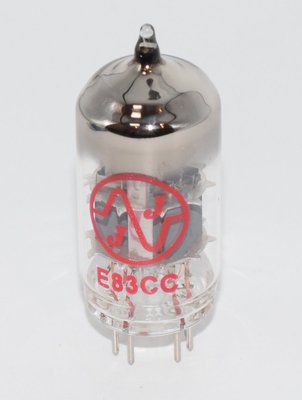
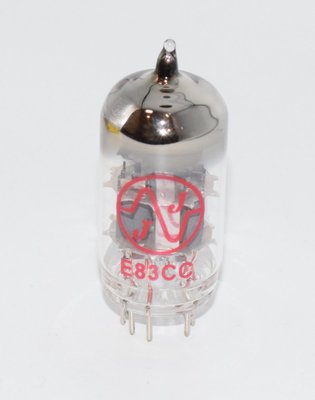
Due to its high gain, the ECC83 can be susceptible to microphony — the tendency to convert mechanical vibrations into electrical signals. This is particularly relevant in the first gain stage of guitar amplifiers and phono preamplifiers. Premium-grade versions (such as the E83CC, ECC803S, and 7025) were specifically developed with enhanced anti-microphonic construction for critical applications.
5. Equivalent and Substitute Types
5.1 Close/Identical Substitutes (Direct Drop-In Replacements)
The following types are electrically identical and directly interchangeable with the ECC83:
- 12AX7 — American RETMA designation; identical in all respects
- 12AX7R — Ruggedized version
- CV492 — UK military designation (as noted in the Tesla datasheet)
- CV10319 — UK military designation
- B339 — Philips designation (as noted in the Tesla datasheet)
5.2 Different Rating Substitutes (Not Necessarily Direct Drop-In)
The following types are related but may have different specifications, tighter tolerances, ruggedized construction, or different maximum ratings. They may require circuit adjustments or may not be suitable in all applications:
- 12AX7A — Improved version with tighter specifications
- 12AX7S — Special quality version
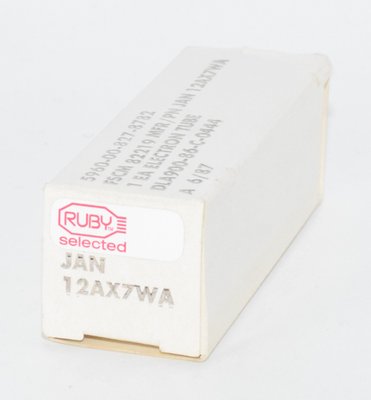
- 12AX7WA — Military ruggedized version
- 5751 / 5751WA / CK5751 — Military-grade with reduced gain (μ ≈ 70 instead of 100); widely used as a lower-gain substitute in guitar amplifiers for a cleaner tone
- 6057 — Premium low-noise version
- 6681 — Selected/premium version
- 7025 — Low-noise, low-hum version specifically designed for audio; reduced microphony
- 7729, 7382, 7494 — Special application variants
- E83CC — Philips/Mullard special quality, long-life version with frame grid construction
- ECC803 / ECC803S — Special quality, selected for low noise and microphony
- ECC863 — Enhanced version
- CV4004 — UK military special quality (equivalent to M8137)
- CV4017 — UK military designation
- CV8156, CV8222, CV8312 — Various UK military designations
- M8137 — Mullard special quality military version
- 6L13 — Related type
- QB339 — Variant of B339
- E2164 — Telefunken designation
- 20EZ7 — Related type (different heater arrangement should be verified)
- 6AX7 — Similar but with different heater arrangement; not a direct substitute without verification
Important Note: The 5751 is the most commonly encountered "substitute" that is not a direct equivalent. Its lower gain (μ ≈ 70 vs. 100) will noticeably affect circuit performance, particularly in guitar amplifiers where it is sometimes deliberately used to reduce preamp gain and achieve a cleaner tone at higher volumes.
6. Notable Characteristics
6.1 Exceptionally High Amplification Factor
With μ = 100, the ECC83 has the highest amplification factor of any commonly available dual triode. This is the fundamental reason for its dominance in preamplifier applications — a single stage can provide practical voltage gains of 30 to 77 depending on circuit configuration.
6.2 Low Current Operation
The ECC83 operates at very low anode currents — typically 0.5 mA at 100V and 1.2 mA at 250V. This means extremely low power consumption and minimal heat generation, but it also means the tube is sensitive to component tolerances and parasitic effects. The maximum cathode current per section is 8 mA.
6.3 High Plate Resistance
The plate resistance of 62.5 kΩ (at Ua = 250V) to 80 kΩ (at Ua = 100V) is relatively high, which means the tube works best with high-impedance loads. This is why plate load resistors of 100 kΩ to 220 kΩ are commonly used, and why the ECC83 is not suitable as a low-impedance driver without a cathode follower buffer.
6.4 Wide Supply Voltage Range
The datasheet provides operating data for supply voltages from 100V to 400V, demonstrating the tube's versatility. The maximum operating anode voltage is 300V, while the cold (no-signal) anode voltage can be as high as 550V. This wide operating range makes the ECC83 adaptable to many different circuit topologies and power supply configurations.
6.5 Grid Current Onset
Grid current begins to flow at approximately Ug1 = −1.3V (for Ig1 ≤ 0.3 μA). This is an important parameter for circuit designers, as it defines the maximum positive grid swing before the tube begins to load the driving source. In guitar amplifier applications, deliberately driving the grid into conduction is a key part of achieving certain overdrive tones.
6.6 Excellent Inter-Section Isolation
The inter-section capacitances are remarkably low (≤ 0.01 pF grid-to-grid, ≤ 0.2 pF anode-to-anode, ≤ 0.03 pF grid-to-anode between sections). This excellent isolation allows both sections to be used in high-gain cascaded configurations without instability or unwanted coupling.
6.7 Comprehensive Characteristic Curves
The Tesla datasheet includes an unusually comprehensive set of characteristic curves:
- Ia = f(Ug1) — Anode current vs. grid voltage at various anode voltages (50V to 300V)
- Ia = f(Ua) — Anode current vs. anode voltage (plate characteristics) at various grid voltages (0V to −4V)
- S, μ, D, Ri = f(Ia) — Transconductance, amplification factor, distortion, and plate resistance as functions of anode current at Ua = 100V, 200V, and 250V
- S = f(Ug1) — Transconductance vs. grid voltage at various anode voltages
- μ, Ri = f(Ug1) — Amplification factor and plate resistance vs. grid voltage at various anode voltages
- S, −Ug1 = f(Ua) — Transconductance and grid voltage as functions of anode voltage at various anode currents
7. Usage in the Audio Community
7.1 Guitar Amplifiers — The Defining Application
The ECC83/12AX7 is, without exaggeration, the most important tube in the guitar amplifier world. It is found in virtually every tube guitar amplifier ever made, from vintage Fender Tweed and Blackface designs to modern high-gain Mesa/Boogie and Bogner amplifiers. Typical usage includes:
- Fender amplifiers: Typically use 3–4 ECC83/12AX7 tubes for the entire preamp section, including input stages, tone stack recovery, reverb driver/recovery, and phase inverter.
- Marshall amplifiers: The classic JTM45, JCM800, and JCM900 designs use 2–3 ECC83/12AX7 tubes in cascaded gain stages and phase inverter configurations.
- Vox amplifiers: The AC30 uses ECC83 tubes in its preamp and tremolo circuits.
- High-gain designs: Modern high-gain amplifiers (Mesa Rectifier, Peavey 5150, etc.) may use 5 or more ECC83/12AX7 tubes in cascaded gain stages to achieve extreme distortion levels.
Guitar players are among the most discerning tube consumers, often experimenting with different brands and vintages of ECC83/12AX7 to fine-tune their tone. NOS (New Old Stock) tubes from manufacturers like Mullard, Telefunken, Amperex, RCA, and Tungsram command premium prices on the vintage market.
7.2 Hi-Fi Preamplifiers
The ECC83 is a staple of high-end tube preamplifier design. Its high gain makes it particularly well-suited for phono stages, where the low output of moving-magnet and moving-coil cartridges requires significant amplification. Classic designs from Marantz (Model 7), McIntosh, Audio Research, and Conrad-Johnson all employ the ECC83/12AX7. Modern manufacturers such as PrimaLuna, Line Magnetic, Cary Audio, and many boutique builders continue to design around this tube.
In hi-fi applications, the tube's low noise performance is critical. Premium versions such as the 7025, E83CC, and ECC803S are preferred for phono stages and other low-level applications where microphony and noise must be minimized.
7.3 Recording Studio Equipment
The ECC83/12AX7 is found in numerous classic and modern recording studio devices:
- Microphone preamplifiers: Many boutique and vintage mic preamps use ECC83 tubes for their gain stages
- Compressors and limiters: Classic designs like the Altec 436 and various Fairchild-inspired units
- Equalizers: Tube-based parametric and graphic equalizers
- DI boxes: Tube direct injection boxes for bass and acoustic instruments
- Tape machine electronics: Many vintage tape machines used ECC83 tubes in their record and playback amplifiers
7.4 Tube Rolling Culture
The ECC83/12AX7 is at the center of the "tube rolling" culture — the practice of swapping different brands and vintages of tubes to alter the sound of an amplifier or preamplifier. Because the ECC83 is the first active element in the signal chain of most tube amplifiers, changes in this position have the most audible effect on the overall sound.
The most sought-after NOS ECC83/12AX7 tubes include:
- Telefunken ECC83 (smooth plates, diamond-bottom logo) — Often considered the finest ECC83 ever made; prized for clarity and detail
- Mullard ECC83 (long plates, Blackburn factory) — Valued for warmth and richness
- Amperex Bugle Boy 12AX7 — Celebrated for musicality and three-dimensional imaging
- RCA 12AX7 long black plates — Sought for warm, smooth character
- GE 5751 — Popular as a lower-gain substitute for a cleaner, more dynamic sound
- Tungsram ECC83 — Increasingly valued for their lively, dynamic character
- Valvo ECC83 (German-made) — Highly regarded, often Philips/Mullard tooling with German quality control
7.5 Current Production
The ECC83/12AX7 remains in active production from several manufacturers:
- JJ Electronic (Slovakia) — ECC83S, widely used in guitar amplifiers
- Electro-Harmonix / Sovtek / Tung-Sol (Russia/New Sensor) — Multiple variants including reissue Mullard and Tung-Sol branded tubes
- Shuguang / Psvane (China) — Various grades including premium "Treasure" series
- TAD (Tube Amp Doctor) — Selected and branded tubes from various manufacturers
The enduring demand for the ECC83/12AX7 ensures it will remain in production for the foreseeable future, cementing its status as the most important small-signal tube in audio history.