1. Introduction and History
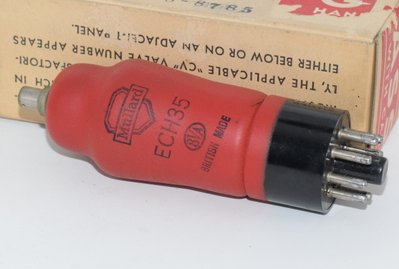
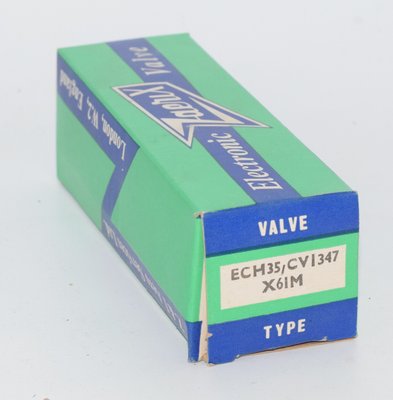
The ECH35 is a European-designed vacuum tube that emerged during the golden age of radio and audio amplification in the 1930s and 1940s. This multi-function tube represents an important milestone in valve technology, combining multiple electrode systems within a single glass envelope to reduce component count and manufacturing costs in radio receivers and early audio equipment.
Developed primarily by European manufacturers including Mullard, Telefunken, and other major valve producers, the ECH35 became a standard component in medium-wave and long-wave radio receivers throughout Europe and other regions. The tube designation follows the European naming convention, where the letters indicate the tube's functional classification and the numbers denote its heater voltage and general characteristics.
The ECH35 was particularly popular during the 1940s and 1950s, finding extensive use in domestic radio sets where its compact design and multi-functional capabilities made it an economical choice for manufacturers. While its use declined with the advent of transistors in the 1960s, the ECH35 remains highly valued by vintage radio restorers, tube enthusiasts, and audio purists who appreciate its sonic characteristics.
2. Technical Specifications and Design
Physical Characteristics
The ECH35 is a noval-based vacuum tube housed in a standard European glass envelope. It features an octal or noval pin configuration depending on the specific variant, with a total height of approximately 85-90mm and a diameter of roughly 25mm. The tube operates on a 6.3V AC heater supply at approximately 0.3A, making it compatible with standard radio receiver power supplies.
Functional Design
The ECH35 is fundamentally a triode-hexode tube, combining:
- A triode section - serving as a local oscillator with a control grid, cathode, and anode
- A hexode section - functioning as a mixer stage with multiple grids and electrodes
This dual-function design allows the ECH35 to simultaneously generate an oscillator signal and mix it with an incoming RF signal, eliminating the need for separate oscillator and mixer tubes in superheterodyne radio receivers.
Pin Configuration
The ECH35 typically features the following pin arrangement (noval base):
- Pin 1: Anode 2 (Hexode)
- Pin 2: Grid 3 (Hexode)
- Pin 3: Grid 2 (Hexode)
- Pin 4: Cathode (Common)
- Pin 5: Grid 1 (Hexode)
- Pin 6: Anode 1 (Hexode)
- Pin 7: Anode (Triode)
- Pin 8: Grid (Triode)
- Pin 9: Heater
Operating Parameters
| Parameter | Typical Value | Unit |
|---|---|---|
| Heater Voltage | 6.3 | V AC |
| Heater Current | 0.3 | A |
| Maximum Plate Voltage (Hexode) | 330 | V |
| Maximum Plate Voltage (Triode) | 330 | V |
| Maximum Grid Voltage | -2 | V |
| Mutual Conductance (Triode) | 1.6 | mA/V |
| Amplification Factor (Triode) | 20 | — |
| Plate Resistance (Triode) | 12,500 | Ω |
Electrical Characteristics
The ECH35 exhibits moderate amplification characteristics with a conversion conductance (for the hexode section) of approximately 1.2 mA/V. The triode oscillator section provides stable frequency generation with good frequency stability due to its relatively low plate resistance and moderate amplification factor.
The tube's noise figure is acceptably low for RF applications, though not exceptional by modern standards. The hexode's sensitivity to input signals makes it suitable for detection of weak RF signals in radio receivers, while the triode section provides reliable oscillation across the medium and long-wave frequency bands.
3. Applications and Usage
Primary Applications
The ECH35 was primarily designed for use in superheterodyne radio receivers, where it served as a combined local oscillator and mixer tube. This application represents the vast majority of ECH35 usage:
- Medium-Wave (MW) Reception - 530-1600 kHz
- Long-Wave (LW) Reception - 150-280 kHz
- Short-Wave (SW) Reception - In some advanced receiver designs
Circuit Configuration
In a typical superheterodyne receiver, the ECH35 would be configured with:
- The hexode section receiving the amplified RF signal from an RF amplifier stage
- The triode section operating as a Colpitts or Hartley oscillator
- The mixed output (IF signal) coupled to an IF amplifier stage
- Automatic Gain Control (AGC) voltage applied to the hexode grids for receiver gain regulation
Secondary Applications
While less common, the ECH35 has been used in:
- Portable radio receivers where space and power consumption were critical
- Military and professional radio equipment during the 1940s-1950s
- Early television tuner circuits in some European TV sets
- Specialized measurement and test equipment
4. Sound Characteristics and Audio Performance
Tonal Quality
Although the ECH35 is primarily an RF/mixer tube rather than an audio output or amplification tube, its contribution to overall receiver sound quality is significant. The tube exhibits:
- Clean, transparent signal conversion - Minimal harmonic distortion in the RF and IF stages
- Good linearity - Accurate mixing of RF and local oscillator signals with minimal intermodulation products
- Low noise floor - Acceptable noise performance for domestic radio reception
- Stable frequency generation - The triode oscillator section produces a stable, drift-free local oscillator signal
Sonic Signature
Receivers employing quality ECH35 tubes (particularly Mullard and other premium manufacturers) are renowned among vintage radio enthusiasts for producing:
- Warm, natural-sounding audio with good midrange clarity
- Smooth treble response without excessive harshness
- Solid bass reproduction with good transient response
- Excellent AM broadcast reception quality
The ECH35's contribution to this sonic character is primarily through its role in clean signal conversion and low-distortion mixing, which preserves the integrity of the received signal for subsequent audio amplification stages.
Comparison with Solid-State Equivalents
Modern semiconductor mixers and oscillators offer superior noise figures and linearity in absolute terms, yet many audio enthusiasts and radio restorers report that well-maintained ECH35-based receivers produce more musically engaging and less fatiguing audio than their transistorized counterparts. This phenomenon is attributed to:
- The tube's gentle compression characteristics under signal overload
- Natural harmonic enhancement in the RF signal path
- The absence of harsh switching noise common in early solid-state designs
- The tube's inherent frequency stability without digital phase-lock loops
5. Use in the Audio Community
Vintage Radio Restoration
The ECH35 holds a special place in the vintage radio restoration hobby. Enthusiasts actively seek original ECH35 tubes from reputable manufacturers like Mullard, Telefunken, and Siemens for several reasons:
- Authenticity - Restorers prefer original tubes to maintain the receiver's historical integrity and original performance characteristics
- Sound Quality - Many believe that original manufacturer tubes, particularly those from premium manufacturers, sound superior to modern reproductions
- Rarity and Collectibility - Certain variants and manufacturer stamps have become collectible, with NOS (New Old Stock) examples commanding premium prices
Audio Enthusiast Community
Within the broader tube audio community, the ECH35 has gained renewed interest:
- Vintage Radio Listening - Enthusiasts actively maintain and use vintage radios equipped with ECH35 tubes for AM/FM reception
- Tube Collecting - The ECH35 is a popular tube for collectors interested in European valve technology
- DIY Audio Projects - Some experimental audio designers have incorporated ECH35 tubes into custom RF front-ends and specialized audio equipment
- Measurement and Analysis - Audio engineers use ECH35 tubes in vintage test equipment and measurement systems
Market and Availability
The ECH35 market has experienced interesting dynamics:
- NOS Availability - Original NOS (New Old Stock) tubes remain available from specialty suppliers, though supplies are gradually diminishing
- Pricing - Premium examples, particularly Mullard variants, command prices of $15-40 USD depending on condition and testing status
- Reproduction Tubes - Modern manufacturers have reintroduced ECH35 production, though these are often viewed with skepticism by purists who question their quality and sonic characteristics
- Testing and Matching - Specialty tube retailers offer testing services to ensure proper operation and matching for stereo applications
Sonic Preferences and Mythology
The ECH35 community exhibits strong preferences for specific manufacturers:
- Mullard ECH35 - Highly regarded for warm, musical characteristics and excellent build quality. British manufacture is valued by enthusiasts.
- Telefunken ECH35 - German tubes are appreciated for reliability and consistent performance
- Siemens ECH35 - Known for good construction and neutral sonic character
- RFT ECH35 - East German tubes are sought by some enthusiasts for their unique characteristics
While some sonic differences between manufacturers are audible and measurable, much of the preference is influenced by subjective perception and the placebo effect inherent in high-fidelity audio pursuits.
Educational and Historical Value
The ECH35 serves important roles in:
- Electronics Education - Students learn about tube circuits and superheterodyne principles using ECH35-based equipment
- Historical Documentation - The ECH35 represents important engineering solutions from the valve era
- Museum Collections - Science and technology museums maintain ECH35 examples as part of radio and electronics history exhibits
6. Equivalent or Substitute Types
Direct Equivalents
The following tubes are considered direct electrical and functional equivalents to the ECH35:
- 6U8 - American equivalent with identical electrical characteristics and pin configuration
- ECH42 - Enhanced version with slightly improved characteristics, though less common
- ECH81 - Later European development with similar functionality
Functional Alternatives
In some applications, the following tubes can serve as alternatives, though modification of the circuit may be required:
- 6L7 - American pentagrid converter with similar mixing characteristics
- ECH21 - Older European equivalent with 4V heater requirement
- EK90 - Alternative mixer configuration
Substitution Considerations
When substituting tubes, the following factors must be considered:
- Heater Voltage - Must match the power supply configuration
- Pin Configuration - Physical compatibility with the socket
- Electrical Characteristics - Gain, impedance, and bias requirements
- Frequency Response - Must be suitable for the intended frequency band
- Noise Performance - Critical for RF applications
7. Notable Characteristics
Design Innovation
The ECH35 represents a significant engineering achievement in miniaturization and integration. By combining triode and hexode functions in a single envelope, manufacturers achieved:
- Reduced component count in receiver designs
- Lower manufacturing costs
- Improved reliability through fewer interconnections
- More compact receiver designs
Reliability and Longevity
The ECH35 is renowned for exceptional reliability:
- Well-designed tubes from quality manufacturers often remain functional after 70+ years
- Minimal cathode poisoning or grid emission issues in properly stored tubes
- Stable performance with minimal drift when operated within specifications
- Excellent mechanical construction with robust electrode support
Frequency Stability
The triode oscillator section exhibits remarkable frequency stability:
- Minimal frequency drift after initial warm-up period
- Good temperature stability due to moderate plate resistance
- Suitable for stable reception across the MW and LW bands
- Adequate for AM reception without need for complex frequency compensation
Intermodulation Performance
The hexode mixer section demonstrates good intermodulation characteristics:
- Moderate conversion gain with acceptable noise figure
- Good selectivity when properly tuned in the IF stage
- Acceptable performance in strong signal environments
- Linear mixing characteristics over the typical signal range
Conclusion
The ECH35 represents an important chapter in radio and vacuum tube history. While its practical applications have largely been superseded by semiconductor technology, the tube maintains significant value within the vintage radio restoration and audio enthusiast communities. Its combination of functional efficiency, reliable performance, and contribution to the sonic character of vintage radio receivers ensures its continued appreciation among those who value the engineering and sound quality of the vacuum tube era.
For collectors, restorers, and audio enthusiasts, the ECH35 remains a quintessential European vacuum tube, embodying the principles of elegant engineering and practical functionality that characterized the golden age of radio. Whether restoring a beloved vintage receiver or exploring the sonic characteristics of tube-based RF circuits, the ECH35 continues to demonstrate why vacuum tubes remain relevant in the modern audio world.