1. Introduction and History
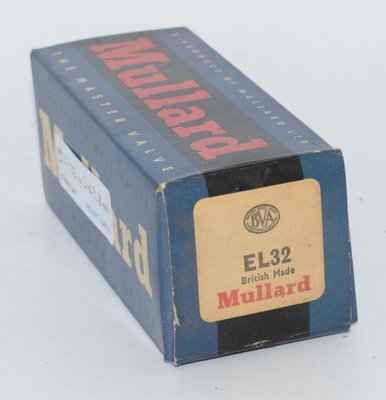
The EL32 is a medium-power pentode vacuum tube that emerged during the golden age of valve amplifier design in the mid-20th century. Developed primarily by European manufacturers, particularly Mullard in the United Kingdom, the EL32 represents a significant milestone in the evolution of audio amplification technology. This tube was designed to fill a specific niche in amplifier design, offering moderate power output with excellent linearity and tonal characteristics.
The EL32 gained prominence in the 1950s and 1960s, appearing in numerous high-quality audio amplifiers, radio receivers, and public address systems. Its development was driven by the need for tubes that could deliver more power than small signal tubes while maintaining the sonic qualities preferred by audio engineers and musicians. The tube's relatively robust construction and reliable performance made it a favorite among manufacturers seeking dependable components for consumer and professional audio equipment.
Today, the EL32 remains highly sought after by vintage audio enthusiasts, tube amplifier designers, and audiophiles who appreciate the warm, musical characteristics these tubes impart to audio systems. Original Mullard UK production EL32s, in particular, have become collector's items, valued for their superior construction and sonic properties.
2. Technical Specifications and Design
Basic Specifications
| Parameter | Value |
|---|---|
| Tube Type | Pentode (Power Amplifier) |
| Heater Voltage | 6.3V AC |
| Heater Current | 0.9A |
| Maximum Plate Voltage | 550V |
| Maximum Plate Dissipation | 12W |
| Maximum Screen Voltage | 550V |
| Typical Output Power | 5-7W (Class A/AB) |
| Amplification Factor (μ) | 8-10 |
| Plate Resistance | 1.2-1.5 kΩ |
| Transconductance (gm) | 7-9 mS |
| Socket Type | Octal (8-pin) |
| Physical Length | Approximately 4.5 inches (114mm) |
Internal Structure and Design Philosophy
The EL32 is constructed as a pentode, meaning it contains five active elements: a cathode, control grid, screen grid, suppressor grid, and plate (anode). This configuration provides several advantages over simpler tube designs:
- Control Grid: Modulates the electron flow from cathode to plate, determining the tube's output signal
- Screen Grid: Accelerates electrons toward the plate while shielding the control grid from plate voltage variations, improving gain and stability
- Suppressor Grid: Prevents secondary emission electrons from the plate from reaching the screen grid, enhancing linearity and reducing distortion
The EL32's design emphasizes thermal stability and linear operation across its operating range. The tube features a robust nickel-plated anode structure capable of dissipating significant heat, and carefully engineered electrode spacing to minimize parasitic oscillation and unwanted resonances.
Electrical Characteristics
The EL32 exhibits excellent linearity in Class A and Class AB configurations. Its relatively low plate resistance (1.2-1.5 kΩ) makes it particularly suitable for driving loudspeaker loads with minimal output transformer impedance mismatch. The tube's moderate amplification factor provides good balance between sensitivity and power output, making it ideal for both small integrated amplifiers and as a driver stage in larger power amplifier designs.
The tube's transconductance of 7-9 mS is sufficient to deliver crisp transient response while maintaining the warm, organic character associated with pentode amplification. This makes the EL32 particularly valued in vintage audio restoration and modern tube amplifier designs that prioritize sonic character.
3. Sound Characteristics
Tonal Profile
The EL32 is renowned among audio enthusiasts for its warm, musical, and highly musical character. Unlike solid-state amplifiers or some modern tube designs that prioritize clinical accuracy, the EL32 imparts a subtle but distinctive coloration to the audio signal that many listeners find deeply pleasing.
Midrange and Presence
One of the most celebrated characteristics of the EL32 is its exceptional midrange performance. The tube delivers vocals and acoustic instruments with remarkable presence and intimacy. The midrange is neither forward nor recessed, but rather sits in a sweet spot that makes it feel natural and engaging. This characteristic has made the EL32 a favorite in vintage guitar amplifiers and high-fidelity audio systems.
Bass Response
The EL32 produces tight, well-defined bass with good articulation. The tube's relatively low plate resistance contributes to its ability to control loudspeaker drivers effectively, preventing the mushy or bloated bass that can occur with some tube designs. Bass notes maintain their shape and definition even at higher output levels, contributing to the overall sense of musical clarity.
Treble and High-Frequency Extension
The treble response of the EL32 is smooth and extended without being harsh or fatiguing. The tube naturally rolls off extreme high frequencies slightly, which many listeners perceive as forgiving and musical rather than a limitation. This characteristic makes the EL32 particularly suitable for systems that might otherwise sound bright or analytical with other tube types.
Harmonic Distortion Character
When operated within its rated specifications, the EL32 produces primarily second and third-order harmonic distortion, which is musically benign and actually adds to the perceived warmth and fullness of the sound. When pushed toward clipping, the distortion remains musical and non-fatiguing, making the EL32 popular in guitar amplifier applications where slight overdrive is desirable.
Dynamics and Transient Response
The EL32 excels at reproducing dynamic contrasts. The tube responds quickly to transient signals, allowing percussive instruments and vocal attacks to come through with immediacy and impact. This dynamic capability, combined with the tube's natural compression characteristics, creates a sense of liveliness and engagement in the listening experience.
Soundstage and Imaging
Amplifiers utilizing EL32 tubes typically exhibit excellent soundstage depth and three-dimensional imaging. The tube's low distortion and good linearity allow spatial cues in recordings to be reproduced with clarity, while the subtle harmonic coloration adds a sense of cohesion and musicality to the overall presentation.
4. Applications and Usage in the Audio Community
Vintage Audio Equipment
The EL32 appears in numerous classic audio amplifiers from the 1950s and 1960s, particularly European designs. Restorers and vintage audio enthusiasts actively seek original Mullard UK EL32s to restore these amplifiers to their original sonic glory. The tube's presence in vintage equipment has contributed significantly to the EL32's continued appreciation among audiophiles.
Guitar Amplifiers
The EL32 has found renewed popularity in boutique and vintage guitar amplifier design. Its warm, musical character and natural breakup characteristics make it ideal for blues, rock, and classic rock applications. Guitar amplifier manufacturers appreciate the EL32's ability to deliver satisfying overdrive at moderate volume levels, making it suitable for both studio and live performance use.
High-Fidelity Integrated Amplifiers
Contemporary tube amplifier designers continue to incorporate EL32s in integrated amplifier designs, particularly in compact, high-quality amplifiers designed for small to medium-sized listening rooms. The tube's moderate power output (5-7W) makes it ideal for efficient loudspeaker designs, which have become increasingly popular in the high-fidelity community.
Preamplifier and Driver Stages
While the EL32 is primarily a power tube, it can be effectively used as a driver stage in larger amplifier designs. Its good linearity and moderate gain make it suitable for bridging the gap between preamplifier stages and power amplifier output stages in complex audio systems.
Audio Restoration and Preservation
Vintage audio restorers consider the EL32 an essential component in their inventory. When restoring classic amplifiers and receivers, sourcing original or high-quality replacement EL32s is often critical to achieving authentic sonic restoration. The tube's relatively common availability in the vintage market makes restoration projects feasible for many enthusiasts.
DIY Amplifier Projects
The EL32 is frequently specified in DIY tube amplifier designs published in audio magazines and online communities. Its moderate power requirements, good documentation, and excellent sonic characteristics make it accessible to hobbyists and enthusiasts building their first tube amplifiers. Numerous proven amplifier designs utilizing the EL32 are available to guide DIY builders.
Professional Audio Applications
In professional audio, the EL32 appears in some vintage mixing console monitor amplifiers and broadcast equipment. While less common in modern professional settings, the tube remains respected for its reliability and sonic characteristics in legacy equipment still in use.
Tube Rolling and Experimentation
Audio enthusiasts engaged in tube rolling—the practice of experimenting with different tube brands and variants to optimize amplifier sound—frequently explore EL32 variants from different manufacturers. Mullard, RFT, Telefunken, and other manufacturers produced EL32s with subtle sonic differences, providing ample opportunity for experimentation and optimization.
5. Equivalent or Substitute Types
Direct Equivalents
- EL84: While slightly lower in power output (5W vs. 7W), the EL84 can serve as a substitute in some applications. However, the EL84 has different electrical characteristics and will require circuit modifications for optimal performance.
- 6V6: The American equivalent of the EL32, sharing similar power output and electrical characteristics. The 6V6 can often be substituted directly, though some circuit optimization may be beneficial.
- EL37: A higher-power variant with similar characteristics, suitable for applications requiring more output power.
Functional Alternatives
- EL34: A more powerful pentode that can substitute in some designs, though it will change the amplifier's characteristics significantly.
- 6L6/5881: American tubes with higher power output, suitable for designs requiring more power than the EL32 provides.
Important Substitution Considerations
While some tubes share similar electrical characteristics with the EL32, direct substitution should only be attempted after careful evaluation of circuit requirements. Different tubes have varying plate resistance, amplification factors, and maximum voltage ratings. Substituting tubes without proper analysis can result in poor performance, reduced amplifier lifespan, or damage to other components.
When considering substitutes, consult the original equipment documentation and seek guidance from experienced tube amplifier technicians. In many cases, the EL32's unique characteristics are integral to the amplifier's design, and substitution may not be advisable.
6. Notable Characteristics
Mullard UK Production
Mullard EL32s, particularly those manufactured in the United Kingdom during the 1950s and 1960s, are highly regarded for their superior construction quality and sonic characteristics. These tubes feature robust construction with carefully selected materials and precise manufacturing tolerances. Mullard UK EL32s command premium prices in the vintage tube market due to their reputation for reliability and exceptional sound quality.
Reliability and Longevity
The EL32 is known for exceptional reliability and long operational life when used within specifications. Many original tubes from the 1950s remain fully functional today, testament to the quality of their construction. This reliability has contributed to the EL32's enduring popularity and availability in the vintage market.
Thermal Characteristics
The EL32 operates at moderate temperatures compared to higher-power tubes, making it suitable for amplifiers with modest cooling requirements. This characteristic has made it popular in compact amplifier designs and in applications where heat dissipation is a concern.
Plate Dissipation and Headroom
With a maximum plate dissipation of 12W, the EL32 provides ample headroom for dynamic audio signals. This allows the tube to handle transient peaks without compression or distortion, contributing to the dynamic and lively character for which it is known.
Low Microphony
Well-designed EL32s exhibit relatively low microphony (susceptibility to vibration-induced noise), making them suitable for high-gain amplifier stages where microphony can be problematic. This characteristic is particularly important in high-fidelity applications where background noise must be minimized.
Impedance Matching Flexibility
The EL32's relatively low plate resistance allows for flexible output transformer design. This characteristic has made it popular in amplifier designs spanning a wide range of output impedances and loudspeaker configurations, from 4-ohm to 16-ohm loads.
Conclusion
The EL32 represents a pinnacle of mid-century tube amplifier design, combining moderate power output with exceptional sonic characteristics and reliability. Whether in vintage audio restoration, contemporary high-fidelity applications, or guitar amplifier design, the EL32 continues to be valued by audio professionals and enthusiasts who appreciate its warm, musical character and robust construction.
The enduring popularity of the EL32, particularly Mullard UK examples, reflects the tube's intrinsic qualities and the deep appreciation many audio enthusiasts have for the sonic character of well-designed tube amplification. For those seeking to restore, design, or simply experience the qualities of classic tube amplification, the EL32 remains an excellent choice that continues to deliver musical satisfaction decades after its original design.