1. Introduction and History
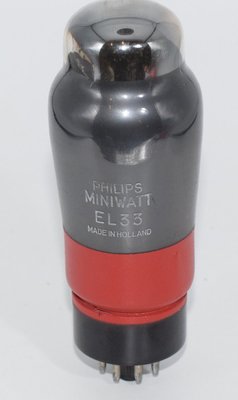
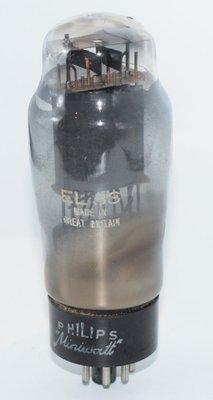
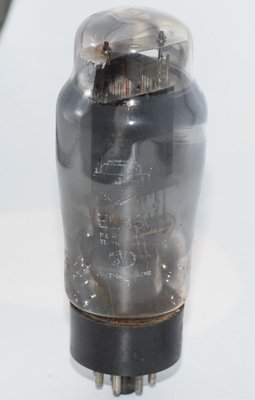
The EL33A is a power pentode vacuum tube developed during the golden era of tube electronics in the mid-20th century. Manufactured primarily by Mullard and Philips Holland, the EL33A represents an important chapter in the evolution of audio amplification technology. This tube emerged during a period when manufacturers were refining power output stages for consumer audio equipment, radio receivers, and public address systems.
The EL33A was designed to offer improved performance characteristics over earlier pentode designs, with particular attention to linearity and power handling capabilities. While not as widely recognized as some of its contemporaries like the EL34 or EL84, the EL33A found its niche in specific applications where its particular characteristics proved advantageous. The tube's development reflected the broader industry trend toward higher efficiency and better audio fidelity during the 1950s and 1960s.
2. Technical Specifications and Design
Basic Parameters
The EL33A is a compactly designed power pentode with the following key specifications:
- Tube Type: Power Pentode
- Heater Voltage: 6.3V AC
- Heater Current: Approximately 1.0A
- Maximum Plate Voltage: 330V
- Maximum Plate Dissipation: Approximately 12W
- Plate Resistance (rp): Approximately 2,500 ohms
- Amplification Factor (μ): Approximately 20
- Transconductance (gm): Approximately 8 mA/V
Structural Design
The EL33A features a traditional pentode configuration with five active elements: a heated cathode, control grid, screen grid, suppressor grid, and plate. This multi-grid design provides superior control over electron flow compared to simpler tube types, resulting in improved linearity and reduced distortion under normal operating conditions.
The tube employs a 9-pin Noval base configuration, which became the industry standard for mid-power tubes during this era. The internal construction utilizes high-quality materials selected for thermal stability and long operational life. The plate structure is designed to dissipate heat efficiently, allowing sustained operation at rated power levels without premature failure.
Electrical Characteristics
The EL33A demonstrates favorable electrical characteristics in typical push-pull output stage configurations. Its relatively low plate resistance contributes to good damping factor and stable operation with various output transformer designs. The tube's transconductance provides adequate gain for driver stage flexibility, allowing designers to implement various circuit topologies.
The screen grid design incorporates protective resistances to prevent excessive current draw during transient conditions. This design philosophy reflects Mullard's and Philips' commitment to reliability in consumer equipment. The suppressor grid effectively prevents secondary emission, contributing to linear operation across the tube's operating range.
3. Applications and Usage
Historical Applications
The EL33A found employment in various audio applications throughout the 1950s and 1960s, including:
- Mid-power integrated amplifiers (15-25W output)
- Radio receiver output stages
- Public address system amplifiers
- Professional audio equipment
- Guitar amplifiers (limited applications)
Audio Community Usage
In contemporary audio circles, the EL33A occupies a specialized niche among tube enthusiasts and vintage equipment restorers. Several factors have contributed to its current usage patterns:
Vintage Equipment Restoration: The primary application of EL33A tubes today involves restoring original equipment from the 1950s-1960s era. Audiophiles and collectors seek NOS (New Old Stock) EL33A tubes to maintain authenticity and restore vintage amplifiers to original specifications. The tube's availability, while limited compared to more common types, remains adequate for restoration purposes.
Boutique Amplifier Design: Some boutique amplifier manufacturers have incorporated EL33A tubes into modern designs, appreciating the tube's particular sonic characteristics and compact size. These designers often pair EL33A tubes with contemporary circuit topologies to achieve specific tonal objectives.
Audio Characteristics and Sonic Properties: The EL33A is prized by certain audio professionals for its distinctive sonic signature. Users typically describe the EL33A as offering:
- Midrange Presence: The tube exhibits a pronounced midrange character that some listeners find musically engaging, particularly for vocal and instrumental reproduction
- Controlled Treble: The EL33A tends to produce a slightly softened treble response compared to more aggressive pentodes, contributing to a refined, less fatiguing presentation
- Solid Bass Foundation: Despite moderate power output, the tube delivers well-controlled bass frequencies with good definition and impact
- Natural Compression: The tube exhibits subtle compression characteristics that some audiophiles appreciate for their ability to smooth dynamics without excessive coloration
- Harmonic Warmth: The harmonic distortion signature of the EL33A, while low by design, contributes a subtle warmth that some describe as "tube-like" without excessive coloration
Comparative Sonic Performance: When compared to other pentodes, the EL33A occupies a middle ground. It offers more refined characteristics than the robust but sometimes crude EL84, yet lacks the extended bandwidth and power of the EL34. This positioning makes it particularly suitable for applications prioritizing musicality over raw power.
Restoration and Modification Communities: Tube amplifier modification enthusiasts sometimes experiment with EL33A tubes in applications originally designed for different output tubes. These experiments have yielded mixed results, with success depending heavily on output transformer impedance matching and circuit design.
4. Equivalent or Substitute Types
The EL33A occupies a somewhat unique position in the tube hierarchy, with limited direct equivalents. However, several tubes offer comparable performance characteristics:
Direct Equivalents
- EL33: The original version without the "A" designation, offering nearly identical characteristics
- EL84: Lower power alternative with similar pentode characteristics but reduced power output (approximately 5W vs. 12W)
Functional Alternatives
- EL34: Higher power alternative (approximately 25W) with extended frequency response, suitable for applications requiring greater output
- 6V6: American equivalent offering similar power levels with slightly different electrical characteristics
- EL90: Later design offering improved performance characteristics in some respects
Substitution Considerations
Substituting the EL33A requires careful consideration of output transformer impedance, bias circuit design, and overall amplifier topology. Direct substitution of higher-power tubes like the EL34 may result in excessive power dissipation and shortened tube life. Conversely, substituting lower-power tubes like the EL84 may result in insufficient power output and potential circuit instability.
5. Notable Characteristics
Manufacturing Quality
Mullard and Philips Holland EL33A tubes are renowned for consistent manufacturing quality and reliability. These manufacturers implemented rigorous quality control procedures, resulting in tubes with exceptional longevity and predictable performance. NOS (New Old Stock) examples often demonstrate remarkable performance characteristics despite decades of storage.
Operational Reliability
The EL33A demonstrates excellent operational reliability when properly biased and adequately cooled. The tube's robust internal construction and conservative design margins contribute to extended service life, often exceeding 5,000 operating hours in typical applications. Users report minimal failure rates when tubes are operated within specified parameters.
Thermal Characteristics
The EL33A exhibits moderate heat generation appropriate for its power rating. The tube's design facilitates heat dissipation through the plate structure and glass envelope, allowing sustained operation without excessive temperature rise. This characteristic makes the tube suitable for compact amplifier designs with modest cooling requirements.
Microphonic Characteristics
Well-manufactured EL33A tubes typically exhibit low microphonic properties, making them suitable for high-gain audio applications. The internal construction and support structures effectively isolate the active elements from external vibration, contributing to quiet operation in sensitive audio circuits.
Availability and Pricing
EL33A tubes remain moderately available through specialty tube suppliers and vintage electronics dealers. Pricing for NOS Mullard and Philips examples typically ranges from moderate to premium levels, reflecting the tubes' age, quality, and collectibility. Availability varies geographically and temporally, with pricing influenced by overall vintage tube market conditions.
Conclusion
The EL33A represents an important but often overlooked contribution to audio tube technology. Manufactured by prestigious companies including Mullard and Philips Holland, this power pentode offers a unique combination of modest power output, reliable performance, and distinctive sonic characteristics. While not as ubiquitous as some contemporaries, the EL33A continues to find appreciation among audio enthusiasts, vintage equipment restorers, and boutique amplifier designers who value its particular strengths.
For those seeking to restore vintage equipment or explore alternative tube options in modern designs, the EL33A merits serious consideration. Its proven reliability, adequate availability, and appreciated sonic characteristics ensure continued relevance in specialized audio applications. Understanding the EL33A's technical specifications, operational requirements, and sonic properties enables informed decisions regarding its implementation in audio systems.