1. Introduction and History
The EL34 is one of the most iconic and widely recognized vacuum tubes in audio history. Originally designed by Philips in the Netherlands during the 1950s, the EL34 quickly became the preferred power amplifier tube for professional audio equipment and high-fidelity applications throughout Europe and eventually worldwide.
The tube designation "EL34" follows the European naming convention, where "E" indicates a European tube, "L" denotes a power pentode, and "34" is the specific type identifier. The EL34 emerged during a golden era of tube amplifier development, coinciding with the rise of high-fidelity audio reproduction and the growing demand for powerful yet musically transparent amplification.
Throughout the 1960s and 1970s, the EL34 became the tube of choice for legendary amplifier manufacturers including Marshall, Mullard, Telefunken, and numerous British and European audio equipment makers. Its reputation was solidified through use in both professional studio equipment and high-end consumer audio amplifiers, establishing a legacy that continues to this day.
2. Technical Specifications and Design
Physical Characteristics
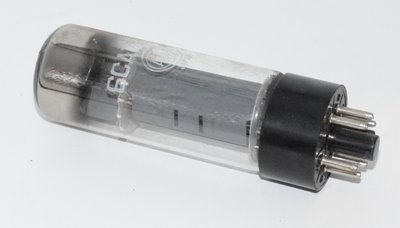
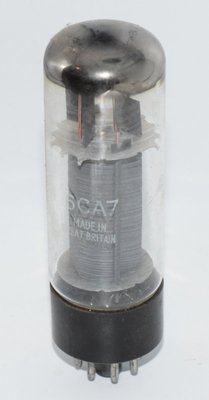
The EL34 is a nine-pin noval tube measuring approximately 3.5 inches (89mm) in height with a standard 9-pin base configuration. The tube features a glass envelope with an internal structure optimized for power amplification applications.
Electrical Specifications
- Tube Type: Power Pentode
- Maximum Plate Voltage: 800V
- Maximum Plate Dissipation: 25W
- Typical Operating Plate Voltage: 500-800V
- Typical Operating Plate Current: 100-150mA per tube
- Amplification Factor: ~9-11
- Plate Resistance: ~1,100-1,500 ohms
- Transconductance (gm): 6-7 mA/V
- Heater Voltage: 6.3V AC
- Heater Current: 1.5A
- Typical Output Power (per tube): 15-25W depending on circuit configuration
Design Features
The EL34 employs a pentode design with five active elements: cathode, control grid, screen grid, suppressor grid, and plate. This configuration provides excellent linearity and power efficiency compared to earlier triode designs. The pentode structure allows for higher voltage operation and greater power output while maintaining reasonable plate resistance.
The internal construction features a robust plate structure designed to handle sustained high temperatures, making the EL34 suitable for continuous operation in demanding amplifier applications. The tube's geometry and grid spacing were carefully engineered to minimize grid current and provide stable operation across a wide range of bias conditions.
Operating Characteristics
The EL34 exhibits excellent linearity in the audio frequency range and demonstrates stable performance under various load conditions. Its plate curves show relatively gentle slopes, contributing to the tube's forgiving nature and musical tonal characteristics. The tube can operate effectively in Class A, Class AB, and Class B configurations, with Class AB being the most common for audio amplifiers.
The EL34's bias stability is a notable feature—the tube maintains consistent performance as it ages, with gradual rather than sudden degradation. This characteristic makes EL34-based amplifiers reliable for extended periods between tube replacements.
3. Applications and Usage
Professional Audio Applications
The EL34 has been extensively used in professional recording studios, mastering facilities, and broadcast environments. Its application in mixing console power supplies, microphone preamplifiers, and monitoring amplifiers established it as a cornerstone of professional audio infrastructure. Many classic recording studios built during the 1960s and 1970s incorporated EL34-based equipment that remains in service today.
High-Fidelity Consumer Audio
In the consumer audio market, the EL34 became synonymous with high-end amplification. Manufacturers such as Quad, Conrad-Johnson, Audio Research, and numerous European brands designed integrated and power amplifiers around the EL34 tube. These amplifiers remain highly sought after by audiophiles and collectors, with vintage examples commanding premium prices.
Musical Instrument Amplification
The EL34 achieved legendary status in the electric guitar amplifier world. Marshall amplifiers, particularly the iconic Marshall 100W amplifier head, utilized EL34 tubes and became inseparable from the sound of rock music. The tube's tonal characteristics—combining power with musical warmth and natural compression—made it the preferred choice for countless musicians and defined the sonic character of numerous classic guitar tones.
Beyond Marshall, numerous other guitar amplifier manufacturers including Hiwatt, Orange, and Mesa/Boogie have incorporated EL34 tubes into their designs, recognizing its unique contribution to musical reproduction.
4. Sound Characteristics of the EL34
Tonal Signature
The EL34 is renowned for its warm, musical tone that many audio professionals and musicians describe as "organic" or "natural." This sonic character stems from several factors inherent to the tube's design and operating characteristics. The tube exhibits a gentle compression characteristic that adds subtle harmonic enhancement to the audio signal, creating a sense of cohesion and musicality that listeners find engaging.
Frequency Response and Harmonic Content
The EL34 produces a smooth, extended frequency response with a slight emphasis in the upper midrange and lower treble regions. This characteristic contributes to a sense of clarity and presence without harshness. The tube's harmonic distortion profile is dominated by lower-order harmonics (primarily 2nd and 3rd harmonics), which are perceived as musical and transparent rather than fatiguing.
When driven into light distortion, the EL34 produces a particularly musical overdrive character, which explains its popularity in guitar amplification. The harmonic generation is smooth and progressive, with the tube resisting abrupt saturation and maintaining tonal definition even at high signal levels.
Dynamic Characteristics
The EL34 demonstrates excellent dynamic performance with fast attack and smooth decay characteristics. The tube responds rapidly to signal transients while maintaining a relaxed, unhurried quality in sustained passages. This dynamic balance contributes to the perception of musical vitality and presence in audio reproduction.
Compression and Saturation Behavior
A distinctive characteristic of the EL34 is its graceful compression behavior. As the signal level increases, the tube exhibits a smooth, progressive compression curve rather than a sharp knee. This means that even when driven hard, the EL34 maintains musical definition and doesn't collapse into a harsh, compressed mass. This characteristic is particularly valued in both studio and live sound applications.
Comparison with Other Power Tubes
Compared to the American 6L6 tube (often used in Fender amplifiers), the EL34 offers a warmer, more midrange-focused tone with greater emphasis on harmonic complexity. Versus the EL84 (a smaller power tube), the EL34 provides greater power output and a deeper, more authoritative bass response. Compared to solid-state amplification, the EL34 imparts a subtle musical enhancement that many listeners find more engaging than the clinical accuracy of transistor-based designs.
5. Usage in the Audio Community
Audiophile and High-End Audio
The EL34 maintains a revered position in the audiophile community. High-end amplifier manufacturers continue to design new equipment around the EL34 tube, with brands such as Audio Research, Conrad-Johnson, Cary Audio, and numerous boutique manufacturers offering EL34-based amplifiers ranging from modest integrated designs to elaborate reference-quality power amplifiers.
Audiophiles appreciate the EL34 for its ability to extract musical detail while maintaining a forgiving, non-fatiguing presentation. The tube's maturity as a design—with decades of refinement and optimization—means that EL34 amplifiers can achieve exceptional performance when properly designed and implemented.
Vintage Equipment Restoration and Collecting
The EL34 has become central to the vintage audio equipment restoration hobby. Collectors actively seek original equipment featuring EL34 tubes, recognizing that properly restored vintage amplifiers often outperform many contemporary designs. The availability of new-production EL34 tubes from various manufacturers has made restoration practical and affordable, keeping classic amplifiers in active use.
Music Production and Recording Studios
Professional recording studios continue to value EL34-based equipment for tracking, mixing, and mastering applications. The tube's musical enhancement and harmonic richness make it particularly valuable for microphone preamplifiers, mixing console outputs, and monitoring systems. Many studios maintain vintage EL34-based equipment specifically for the sonic character it imparts to recordings.
Live Sound and Musical Performance
In live sound applications, the EL34 remains the standard for guitar amplification. Musicians value the tube's responsiveness to playing dynamics and its ability to produce musically satisfying tones across a wide range of gain settings. The EL34's performance under the demanding conditions of live performance—where amplifiers may operate at high temperatures and challenging load conditions for extended periods—demonstrates the tube's robust reliability.
DIY and Enthusiast Communities
The EL34 is a favorite among tube amplifier enthusiasts and DIY builders. The tube's popularity means that comprehensive design information is available, including classic designs from manufacturers like Marshall, Mullard, and others. Hobbyists and small-scale manufacturers continue to design new EL34-based amplifiers, demonstrating the tube's enduring appeal and versatility.
Tube Rolling and Sonic Optimization
A significant practice within the audio community is "tube rolling"—the process of substituting different brands and vintage examples of the same tube type to optimize sonic characteristics. The EL34 is particularly popular for tube rolling due to the significant sonic variations between different manufacturers and production eras. Tubes from manufacturers such as Mullard, Telefunken, GE, Sylvania, and contemporary makers like Tung-Sol and Genalex offer distinct sonic signatures, allowing users to tailor their amplifiers to personal preferences.
6. Equivalent or Substitute Types
Direct Equivalents
- 6L6/5881: American power pentode with similar power output; warmer tone but slightly less detailed
- EL84: European power pentode with lower power output; more aggressive distortion character
- 6V6: American power pentode with lower power; warmer, more compressed tone
- KT77: Modern power pentode with higher power output; cleaner, more extended response
- KT88: Higher-power alternative with greater output and extended bass response
- 6CA7: American equivalent with similar characteristics and pin compatibility
Considerations for Substitution
While various tubes can be substituted for the EL34, direct replacement must consider several factors: pin compatibility, voltage requirements, current draw, and impedance matching. The EL34's 9-pin noval base is shared with several alternatives, but electrical characteristics may differ significantly. Substitution should only be undertaken with careful attention to amplifier design parameters and preferably under the guidance of qualified technicians.
Notable Characteristics
- Robustness: The EL34 is known for reliability and long operational life, with many tubes remaining functional after 30+ years of use
- Flexibility: Suitable for Class A, AB, and B operation; can be configured for various power outputs
- Sonic Maturity: Decades of refinement have resulted in a well-understood tube with predictable performance
- Availability: Excellent availability of new-production tubes from multiple manufacturers ensures continued use
- Cost-Effectiveness: Reasonably priced compared to some alternatives, making EL34 amplifiers accessible to enthusiasts
- Heritage: Rich history and association with legendary equipment enhances its appeal and mystique
Conclusion
The EL34 vacuum tube represents a pinnacle of tube amplifier design, combining robust engineering, musical performance, and versatile application across professional audio, high-fidelity consumer equipment, and musical instrument amplification. Its warm, musical character and reliable operation have secured its position as one of the most respected and widely used power tubes in audio history.
Whether in vintage equipment, contemporary high-end designs, or professional recording studios, the EL34 continues to deliver the musical performance and sonic character that have defined quality audio reproduction for over seven decades. For audio professionals, musicians, and enthusiasts, the EL34 remains the gold standard against which other power tubes are measured.