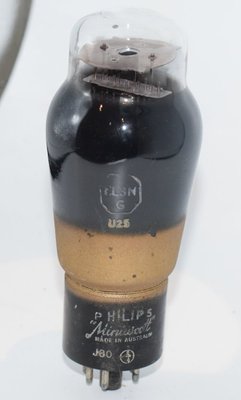
1. Introduction and History
The EL3GN is a power pentode vacuum tube manufactured by Philips Miniwatt in Australia during the valve era, primarily in the 1940s and early 1950s. This tube represents an interesting chapter in Australia's electronic component manufacturing history, as it was part of the localized production of vacuum tubes designed to meet the specific needs of the Australian market.
The EL3GN belongs to the 'EL' series (Eindpentode Leistung) of Philips tubes, which designates power output pentodes. The '3' indicates its position in the series, while the 'G' typically denotes a particular grid construction, and the 'N' suffix was often used to indicate Australian production variants. Philips Miniwatt Australia manufactured these tubes to supply the domestic radio and audio equipment market during a time when importing components was difficult due to trade restrictions and the aftermath of World War II.
2. Technical Specifications and Design
The EL3GN is a power pentode with the following technical specifications:
- Filament/Heater: 6.3V, approximately 0.9A
- Envelope: ST-shaped glass bulb
- Base: Octal (8-pin)
- Structure: Pentode (five active elements: cathode, control grid, screen grid, suppressor grid, and plate/anode)
- Maximum Plate Voltage: 250V
- Maximum Screen Voltage: 250V
- Typical Plate Current: 36mA
- Typical Screen Current: 5mA
- Power Output: Approximately 4-5 watts in single-ended configuration
- Transconductance: Approximately 9-10 mA/V
- Plate Resistance: Approximately 50 kΩ
The design of the EL3GN features a beam-forming plate structure that helps to improve efficiency by directing the electron flow more effectively from the cathode to the anode. This construction also helps to reduce screen current, which improves the tube's power handling capability and efficiency.
3. Applications and Usage
The EL3GN found widespread use in various electronic applications in Australia, including:
- Radio Receivers: As the audio output stage in domestic radio receivers, particularly those manufactured in Australia
- Audio Amplifiers: In single-ended configurations for small to medium-sized audio amplifiers
- Public Address Systems: For moderate power public address systems where reliability was crucial
- Musical Instrument Amplifiers: Some early Australian-made guitar and instrument amplifiers utilized the EL3GN
In typical applications, the EL3GN would be biased for Class A operation in single-ended configurations or Class AB in push-pull arrangements. The tube was known for providing a warm, rich sound characteristic that made it particularly suitable for audio applications where sound quality was important.
4. Equivalent or Substitute Types
While the EL3GN was somewhat specific to the Australian market, there are several tubes that can serve as reasonable substitutes or equivalents:
- EL3: The standard European version without the Australian-specific modifications
- 6F6G: American power pentode with similar characteristics
- 6V6GT: Similar power output capabilities, though with some differences in characteristics
- EL33: Later Philips pentode with comparable specifications
- 6K6GT: Lower-powered alternative that may work in some applications
When substituting tubes, it's important to note that while these alternatives may physically fit and function in circuits designed for the EL3GN, some circuit adjustments might be necessary for optimal performance, particularly regarding bias voltages and output transformer impedances.
5. Notable Characteristics
The EL3GN has several notable characteristics that distinguished it in the market:
- Robustness: The tube was designed to withstand the sometimes harsh operating conditions found in Australia, including higher ambient temperatures and voltage fluctuations
- Sonic Character: Audio enthusiasts often note the EL3GN's warm midrange response and smooth high-frequency characteristics
- Reliability: The Australian Philips Miniwatt production was known for good quality control, resulting in consistent performance and long service life
- Historical Significance: As an Australian-manufactured variant, the EL3GN represents an important part of Australia's electronics manufacturing history
- Collectibility: Due to their relatively limited production compared to international equivalents, EL3GN tubes have become collectible items among vacuum tube enthusiasts and vintage audio equipment restorers
The EL3GN's construction typically featured a more robust internal structure compared to some international equivalents, which contributed to its reliability in the field. This robustness, combined with its pleasant sonic characteristics, has made surviving examples sought after for restoration projects of vintage Australian radio and audio equipment.
For testing purposes, these tubes can be evaluated on standard tube testers like the AVO valve tester, which was a common testing platform in Australia and the UK during the tube era. When properly tested and operated within specifications, these tubes can still provide excellent performance in vintage equipment or modern tube audio designs that accommodate their operating parameters.