1. Introduction and History
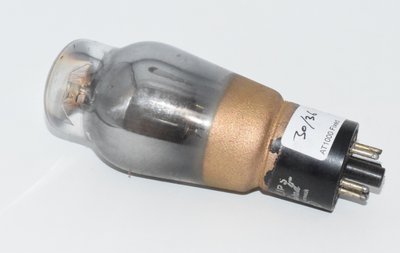
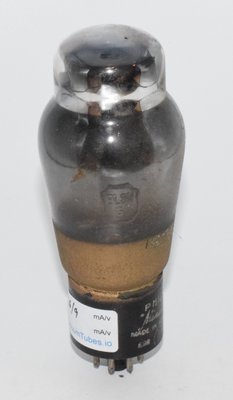
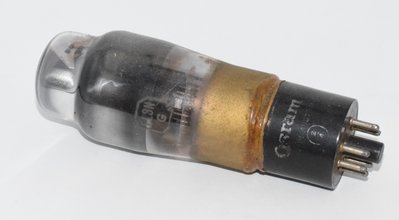
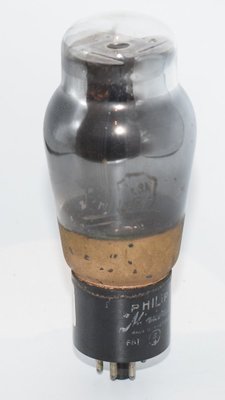
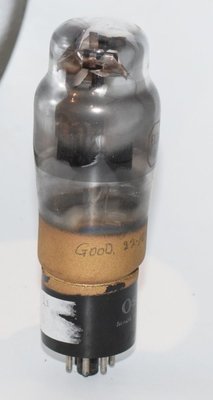
The EL3NG is a power pentode vacuum tube manufactured by Osram Australia, a subsidiary of the British General Electric Company (GEC) that operated in the Australian market during the valve era. Developed in the late 1930s to early 1940s, the EL3NG was part of Osram's 'N' series of valves, with the 'NG' designation indicating it was specifically designed for the Australian market.
The tube was introduced during a period when radio broadcasting was rapidly expanding in Australia, and there was a growing need for reliable audio output tubes that could operate efficiently in the sometimes challenging Australian climate. The EL3NG was designed to meet these requirements, offering robust performance and reliability in various audio applications.
Osram Australia's production of these tubes continued through the golden age of valve electronics, with the EL3NG gaining popularity in domestic radio receivers and audio amplifiers throughout Australia and neighboring regions.
2. Technical Specifications and Design
The EL3NG is a power pentode with the following technical specifications:
- Filament/Heater: 6.3V at approximately 0.9A
- Plate (Anode) Voltage: 250V maximum
- Screen Grid Voltage: 250V maximum
- Control Grid Voltage: -7.5V typical bias
- Plate Dissipation: Approximately 9 watts
- Transconductance: Around 9.5 mA/V
- Output Power: Approximately 4-5 watts in single-ended configuration
- Base: Octal (8-pin)
The EL3NG features a metal envelope design with an octal base, typical of many power tubes of its era. Its internal structure includes a cathode, control grid, screen grid, suppressor grid, and plate arranged in the classic pentode configuration. The suppressor grid is connected to the cathode internally, which helps prevent secondary emission and improves efficiency.
The tube's design emphasizes reliability in variable operating conditions, with particular attention paid to thermal management—a critical consideration for the Australian climate where electronic equipment could be subjected to high ambient temperatures.
3. Applications and Usage
The EL3NG found widespread use in several applications:
- Radio Receivers: The tube was commonly employed as the audio output stage in domestic radio sets, where its power handling capabilities allowed for adequate volume levels in home environments.
- Audio Amplifiers: It served as an output tube in single-ended and push-pull amplifier configurations for both consumer and professional audio equipment.
- Public Address Systems: The EL3NG's power output characteristics made it suitable for small to medium-sized PA systems used in schools, churches, and community halls.
- Guitar Amplifiers: Some Australian-made musical instrument amplifiers utilized the EL3NG for its warm tonal characteristics and reliable performance.
In typical applications, the EL3NG would be biased for Class A or AB operation, with the former providing the best linearity for high-fidelity applications and the latter offering greater power efficiency for applications where maximum output was more important than minimal distortion.
4. Equivalent or Substitute Types
While the EL3NG was somewhat unique to the Australian market, several tubes can serve as potential substitutes with minor circuit adjustments:
- EL3: The standard European version without the 'NG' suffix is electrically similar but may have slight differences in characteristics.
- 6F6G: An American power pentode with similar characteristics, though not an exact match.
- 6V6GT: Another common American power pentode that can substitute in many applications, though it typically has a lower power rating.
- EL84/6BQ5: While smaller and rated for less power, this tube can sometimes substitute in applications where the full power of the EL3NG is not required.
- 6K6GT: Similar characteristics but with lower power handling capability.
When substituting tubes, it's essential to consider not only electrical characteristics but also physical dimensions and pin configurations. Circuit modifications, particularly to bias settings, may be necessary to accommodate different tube types safely.
5. Notable Characteristics
The EL3NG possesses several distinctive characteristics that set it apart from other power pentodes of its era:
- Thermal Stability: Designed specifically for the Australian climate, the EL3NG offers excellent performance stability across a wide temperature range.
- Audio Characteristics: Audiophiles and musicians often note the tube's warm, rich midrange response when used in audio applications, particularly with guitar amplifiers.
- Durability: The robust construction of the EL3NG contributed to its reputation for longevity, with many examples still functioning reliably decades after manufacture.
- Australian Heritage: As a product specifically manufactured for the Australian market, the EL3NG represents an important part of Australia's electronic manufacturing history.
- Collector Value: Due to its relative scarcity outside Australia and its historical significance, well-preserved examples of the EL3NG have become sought after by tube collectors and vintage audio enthusiasts.
The EL3NG's balance of power output, reliability, and sonic characteristics made it a popular choice among Australian radio and amplifier manufacturers during the valve era. Today, these tubes are primarily found in vintage equipment or in the hands of collectors and enthusiasts who appreciate their unique place in audio history.
For those seeking authentic Osram Australia EL3NG tubes for restoration projects or vintage audio systems, it's worth noting that these tubes are increasingly rare, and testing (such as with an AVO tube tester) is essential to verify their condition before use in valuable equipment.