1. Introduction and History
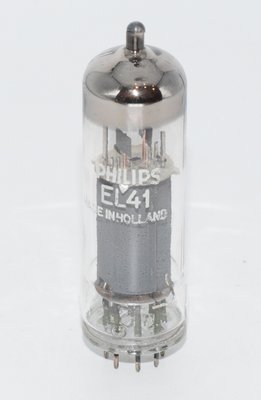
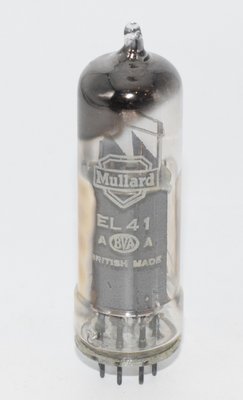
The EL41 is a medium-power pentode vacuum tube that emerged during the post-World War II era of tube development. Designed primarily for audio amplification applications, the EL41 represents an important transition in European tube manufacturing, particularly from British and Dutch manufacturers such as Mullard and Philips.
The tube designation follows the European naming convention, where "EL" indicates a pentode with an indirectly heated cathode suitable for audio applications. The "41" designation reflects its position within the product hierarchy of its era. The EL41 is electrically equivalent to the American 6CK5 tube, making it a valuable component for engineers and enthusiasts working with both European and American vintage equipment.
Developed in the late 1940s and early 1950s, the EL41 found widespread use in medium-powered amplifiers, particularly in British and European radio receivers and early hi-fi amplification systems. Its production continued through the 1960s and into the 1970s, with notable manufacturers including Mullard (UK) and Philips (Holland) producing highly regarded examples of this tube type.
2. Technical Specifications and Design
Physical Characteristics
The EL41 is housed in a standard octal (8-pin) glass envelope, measuring approximately 2.5 inches (63mm) in height with a diameter of about 1 inch (25mm). The tube features a directly heated indirectly-supplied cathode design with a robust construction typical of mid-century European tube manufacturing.
Electrical Specifications
| Parameter | Value | Unit |
|---|---|---|
| Heater Voltage | 6.3 | V AC/DC |
| Heater Current | 0.9 | A |
| Maximum Plate Voltage | 550 | V |
| Maximum Plate Dissipation | 12 | W |
| Plate Resistance (rp) | ~1,200 | Ω |
| Amplification Factor (μ) | ~35 | — |
| Transconductance (gm) | ~28 | mA/V |
| Maximum Plate Current | ~130 | mA |
| Screen Voltage (typical) | 300-350 | V |
| Control Grid Bias (typical) | -8 to -12 | V |
Internal Design and Construction
The EL41 utilizes a five-element structure: a heated cathode, control grid, screen grid, suppressor grid, and plate. This pentode configuration provides superior linearity compared to triodes or tetrodes, with the suppressor grid effectively eliminating secondary emission distortion that plagued earlier tube designs.
The tube features a nickel-plated steel anode structure with excellent heat dissipation characteristics. The grid structure is precisely wound using tungsten wire, providing excellent mechanical stability and thermal characteristics. The mica spacers maintaining grid alignment are of high quality, contributing to the tube's reliability and consistent performance over extended operational periods.
Operating Characteristics
The EL41 operates optimally at plate voltages between 300-500V with screen voltages typically set at 60-70% of the plate voltage. The tube exhibits excellent linearity in the mid-range operating point, making it particularly suitable for audio applications where distortion must be minimized.
The transconductance of approximately 28 mA/V provides adequate gain for use in driver stages or moderate-power output stages. The relatively low plate resistance of around 1,200Ω allows for efficient impedance matching to output transformers, a critical consideration in tube amplifier design.
3. Applications and Usage
Historical Applications
The EL41 was extensively employed in British and European audio equipment throughout the 1950s and 1960s. Primary applications included:
- Radio Receivers: Medium-power output stage in AM/FM radio receivers
- Integrated Amplifiers: Driver and output stages in compact audio amplifiers
- Public Address Systems: Moderate-power amplification for small to medium venues
- Instrument Amplifiers: Guitar and bass amplifier applications
- Hi-Fi Equipment: Early high-fidelity amplification systems
Modern Audio Community Usage
Today, the EL41 enjoys a devoted following within the vintage audio restoration and hi-fi community. Its characteristics make it particularly valuable in several contexts:
Vintage Equipment Restoration: Audiophiles and technicians restoring original British and European amplifiers frequently seek NOS (New Old Stock) EL41 tubes to return equipment to original specifications. The tube's sonic signature is considered integral to the authentic performance of these vintage designs.
DIY Amplifier Projects: Audio enthusiasts engaged in building custom amplifiers appreciate the EL41 for its moderate power output (suitable for headphone amplifiers and low-power integrated designs) and excellent linearity. The 6CK5 equivalent designation allows builders to source tubes from either European or American suppliers.
Boutique Amplifier Manufacturing: Some contemporary boutique amplifier manufacturers incorporate EL41 tubes into new designs, valuing their warm, articulate sonic characteristics for specific applications such as headphone amplifiers and compact integrated amplifiers.
Tube Matching and Rolling: Audio enthusiasts engaged in "tube rolling" (experimenting with different tube brands and types) often explore EL41 examples from different manufacturers, as variations between Mullard, Philips, and other makers produce subtly different sonic characteristics.
4. Sound Characteristics
Sonic Profile
The EL41 is prized in the audio community for its distinctive sonic characteristics that contribute significantly to the tonal signature of vintage equipment:
Midrange Clarity: The EL41 exhibits exceptional midrange clarity and presence, with a natural emphasis in the 1-5 kHz region that enhances vocal intelligibility and instrumental definition. This characteristic made it particularly valued in radio broadcast equipment and public address applications.
Bass Response: The tube produces tight, controlled bass reproduction with good transient response. The moderate plate resistance and good impedance matching characteristics allow for clean bass without bloat or excessive warmth, though the bass is never thin or analytical.
Treble Extension: High-frequency response is smooth and extended, without the harshness or brittleness sometimes associated with more aggressive pentode designs. The treble remains musical and forgiving, particularly with poorly recorded source material.
Harmonic Coloration: The EL41 imparts a subtle but noticeable harmonic coloration characterized as "warm" and "organic." This is primarily due to the tube's natural generation of primarily even-order harmonics, which are generally perceived as musically pleasant. The harmonic distortion, while present, remains low enough to avoid obvious coloration yet pronounced enough to contribute to the tube's characteristic tonal signature.
Dynamic Response: The tube demonstrates good dynamic range and transient response. Percussive instruments maintain their attack and decay characteristics well, while sustained notes exhibit smooth, stable output without motorboating or oscillation artifacts.
Manufacturer Variations: Subtle but audible differences exist between EL41 tubes from different manufacturers. Mullard examples are often described as having slightly more presence and punch, while Philips tubes tend toward a slightly warmer, more laid-back character. These differences, while subtle, are appreciated by discerning listeners and contribute to the popularity of tube rolling among enthusiasts.
5. Equivalent or Substitute Types
The EL41 has several electrical equivalents and near-equivalents that may be employed as substitutes, though each brings slightly different sonic characteristics:
Direct Equivalents
- 6CK5 (American equivalent): Electrically identical to the EL41. American-manufactured examples from RCA, GE, and other makers are directly interchangeable. The 6CK5 was widely used in American equipment and remains relatively available in the used market.
Near-Equivalents
- EL34: A more powerful pentode with higher plate dissipation (25W vs. 12W). While not directly substitutable without circuit modification, some designers have adapted EL34s for use in EL41 applications, though this typically requires reduced operating voltages.
- 6L6: The American equivalent of the EL34, with similar power output and characteristics. Substitution requires circuit modification.
- EL84: A smaller pentode with lower power output (12W plate dissipation, similar to EL41). Some applications allow for direct substitution, though the EL84's different operating characteristics may require adjustment.
- 6V6: American equivalent of the EL84 with similar specifications and interchangeability.
Substitution Considerations
While the 6CK5 is a true direct equivalent requiring no circuit modification, other substitutions should only be attempted by experienced technicians familiar with tube amplifier design. Incorrect substitution can result in excessive plate dissipation, distortion, or even component failure.
6. Notable Characteristics
Reliability and Longevity
The EL41 is renowned for exceptional reliability and long operational life when used within specifications. Examples from quality manufacturers such as Mullard and Philips frequently operate for thousands of hours with minimal degradation. The robust mechanical construction and conservative electrical design contribute to this reputation.
Availability and Pricing
NOS EL41 tubes command moderate to premium prices in the current market, reflecting their desirability among vintage audio enthusiasts. Mullard and Philips examples are particularly sought after, with prices typically ranging from $30-80 per tube depending on condition, testing results, and current market demand. Availability fluctuates based on vintage equipment liquidation and collector interest.
Identification and Authentication
Authentic EL41 tubes from reputable manufacturers display clear printing identifying the manufacturer and often include date codes. Mullard tubes typically feature the characteristic Mullard shield logo and manufacturing codes printed on the glass envelope. Philips examples display the Philips shield and Dutch manufacturing information.
Counterfeit or misidentified tubes occasionally appear in the market, making purchase from reputable dealers essential. Authentic tubes should exhibit consistent construction quality, clear printing, and appropriate weight for the tube type.
Modern Production Status
The EL41 is no longer manufactured by any major tube maker, making NOS examples the only source for new tubes. This scarcity contributes to the tube's value and desirability among collectors and audio enthusiasts. Careful storage and operation within specifications are essential to preserve NOS stock for future use.
Conclusion
The EL41 represents an important chapter in the history of audio tube development, embodying the engineering excellence of mid-century European manufacturers. Its combination of moderate power output, excellent linearity, and distinctive sonic characteristics continues to make it valued by vintage audio enthusiasts and contemporary amplifier designers. Whether restoring original equipment or incorporating the tube into new designs, the EL41 remains a capable and sonically appealing choice for audio applications demanding quality, reliability, and musical performance.