1. Introduction and History
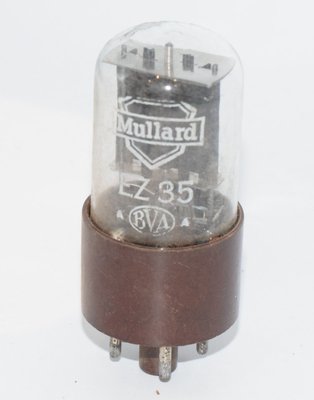
The EZ35 is an indirectly-heated, full-wave vacuum rectifier tube designed for use in AC mains-operated equipment. Manufactured by Mullard (a subsidiary of Philips) and other European valve makers, the EZ35 was developed as part of the Philips/Mullard European valve numbering system. The 'E' prefix denotes a 6.3V heater voltage, the 'Z' designates a rectifier function, and '35' is the type identifier within the series.
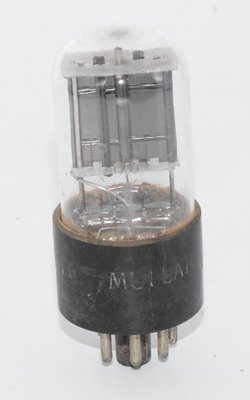
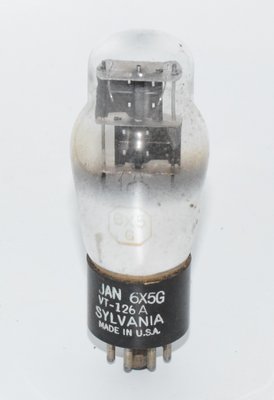
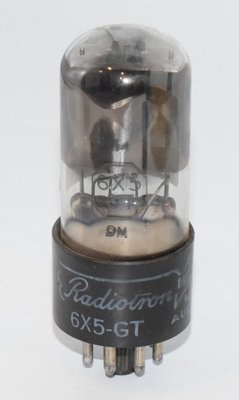
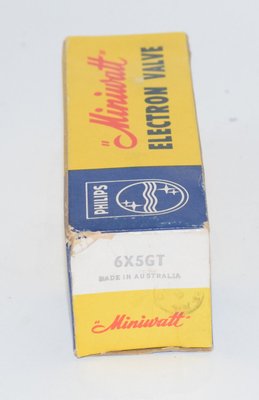
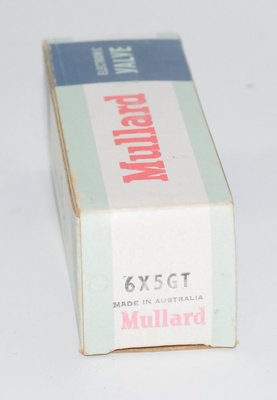
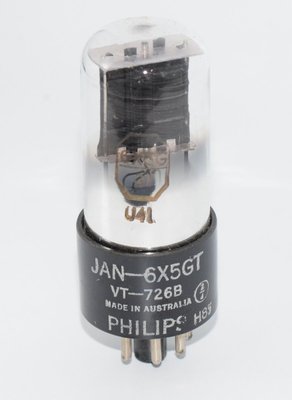
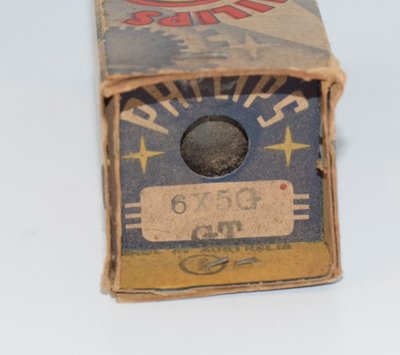
The EZ35 is closely related to the American 6X5GT type, sharing similar electrical characteristics and intended applications. It was widely used in European radio receivers, amplifiers, and other electronic equipment from the late 1940s through the 1960s, providing reliable DC power supply rectification in medium-power circuits. The tube was designed as a replacement for earlier directly-heated rectifiers, offering the advantage of an indirectly-heated cathode which eliminated the need for a separate rectifier heater winding in many designs — the heater could share the same 6.3V supply as the other tubes in the equipment.
Mullard's datasheet (Issue 2, document reference EZ35 1546/1) provides the definitive specifications for this valve, and it remains a sought-after component in vintage audio restoration and new-build tube amplifier power supplies.
2. Technical Specifications and Design
Heater Ratings
| Heater Voltage (Vh) | 6.3 V |
| Heater Current (Ih) | 0.6 A |
Maximum Operating Conditions
| Max. Anode Voltage | 2 × 325 Vrms |
| Max. Rectified Current | 70 mA |
| Max. Voltage, Heater to Cathode | 450 Vpk |
| Max. Capacitance of Reservoir Condenser | 16 µF |
| Min. Value of Limiting Resistance in Series with Each Anode (when reservoir capacitance is 16 µF) | 350 ohms |
Physical Characteristics
| Base Type | Octal (International Octal, IO) |
| Envelope Type | Glass, ST-shape (shouldered tubular) or tubular, depending on manufacturer |
| Maximum Diameter | 33 mm |
| Maximum Overall Height | 93 mm |
| Mounting Position | Any (typically vertical, base down) |
Pin Connections (Octal Base, Bottom View)
Based on the Mullard datasheet pinout diagram:
| Pin | Connection |
|---|---|
| Pin 1 | No connection (key position) |
| Pin 2 | Heater (h) |
| Pin 3 | Heater (h) |
| Pin 4 | Anode 1 (a) |
| Pin 5 | No connection |
| Pin 6 | Anode 2 (a) |
| Pin 7 | No connection |
| Pin 8 | Cathode (k) |
Note: As a rectifier tube, the EZ35 does not have control grids, and therefore specifications such as amplification factor (µ), transconductance (gm), plate resistance (rp), and grid bias range are not applicable to this valve type.
Output Voltage vs. Load Current Characteristics
The Mullard datasheet provides detailed output voltage curves (Vout vs. Iout) for the EZ35 with a 4 µF smoothing condenser at various transformer secondary voltages:
- 350-0-350 Vrms: Approximately 450V DC at low current, dropping to around 395V at 90 mA
- 300-0-300 Vrms: Approximately 390V DC at low current, dropping to around 340V at 90 mA
- 250-0-250 Vrms: Approximately 325V DC at low current, dropping to around 280V at 90 mA
- 200-0-200 Vrms: Approximately 260V DC at low current, dropping to around 200V at 90 mA
- 150-0-150 Vrms: Approximately 190V DC at low current, dropping to around 140V at 90 mA
Note: These values are approximate readings from the published Mullard characteristic curves. The curves show a relatively linear voltage drop with increasing load current, which is characteristic of a well-designed rectifier with moderate internal impedance.
3. Applications and Usage
The EZ35 was designed primarily as a power supply rectifier for AC mains-operated equipment. Its principal applications include:
- Radio Receivers: The EZ35 was widely used in European AM and FM radio receivers of the 1950s and 1960s, providing the B+ DC supply voltage from the mains transformer's high-voltage secondary winding.
- Small to Medium Power Amplifiers: With a maximum rectified current of 70 mA, the EZ35 is well-suited to power supplies for amplifiers using tubes such as the EL84, EL34 (at lower power), 6V6, and similar output valves in single-ended or modest push-pull configurations.
- Test Equipment: Used in laboratory instruments and test equipment where a regulated, clean DC supply was required.
- Preamplifiers and Control Units: The 70 mA current capability is more than adequate for preamplifier circuits, making the EZ35 an excellent choice for dedicated preamplifier power supplies.
The indirectly-heated cathode is a key design feature. Unlike directly-heated rectifiers (such as the 5Y3 or GZ34/5AR4), the EZ35's cathode reaches operating temperature with a slight delay after the heater is energized. This provides a natural "soft start" characteristic — the B+ voltage ramps up gradually as the cathode reaches emission temperature, which can be beneficial in protecting filter capacitors and downstream tube circuits from voltage surges at switch-on.
The requirement for a minimum 350-ohm series resistance per anode (when using the maximum 16 µF reservoir capacitor) is an important design consideration. This resistance limits the peak charging current through the rectifier and protects the cathode coating from damage due to excessive current spikes. In practice, this resistance is often provided by the power transformer's secondary winding resistance, or by adding discrete resistors in series with each anode.
4. Sound Characteristics
While rectifier tubes do not directly amplify the audio signal, they have a significant and well-documented influence on the sonic character of a tube amplifier. The EZ35, as an indirectly-heated rectifier with moderate current capability, imparts specific qualities to the power supply that are reflected in the amplifier's overall sound:
- Gentle Sag and Compression: The EZ35 exhibits a noticeable but controlled voltage drop under load, as clearly shown in its output characteristic curves. This "sag" means that during dynamic musical peaks demanding higher current, the B+ voltage dips slightly, creating a natural, musical compression effect. This is often described as giving music a more "organic" or "breathing" quality compared to solid-state rectification.
- Warm and Smooth Midrange: Users and audiophiles frequently describe the EZ35 as contributing to a warm, smooth midrange presentation. The gradual power supply response tends to soften transient edges slightly, which can be perceived as a more relaxed and less fatiguing listening experience.
- Controlled, Rounded Bass: Due to the inherent impedance of the rectifier and the associated voltage sag, bass response tends to be slightly softer and more rounded compared to amplifiers using solid-state rectification or higher-current rectifier tubes like the GZ34. This characteristic is often preferred for vocal music, jazz, and acoustic genres where an overly tight bass response can sound clinical.
- Natural Dynamics: The interaction between the rectifier's impedance and the amplifier's power demand creates a dynamic response that many listeners find more natural and engaging than the "stiff" supply provided by silicon diodes. Musical dynamics are preserved but with a subtle softening of the hardest transients.
- Sweet Treble: The EZ35 is generally regarded as contributing to a non-harsh, sweet high-frequency character. The slight power supply filtering effect of the tube's internal impedance can reduce high-frequency hash and noise that might otherwise be present.
It should be noted that the sonic influence of any rectifier tube is highly dependent on the overall power supply design, including transformer impedance, filter capacitor values, and choke characteristics. The EZ35's influence is most audible in simpler power supply designs without extensive regulation.
5. Equivalent and Substitute Types
| Type | Equivalence | Notes |
|---|---|---|
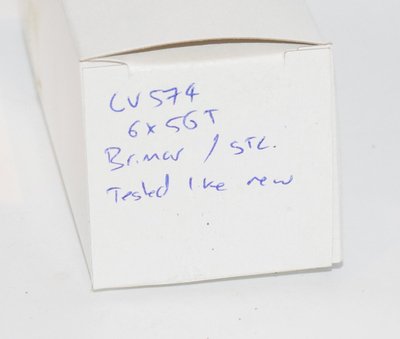
| CV574 | Direct equivalent | UK military (Common Valve) designation for the EZ35. Identical specifications and pinout. Often considered premium quality due to military manufacturing standards. |
| U147 | Direct equivalent | Alternative Mullard/Philips designation. Identical electrically and physically. |
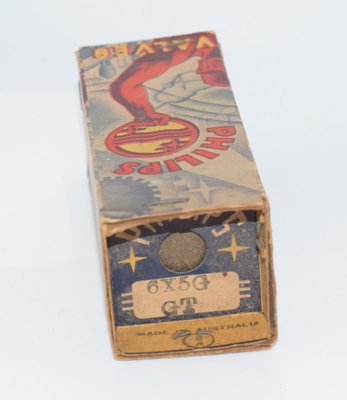
| 6X5GT | Close equivalent | American equivalent type. The EZ35 is frequently cross-referenced with the 6X5GT. Same heater voltage (6.3V), octal base, and similar maximum ratings. The 6X5GT is widely available from American manufacturers (RCA, Sylvania, GE, etc.). Some minor differences in maximum ratings may exist between specific manufacturers' versions — always verify against the specific manufacturer's datasheet. Generally considered interchangeable in most circuits. |
| 6X5 | Close equivalent (earlier version) | The original metal-envelope version of the 6X5GT. Electrically similar but in a metal package. Pin-compatible with the EZ35. |
| EZ35 (Philips) | Identical | Philips-branded versions are identical to Mullard production, often manufactured in the same or sister factories. |
Important Note: The EZ35 should not be confused with the EZ80 (6V4) or EZ81 (6CA4), which are noval-based (9-pin miniature) rectifiers with different pinouts and are not pin-compatible. Similarly, the GZ34 (5AR4), while also an indirectly-heated octal rectifier, has significantly higher current ratings (150 mA vs. 70 mA) and different internal characteristics — substituting a GZ34 for an EZ35 may result in higher B+ voltages due to the GZ34's lower voltage drop, potentially exceeding the ratings of other components in the circuit.
6. Notable Characteristics
- Indirectly-Heated Cathode: The EZ35 uses an indirectly-heated (unipotential) cathode, which is a significant design advantage. This means the cathode is a separate sleeve heated by an internal heater element, allowing the heater to be referenced to ground (or any convenient potential) while the cathode operates at high voltage. This eliminates the need for a separate, isolated heater winding for the rectifier — the 6.3V heater can share the same winding as the rest of the amplifier's tubes.
- High Heater-to-Cathode Voltage Rating: The maximum heater-to-cathode voltage of 450 Vpk is generous and allows the tube to be used in circuits where the cathode (and thus the B+ output) operates at relatively high potentials above ground.
- Soft-Start Behavior: Because the indirectly-heated cathode takes several seconds to reach full emission temperature, the B+ voltage rises gradually at power-on. This inherent soft-start characteristic helps protect electrolytic filter capacitors and extends the life of other tubes in the circuit by avoiding sudden high-voltage application before their cathodes are fully warmed.
- Series Resistance Requirement: The datasheet specifies a minimum 350-ohm limiting resistance in series with each anode when using the maximum 16 µF reservoir capacitor. This is critical for tube longevity — insufficient series resistance can cause cathode stripping due to excessive peak charging currents. Designers must account for this requirement, which is typically met by the power transformer's winding resistance plus any added series resistors.
- Compact Physical Size: At only 33 mm diameter and 93 mm height, the EZ35 is a relatively compact octal tube, making it easy to accommodate in space-constrained chassis designs.
- Dual-Anode Full-Wave Design: The tube contains two diode sections sharing a common cathode, enabling full-wave rectification from a center-tapped transformer secondary. This provides efficient rectification with lower ripple compared to half-wave designs.
- Military Acceptance: The existence of the CV574 military designation indicates that the EZ35 met stringent military reliability and performance standards, a testament to its robust design.
7. Usage in the Audio Community
The EZ35 occupies a respected niche in the vacuum tube audio community, valued both for vintage restoration work and for new amplifier designs where its particular characteristics are desired:
Vintage Restoration
The EZ35 is commonly encountered in European vintage radio receivers and amplifiers from the 1950s and 1960s. Restorers of Mullard, Leak, Rogers, Armstrong, and other British and European equipment frequently seek out original EZ35 or CV574 tubes to maintain authenticity. The tube's reliability and long service life mean that many original examples are still functional decades after manufacture.
Single-Ended Triode (SET) Amplifiers
The EZ35's 70 mA maximum current rating makes it well-suited for single-ended triode amplifiers using tubes like the EL84, 6V6, or smaller triodes. SET amplifier designers often prefer tube rectification for its contribution to the overall sonic character, and the EZ35's moderate sag characteristic complements the SET topology's inherently musical presentation. The natural compression provided by the EZ35 can enhance the perceived dynamics and warmth of SET amplifiers.
Preamplifier Power Supplies
High-end preamplifier builders frequently choose the EZ35 for dedicated preamplifier power supplies. The tube's current capability far exceeds the modest demands of most preamplifier circuits (typically 10–30 mA), meaning it operates well within its ratings with excellent longevity. The tube rectification provides a naturally quiet, smooth power supply that benefits sensitive preamplifier stages.
Guitar Amplifiers
While less common than the GZ34 or 5Y3 in guitar amplifier applications, the EZ35/6X5GT is used in smaller practice amplifiers and low-wattage designs where its 70 mA current limit is not a constraint. Guitar players appreciate the sag and compression characteristics for blues, jazz, and classic rock tones. The tube's natural compression at higher current draws creates a touch-sensitive playing experience that responds dynamically to picking intensity.
DIY and Hobbyist Community
The EZ35 is popular among DIY tube amplifier builders due to its forgiving nature and straightforward application requirements. Its compatibility with standard 6.3V heater supplies (no separate rectifier heater winding needed) simplifies transformer selection and power supply design. The tube is frequently recommended in online forums and build guides for beginners constructing their first tube amplifier power supply.
Availability and Pricing
Original Mullard and Philips EZ35 tubes are available on the vintage market, though they are becoming increasingly scarce. The CV574 military version commands a premium due to its perceived higher quality and tighter manufacturing tolerances. The American equivalent 6X5GT is generally more readily available from NOS (New Old Stock) sources, with examples from RCA, Sylvania, GE, Tung-Sol, and others commonly found. As of recent years, some current-production manufacturers have included the 6X5GT in their product lines, ensuring continued availability for new builds.
Tube Rolling
Audiophiles who enjoy "tube rolling" (swapping different tube brands to explore sonic differences) find that the EZ35/6X5GT family offers interesting variations between manufacturers. Mullard-made EZ35s are often described as having a particularly warm and smooth character, while American-made 6X5GTs from manufacturers like Sylvania or RCA may offer slightly different tonal balances. The CV574 military version is frequently cited as offering the best combination of reliability and sonic quality, though subjective preferences vary widely among listeners.