Introduction and History
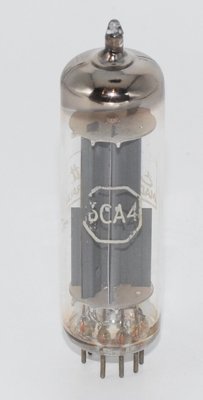
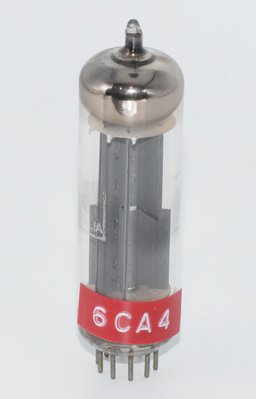
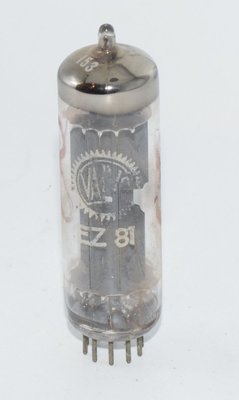
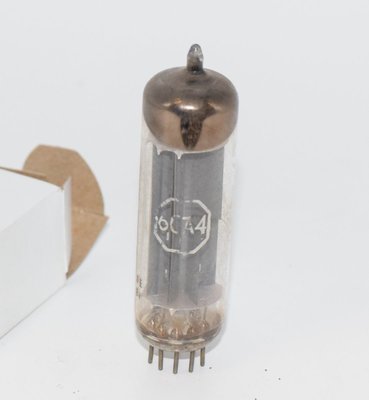
The EZ81, also known by its American designation 6CA4, is a high vacuum double anode (full-wave) rectifying tube developed by Philips in the mid-1950s. The earliest Philips datasheet for this type dates from September 9, 1957, with subsequent revisions through 1961, indicating active development and refinement over several years. The tube was designed as a compact, reliable rectifier for use in power supplies of radio receivers, amplifiers, and other electronic equipment requiring moderate DC output currents.
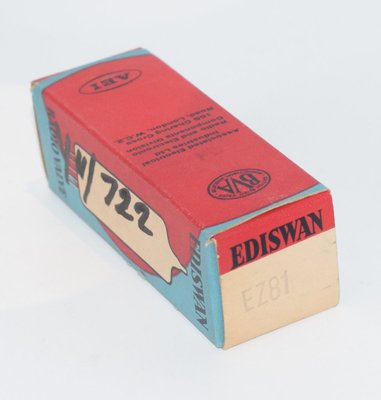
The EZ81 belongs to the European "E" series of tubes (6.3V heater voltage), with the "Z" designating a full-wave rectifier function. It was manufactured by numerous European and international companies including Philips (Miniwatt), Mullard, Valvo, Ediswan, Amperex, Siemens, Telefunken, and many others. The tube represented a significant step forward from earlier octal-based rectifiers like the 5Y3 and 5U4, offering a more compact Noval (B9A) base package with improved performance characteristics.
As a high vacuum rectifier (as opposed to mercury vapor types), the EZ81 offered the advantages of no warm-up delay concerns regarding high-voltage application, no temperature sensitivity, and no need for current-limiting during warm-up — though proper transformer resistance values must still be observed to limit surge currents. Its indirectly heated cathode provided the additional benefit of reduced hum compared to directly heated rectifiers, making it particularly attractive for high-fidelity audio applications.
Technical Specifications and Design
General Description
The EZ81 is a high vacuum double anode rectifying tube with an indirectly heated cathode, designed for full-wave rectification in power supply circuits. It uses parallel heater supply (AC heating).
Heater Ratings
| Parameter | Value |
|---|---|
| Heater Voltage (Vf) | 6.3 V |
| Heater Current (If) | 1.0 A |
| Heating Method | Indirect, by A.C.; parallel supply |
Absolute Maximum Ratings (Limiting Values)
| Parameter | Value | Notes |
|---|---|---|
| Max. Transformer Voltage (Vtr) | 350 Veff | Per anode (from early datasheet) |
| Max. Peak Inverse Voltage (Va inv p) | 1 kV | From early datasheet |
| Max. DC Output Current (Io) | 150 mA | From early datasheet |
| Max. Peak Anode Current (Iap) | 450 mA | From early datasheet |
| Max. Cathode-to-Heater Voltage (Vkf) | 500 V | Cathode positive, heater negative |
Design Centre Limiting Values (Revised Datasheet)
| Parameter | Value |
|---|---|
| Max. Peak Inverse Voltage (Va inv p) | 1.3 kV |
| Max. Peak Anode Current (Ia p) | 500 mA |
| Max. Anode Surge Current (Ia surge) | 1.8 A |
| Max. Cathode-to-Heater Voltage (Vkf, k pos.) | 500 V |
| Max. Filter Capacitor (Cfilt) | 50 µF |
Operating Characteristics — Capacitor Input Filter (Early Datasheet)
| Parameter | Condition 1 | Condition 2 | Condition 3 |
|---|---|---|---|
| Vtr | 2×250 Veff | 2×300 Veff | 2×350 Veff |
| Cfilt | 50 µF | 50 µF | 50 µF |
| Rt (per anode) | 2×150 Ω | 2×200 Ω | 2×240 Ω |
| Io | 150 mA | 150 mA | 150 mA |
| Vo (DC output) | 245 V | 293 V | 347 V |
Operating Characteristics — Capacitor Input Filter (Revised Datasheet)
| Parameter | Condition 1 | Condition 2 | Condition 3 |
|---|---|---|---|
| Vtr | 2×250 Veff | 2×350 Veff | 2×450 Veff |
| Cfilt | 50 µF | 50 µF | 50 µF |
| Rt (per anode) | 2×150 Ω | 2×230 Ω | 2×310 Ω |
| Io | 160 mA | 150 mA | 100 mA |
| Vo (DC output) | 245 V | 352 V | 497 V |
Operating Characteristics — Choke Input Filter
| Parameter | Condition 1 | Condition 2 | Condition 3 |
|---|---|---|---|
| Vtr | 2×250 Veff | 2×350 Veff | 2×450 Veff |
| L (choke inductance) | 10 H | 10 H | 10 H |
| Io | 180 mA | 180 mA | 150 mA |
| Vo (DC output) | 199 V | 288 V | 378 V |
Minimum Transformer Resistance (Rt min, per anode)
| Vtr | Rt min |
|---|---|
| 2×250 Veff | 150 Ω |
| 2×300 Veff | 200 Ω |
| 2×350 Veff | 240 Ω |
Note: The total resistance Rt per anode includes the secondary winding resistance (Rs), the reflected primary resistance (n²Rp), and any additional series resistance (Ra) if used. The formula is: Rt = Rs + n²Rp + Ra. This minimum resistance requirement is critical for limiting peak anode current and surge current at switch-on, protecting the tube's cathode from damage.
Physical Dimensions
| Parameter | Early Version | Later Version |
|---|---|---|
| Maximum Diameter | 22 mm | 22 mm |
| Maximum Seated Height | 60.3 mm (max 66.7 mm overall) | 71.4 mm (max 77.8 mm overall) |
Note: Two physical versions exist in the Philips datasheets. The earlier (1957) version has a shorter envelope with maximum overall height of 66.7 mm, while the later (1960) version is taller at 77.8 mm maximum overall height. Both share the same 22 mm maximum diameter.
Base and Pinout
The EZ81 uses a Noval (B9A) 9-pin miniature base. The pinout is as follows:
| Pin | Connection |
|---|---|
| Pin 1 | Anode (a) |
| Pin 2 | Internal connection (i.c.) |
| Pin 3 | Cathode (k) |
| Pin 4 | Heater/Filament (f) |
| Pin 5 | Heater/Filament (f) |
| Pin 6 | Internal connection (i.c.) |
| Pin 7 | Anode' (a') — second anode |
| Pin 8 | Internal connection (i.c.) |
| Pin 9 | Internal connection (i.c.) |
Important: Pins 2, 6, 8, and 9 are internal connections and must not be connected to external circuitry. The two heater pins are 4 and 5. The cathode is on pin 3, and the two anodes are on pins 1 and 7.
Note: As a rectifier tube, the EZ81 does not have specifications for amplification factor (µ), transconductance (gm), or plate resistance (rp) — these parameters apply to amplifying tubes (triodes, pentodes, etc.) and are not applicable to diode rectifiers. Similarly, there is no grid bias range as the tube contains no control grid.
Applications and Usage
The EZ81 was designed primarily as a full-wave rectifier for power supply circuits in a wide range of electronic equipment. Its principal applications include:
Power Supply Rectification
The tube is used in conventional full-wave rectifier circuits with a center-tapped power transformer. It can be operated with either a capacitor input filter or a choke input filter:
- Capacitor Input Filter: Provides higher DC output voltage but with higher peak currents through the rectifier. With a 50 µF input capacitor and 2×350 Veff transformer, the EZ81 delivers 352 V DC at 150 mA. The minimum transformer resistance requirements must be carefully observed to protect the tube.
- Choke Input Filter: Provides better voltage regulation and lower peak currents, but at a lower DC output voltage. With a 10 H choke and 2×350 Veff transformer, the tube delivers 288 V DC at 180 mA. The choke input configuration is generally preferred for high-quality audio applications due to superior regulation and reduced stress on the rectifier and filter capacitors.
Audio Amplifier Power Supplies
The EZ81 is widely used in the power supplies of vacuum tube audio amplifiers, both integrated amplifiers and preamplifiers. Its 150 mA maximum output current capability makes it suitable for powering push-pull amplifiers using tubes such as the EL84, EL34, 6V6, and 6L6 in moderate-power configurations. Many classic amplifier designs from the 1950s and 1960s specified the EZ81 as their rectifier tube.
Radio Receivers and General Electronics
Originally designed for use in radio receivers and general-purpose electronic equipment, the EZ81 found its way into countless consumer and professional devices requiring a reliable, compact rectifier with moderate current capability.
Design Considerations
When designing with the EZ81, several critical factors must be observed:
- The minimum transformer resistance (Rt min) per anode must be maintained to limit surge current at switch-on. This resistance increases with higher transformer voltages — from 150 Ω at 2×250 V to 240 Ω at 2×350 V (per the early datasheet). If the transformer's inherent resistance is insufficient, external series resistors (Ra) must be added in each anode circuit.
- The maximum filter capacitor is limited to 50 µF. Exceeding this value increases peak charging currents beyond the tube's ratings.
- The cathode-to-heater voltage must not exceed 500 V (cathode positive). This is important when the heater winding is referenced to ground while the cathode sits at a high DC potential.
- The total resistance formula for capacitor input filter is: Rt = Rs + n²Rp + Ra, where Rs is the secondary winding resistance, Rp is the primary resistance, n is the turns ratio, and Ra is any added external resistance.
Sound Characteristics
As a rectifier tube, the EZ81 does not directly amplify the audio signal, yet it has a profound and well-documented influence on the sonic character of the amplifier it powers. Audiophiles and engineers have long recognized that the choice of rectifier tube significantly affects the overall sound of a tube amplifier, and the EZ81 has earned a strong reputation in this regard.
Tonal Character
The EZ81 is generally described as producing a warm, smooth, and musically engaging sound. Compared to solid-state rectification, the EZ81 introduces a subtle softness to transients and a gentle compression effect under dynamic peaks. This is a natural consequence of the tube's internal resistance, which causes a slight voltage sag under heavy current demand — the so-called "sag" effect that many musicians and audiophiles find musically pleasing.
Bass Response
The EZ81's relatively low internal impedance (as evidenced by its Ia/Va characteristic curves showing good linearity up to 250+ mA) provides tighter and more controlled bass compared to higher-impedance rectifiers like the 5Y3 or GZ34 at equivalent current draws. The bass is described as firm and well-defined, without the excessive bloom or looseness that can characterize some directly heated rectifiers.
Dynamics and Headroom
With its 150 mA maximum output current, the EZ81 provides adequate headroom for small to medium power amplifiers. Under dynamic musical passages, the slight power supply sag introduces a natural, gentle compression that many listeners find adds to the musicality of the presentation. This effect is more pronounced than with solid-state rectification but less dramatic than with higher-impedance rectifiers.
Noise Performance
The indirectly heated cathode of the EZ81 is a significant advantage for audio applications. Unlike directly heated rectifiers (such as the 5U4 or 5Y3), the EZ81's cathode is electrically isolated from the heater, resulting in significantly lower hum and noise in the DC output. This makes it particularly well-suited for preamplifier power supplies and any application where low noise is critical.
Brand Variations
Different manufacturers' versions of the EZ81 are reported to exhibit subtle sonic differences, attributed to variations in construction, materials, and manufacturing tolerances:
- Mullard EZ81: Often praised for a rich, warm midrange and smooth top end. Considered among the finest sounding examples.
- Philips/Miniwatt EZ81: Known for excellent balance and neutrality with good dynamics.
- Valvo EZ81: German-made examples are valued for precision and clarity, with tight bass response.
- Ediswan EZ81: British-made NOS examples are sought after for their musical presentation.
- Telefunken EZ81: Diamond-bottom examples are particularly prized by collectors, noted for exceptional clarity and detail.
Equivalent and Substitute Types
The following types are direct equivalents or close substitutes for the EZ81:
Direct Equivalents (Pin-for-Pin Compatible)
| Type | Notes |
|---|---|
| 6CA4 | American (RETMA) designation for the same tube. Fully identical and directly interchangeable. |
| CV3996 | British military (Common Valve) designation. Identical specifications, often to tighter military tolerances. |
| CV5072 | Another British military designation for the EZ81. Directly interchangeable. |
| U709 | Alternative European designation. Directly interchangeable with the EZ81. |
Possible Substitutes (With Caveats)
The following tubes serve a similar function but are not direct drop-in replacements without circuit modifications:
- EZ80 (6V4): A smaller Noval rectifier with the same 6.3V heater but only 0.6A heater current and 90 mA maximum output current. Same base type but lower current capability — can be used as a replacement only if the circuit's current demands are within the EZ80's lower ratings. The pinout is compatible.
- GZ34 (5AR4): A larger rectifier with higher current capability (250 mA) but uses an octal base — completely different socket, not a drop-in replacement. Requires socket change and potentially different transformer heater winding (5V heater for some versions, though the GZ34 also uses 5V/1.9A).
- 5Y3GT: Octal-based, directly heated rectifier — different base, different heater voltage (5V), different characteristics. Not interchangeable.
Important: Only the 6CA4, CV3996, CV5072, and U709 are genuinely interchangeable with the EZ81 without any circuit modifications. Any other substitution requires careful verification of pinout, heater requirements, and electrical ratings.
Notable Characteristics
Indirectly Heated Cathode
One of the EZ81's most significant design features is its indirectly heated cathode. This provides several advantages over directly heated rectifiers:
- Lower hum: The cathode is electrically isolated from the AC heater supply, dramatically reducing 50/60 Hz hum in the DC output.
- Better regulation: The cathode temperature is more uniform, providing more consistent emission characteristics.
- Simplified heater wiring: The heater can share a common winding with other 6.3V tubes in the circuit, eliminating the need for a separate 5V rectifier heater winding.
Compact Noval Package
The use of the 9-pin Noval (B9A) base allows the EZ81 to be significantly smaller than octal-based rectifiers. With a maximum diameter of only 22 mm and seated height under 78 mm, it occupies minimal chassis space — an important consideration in compact amplifier designs.
Internal Connections
Pins 2, 6, 8, and 9 are designated as internal connections (i.c.) in the Philips datasheet. These pins are used internally within the tube structure (likely for cathode and shield connections) and must not be connected to external circuitry. This is an important detail that designers must observe when laying out PCBs or wiring tube sockets.
Voltage Sag Characteristic
The datasheet curves (pages C and D) clearly show the EZ81's voltage regulation characteristics. With a capacitor input filter, the DC output voltage drops significantly as load current increases — for example, at 2×350 Veff with Rt = 2×230 Ω, the output drops from approximately 480 V at no load to 352 V at 150 mA. This "sag" characteristic is inherent to all vacuum tube rectifiers and contributes to the distinctive sound character that audiophiles value.
Dual Datasheet Versions
The Philips datasheet exists in two versions — an earlier version (1957) with a shorter envelope and slightly different ratings, and a later version (1960-1961) with a taller envelope and expanded operating data including choke input filter characteristics. The later version also increased the maximum peak inverse voltage from 1 kV to 1.3 kV (design centre value) and added the 2×450 Veff operating condition. Builders should verify which version of the datasheet applies to their specific tubes.
Current Derating at Higher Voltages
An important characteristic visible in the datasheet is that the maximum allowable output current decreases as transformer voltage increases. At 2×250 Veff, the tube can deliver 160 mA, but at 2×450 Veff with capacitor input, this drops to 100 mA. This derating must be accounted for in power supply design.
Usage in the Audio Community
The EZ81 / 6CA4 occupies an important and beloved position in the vacuum tube audio community. Its combination of compact size, low noise, adequate current capability, and musical sound character has made it a staple in countless audio designs.
Classic Amplifier Designs
The EZ81 was specified in numerous classic amplifier designs from the golden age of tube audio. It appears in many European amplifier designs from manufacturers such as Leak, Rogers, Quad, and others. Its Noval base and 6.3V heater made it particularly convenient in amplifiers that already used other 6.3V Noval tubes (such as the ECC83, ECC82, and EL84), allowing all tubes to share a single heater winding.
Modern DIY and Boutique Amplifiers
In the modern tube audio revival, the EZ81 continues to be widely specified in DIY amplifier projects and boutique commercial amplifiers. It is a popular choice for:
- EL84/6BQ5 push-pull amplifiers: The EZ81's 150 mA current capability is well-matched to a pair of EL84s in push-pull, which typically draw 90-100 mA total plate and screen current.
- Preamplifier power supplies: The low noise of the indirectly heated cathode makes the EZ81 ideal for preamplifier supplies where hum must be minimized.
- Headphone amplifiers: Many tube headphone amplifier designs use the EZ81 for its compact size and adequate current for the modest demands of headphone output stages.
- Single-ended amplifiers: Small single-ended designs using tubes like the EL84, 6V6, or EL34 (at reduced power) can benefit from the EZ81's characteristics.
Guitar Amplifiers
While less common than the GZ34 in guitar amplifiers, the EZ81 does appear in some smaller guitar amp designs, particularly those of European origin. The voltage sag characteristic is appreciated by guitarists for the natural compression and touch sensitivity it imparts to the playing feel. Some boutique guitar amplifier builders specifically choose the EZ81 for lower-powered designs where its 150 mA current limit is not a constraint.
Tube Rolling
The EZ81 is a popular candidate for "tube rolling" — the practice of swapping different brands or vintages of the same tube type to fine-tune the sound of an amplifier. Because the rectifier tube affects the entire amplifier's power supply, changing the EZ81 can produce noticeable differences in the overall sonic presentation. Collectors and audiophiles particularly seek out:
- NOS (New Old Stock) Mullard EZ81 tubes, especially those with the Blackburn factory codes
- Philips/Miniwatt production from the Heerlen (Netherlands) factory
- Valvo production from Hamburg, Germany
- Ediswan NOS examples
- Telefunken diamond-bottom production
Availability and Current Production
Original NOS EZ81 tubes from premium manufacturers command moderate to high prices on the vintage tube market, reflecting their continued demand. Several current-production manufacturers offer new EZ81/6CA4 tubes, including JJ Electronic (Slovakia) and others. While opinions vary on how closely current production matches the sonic qualities of the best NOS examples, modern EZ81s are generally considered reliable and good-sounding tubes that serve well in most applications.
Comparison with Solid-State Rectification
Many modern amplifier designs offer the option of switching between tube rectification (using the EZ81) and solid-state rectification (using silicon diodes). This allows users to compare the sonic differences directly. The consensus in the audio community is that the EZ81 provides a slightly warmer, more relaxed, and more "organic" sound compared to the tighter, more analytical presentation of solid-state rectification. The choice between the two is ultimately a matter of personal preference and musical taste, though purists in the tube audio community generally prefer the all-tube approach with the EZ81 or similar rectifier tubes.