1. Introduction and History
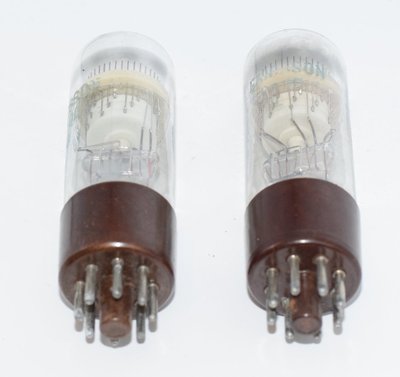
The GC10D (also designated CV.5143) is a cold-cathode, gas-filled, scale-of-ten counter tube — commonly known as a Dekatron. Manufactured by Ericsson Telephones Ltd (under the ETL brand), this tube was developed in the early 1950s in Britain as part of a family of decade counting tubes designed for electronic computing, instrumentation, and scientific measurement equipment. The Dekatron family represented a significant advance in digital counting technology, providing a visible decimal readout combined with reliable electronic counting in a single envelope.
Unlike conventional thermionic valves, the GC10D is a cold-cathode device — it has no heater filament. Instead, it operates on the principle of a gas discharge that can be transferred sequentially between ten cathode positions arranged in a circle. When viewed through the dome of the glass bulb, the glowing discharge visibly indicates which of the ten cathode positions (0–9) is currently active, providing a direct decimal readout without additional display hardware. This made Dekatrons extremely popular in frequency counters, scalers for nuclear physics experiments, industrial counting equipment, and early digital computers such as the WITCH (Wolverhampton Instrument for Teaching Computing from Harwell), which used banks of Dekatrons as its primary memory and arithmetic registers.
The GC10D is specifically designed for single-pulse operation, meaning it advances one position per input pulse. This distinguishes it from double-pulse Dekatrons (such as the GC10B) that require two guide phases to transfer the discharge. The single-pulse design simplifies the drive circuitry, making the GC10D particularly convenient for applications where a straightforward pulse-counting interface is desired.
2. Technical Specifications and Design
Tube Type and Classification
- Type designation: GC10D
- Military/CV designation: CV.5143
- Category: Cold-cathode, gas-filled, scale-of-ten counter tube (Dekatron)
- Operation mode: Single-pulse drive
- Manufacturer: Ericsson Telephones Ltd (ETL)
Limit Ratings
| Parameter | Value |
|---|---|
| Maximum counting rate (any wave shape) | 20 kp/s (kilopulses per second) |
| Maximum total anode current | 1.2 mA |
| Minimum total anode current | 700 µA |
| Minimum anode supply voltage (normal room illumination) | 420 V |
| Maximum potential difference between guides and cathodes | 180 V |
Important note: The output cathode must not rise above the potential of the commoned cathodes by more than 10 volts, and may be made more than 30 volts negative only when resetting.
Characteristics
| Parameter | Value |
|---|---|
| Running voltage at 800 µA | 215 V approx. |
Recommended Operating Conditions
| Parameter | Value |
|---|---|
| Anode current* | 800 µA |
| Output cathode load | 82 kΩ |
| Forced resetting pulse | −140 V |
| Random pulse drive amplitude | −(144 V +50/−12 V) |
| Random pulse drive duration** | 25 µS min. |
| Random pulse drive quiescent time** | 25 µS min. |
| Random pulse drive — guide bias | +72 ± 12 V |
| Sine wave drive amplitude | 65–100 V r.m.s. |
| Sine wave drive — guide bias | +12 ± 2 V |
* The required anode current may be obtained from a 475 V supply via a 330 kΩ resistor.
Note: To reduce the effect of stray capacity to a minimum, it is essential that the anode resistor be wired not more than ¼" (or 5 mm) from tag 4 on the valve holder.
** The maximum is limited by the repetition rate.
Electrical Notes
As a cold-cathode gas-discharge device, the GC10D does not have conventional thermionic valve parameters such as heater voltage/current, amplification factor (µ), transconductance (gm), plate resistance (rp), or grid bias in the traditional sense. The tube operates on gas ionization principles rather than thermionic emission. The "guides" in a Dekatron serve a function analogous to grids but operate on entirely different physics — they steer the gas discharge between cathode positions rather than controlling electron flow from a heated cathode.
Mechanical Data
| Parameter | Value |
|---|---|
| Base type | I.O. (International Octal) |
| Mounting position | Any (for visual indication, view through dome of bulb) |
| Alignment | Cathode "0" is aligned with pin 6 to an accuracy of ± 12° |
| Weight | 44 g (nominal) |
| Escutcheons | N.78211 Bakelite or N.79368 Brass |
| Envelope diameter (max) | 29.5 mm (1.16" max) |
| Overall height | 85 ± 3.5 mm (3.35") |
| Seated height | 70 ± 4 mm (2.75") |
| Base diameter (max) | 29.9 mm (1.175" max) |
| Pin protrusion (max) | 14.75 mm (0.58" max) |
Pin-Out (Base Connections — Underside View)
| Pin | Connection |
|---|---|
| 1 | Common cathodes |
| 2 | 3rd Guides |
| 3 | 1st Guides |
| 4 | Anode |
| 5 | — (No connection) |
| 6 | Output cathode |
| 7 | Output 3rd Guide |
| 8 | 2nd Guides |
The internal structure consists of a single anode surrounded by ten main cathodes arranged in a circle, with three sets of guide electrodes (1st, 2nd, and 3rd guides) interleaved between the cathodes to steer the discharge transfer. The output cathode (pin 6) and output 3rd guide (pin 7) are brought out separately to provide the decade carry-over pulse for cascading multiple tubes.
Recommended Drive Circuit
The datasheet provides a complete application circuit (designated LK122) for both sine-wave and random-pulse drive modes. Key supply voltages are:
- HT supply: +475 V ± 25 V (via 330 kΩ anode resistor)
- Guide supply: +300 V (+10/−20 V)
- Indicator lamp supply: +10 V
- Reset line: −15 V ± 15 V
For random pulse drive: C1 = 0.02 µF, R1 = 1 MΩ, D1 = Q3/3 diode, input amplitude = 145 V (+50/−12 V), duration > 25 µS.
For sine wave drive: C1 sized to suit lowest frequency, R2 = 100 kΩ, amplitude = 65–100 V r.m.s.
3. Applications and Usage
The GC10D was designed primarily for digital counting and scaling applications in scientific, industrial, and military instrumentation:
- Frequency counters: The most common application, where chains of GC10D tubes provided direct visual decimal readout of frequency measurements. Each tube represented one decimal digit, and the carry-over output from one tube drove the next in the chain.
- Nuclear physics scalers: Used extensively in Geiger-Müller counter circuits and scintillation counter systems to count radioactive decay events. The 20 kp/s maximum counting rate was adequate for many radiation measurement applications.
- Industrial counters: Production line counting, batch counting, and event totalizing in factory automation systems of the 1950s and 1960s.
- Early digital computers: The Harwell WITCH computer (1951) and similar machines used Dekatrons as both memory elements and arithmetic registers, exploiting their ability to store a decimal digit as a physical discharge position.
- Timer circuits: When driven by a calibrated oscillator, cascaded Dekatrons could function as precision timers with direct visual readout.
- Scientific instrumentation: General-purpose laboratory counting and measurement equipment where a visible, reliable decimal counter was needed.
The single-pulse operation of the GC10D simplified drive circuitry compared to double-pulse types, making it particularly attractive for applications where circuit simplicity was valued. Multiple GC10D tubes could be cascaded by connecting the output cathode (pin 6) of one stage to the input of the next, with appropriate coupling components.
4. Sound Characteristics
The GC10D is a cold-cathode gas-discharge counting tube, not an amplifying valve. It was never designed for audio signal amplification and possesses none of the conventional characteristics that define audio tube "sound." It has no heater, no thermionic cathode, no control grid in the traditional sense, and no linear amplification region. The device operates as a digital decade counter — it is either conducting at one cathode position or another, with no analog signal processing capability.
As such, the GC10D has no meaningful sonic signature in the way that triodes (such as the 12AX7 or 300B) or pentodes (such as the EL34 or 6L6) do. It cannot be used as a gain stage, output stage, or any other audio amplification function. The gas discharge within the tube does produce a faint audible tick or buzz during operation, and the visible glow has a characteristic warm neon-orange color, but these are operational artifacts rather than audio characteristics.
Any attempt to use a Dekatron in an audio signal path would be fundamentally misguided — the device simply does not function as a signal amplifier. Its charm lies entirely in its visual and digital counting properties rather than any sonic qualities.
5. Equivalent or Substitute Types
The Dekatron family includes several related types, but direct substitution requires careful attention to the drive mode (single-pulse vs. double-pulse) and pinout:
- GC10/4B: An earlier Ericsson single-pulse Dekatron with similar function but potentially different drive requirements. Pin compatibility should be verified against the specific datasheet before substitution.
- GC10D from other manufacturers: Some tubes were manufactured under license or to the same CV.5143 specification by other British manufacturers. These should be directly interchangeable.
- GS10D: A related single-pulse Dekatron variant — verify electrical and pin compatibility before use.
Not directly interchangeable:
- GC10B (CV.2325): This is a double-pulse Dekatron requiring a two-phase guide drive circuit. While physically similar and using the same I.O. base, the drive circuitry is fundamentally different and the two types cannot be swapped without complete circuit redesign.
- OG-4 / OG-3 (Soviet types): Soviet-manufactured Dekatrons with different pinouts, different base types, and different electrical characteristics. Not pin-compatible.
When sourcing replacements, it is critical to match the exact type designation, as the differences between single-pulse and double-pulse Dekatrons make them non-interchangeable despite their similar appearance.
6. Notable Characteristics
- Cold-cathode operation: No heater or warm-up time required. The tube is ready to count as soon as the gas discharge is established, which occurs almost instantaneously when the anode supply is applied.
- Visual decimal readout: The glowing discharge is visible through the dome of the glass envelope, providing a direct human-readable decimal display. The cathode "0" position is aligned with pin 6 to within ± 12°, allowing consistent orientation in panel-mounted applications.
- Single-pulse simplicity: The three-guide internal structure allows the discharge to be advanced by a single input pulse, simplifying external drive circuitry compared to double-pulse types that require two-phase guide signals.
- Cascadability: The separate output cathode (pin 6) and output 3rd guide (pin 7) connections allow straightforward cascading of multiple GC10D tubes for multi-digit counting, with each tube providing a carry pulse to the next decade.
- Moderate counting speed: The maximum counting rate of 20 kp/s was adequate for many instrumentation applications of the era, though faster counting required alternative technologies.
- Long operational life: Cold-cathode tubes generally have very long service lives since there is no heater to burn out and no cathode coating to deplete. Many GC10D tubes remain functional after 60+ years.
- Gas-filled envelope: The tube contains a low-pressure gas mixture (typically neon-based with hydrogen or other additions) that supports the glow discharge. The characteristic orange-neon glow is visually distinctive and appealing.
- Lightweight construction: At only 44 g nominal weight, the GC10D is remarkably light, reflecting its compact glass envelope and absence of heavy internal structures like output transformers or large electrode assemblies.
- Sensitivity to light: The minimum anode supply voltage specification of 420 V applies under "normal room illumination" conditions, as ambient light can affect the ionization characteristics of the gas. In darkness, the tube may require a slightly higher striking voltage or a small radioactive "keep-alive" source (some installations used a small amount of tritium paint near the anode).
7. Usage in the Audio Community
The GC10D Dekatron has found a unique and enthusiastic following in the audio community, though not for any audio signal processing purpose. Its appeal is entirely visual and aesthetic:
Visual Display in Audio Equipment
The most common use of GC10D tubes in audio contexts is as spinning visual indicators in custom-built or modified audio equipment. When driven by a continuous pulse train, the glowing discharge appears to "spin" around the circle of cathodes, creating a mesmerizing rotating light effect visible through the glass dome. Audio enthusiasts have incorporated Dekatrons into:
- VU meter alternatives: By converting audio signal levels into pulse frequencies (using a voltage-to-frequency converter), the spinning speed of a Dekatron can be made proportional to audio signal level. Louder signals produce faster spinning, creating a unique and visually striking level indicator.
- Custom amplifier builds: Some boutique amplifier builders include one or more Dekatrons as purely decorative elements, driven by a simple oscillator circuit. The warm neon glow complements the aesthetic of other vacuum tubes in the chassis.
- Audio-reactive art installations: Artists and makers have used GC10D tubes in installations where music drives the counting rate, creating visual representations of audio content.
The "Nixie Tube" Adjacent Community
The GC10D benefits from the broader resurgence of interest in vintage gas-discharge display technology driven by the Nixie tube clock community. While Dekatrons are functionally different from Nixie tubes (counters vs. numeric displays), they share the same warm gas-discharge glow aesthetic and appeal to the same community of enthusiasts who value vintage electronic components for their visual beauty.
Dekatron clocks — where six or more Dekatrons are cascaded to count seconds, minutes, and hours — are popular DIY projects. The GC10D's single-pulse drive makes it particularly convenient for clock projects, as the drive circuitry can be implemented with simple microcontroller outputs and level-shifting transistors.
Collectibility and Market
GC10D tubes are actively traded among collectors and makers. As new-old-stock (NOS) supplies diminish, prices have risen significantly from their original cost. Pairs and matched sets command premium prices, particularly for clock and display projects that require multiple tubes with consistent brightness and appearance. The Ericsson-branded tubes are especially sought after for their quality and the distinctive ETL logo on the glass envelope.
It should be clearly understood that the GC10D contributes nothing to audio signal quality — it is purely a visual and aesthetic component in audio contexts. Any claims about the GC10D affecting sound quality would be unfounded, as the tube has no interaction with the audio signal path whatsoever.