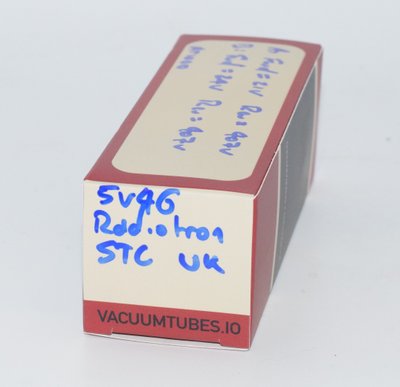
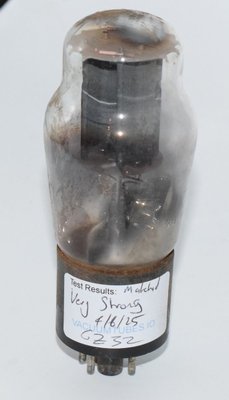
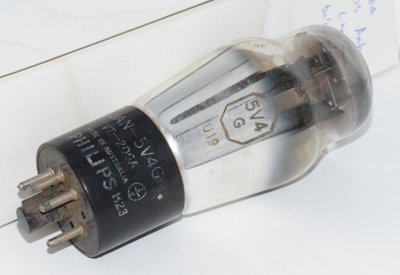
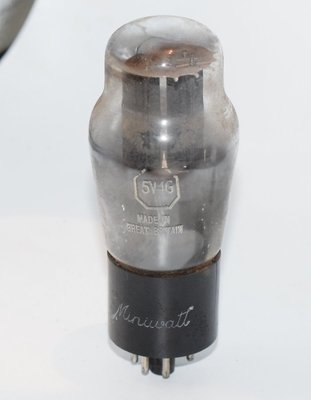
1. Introduction and History
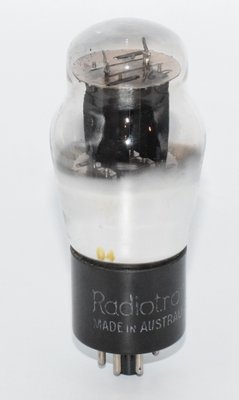
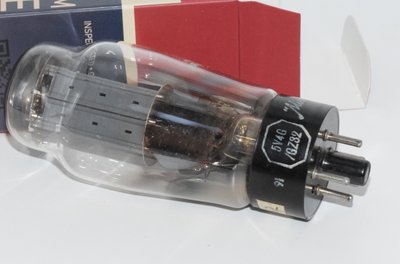
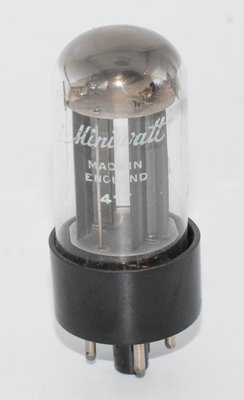
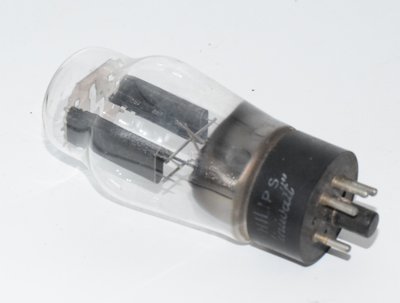
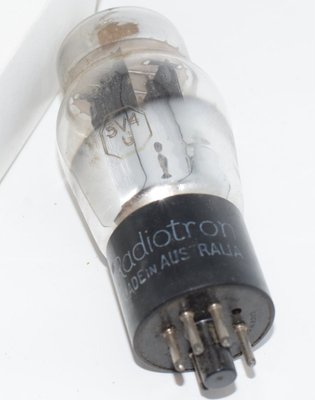
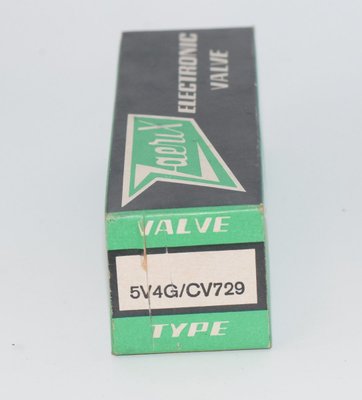
The GZ32 is an indirectly heated, full-wave (double-diode) rectifier vacuum tube designed for high-voltage power supply applications. Classified under the European Mullard–Philips naming convention, the GZ32 carries the American RETMA designation 5V4G (and 5V4GA), reflecting its widespread adoption on both sides of the Atlantic. The tube was manufactured by many of the great European valve houses — Philips Miniwatt, Mullard (at their Mitcham and Tottenham plants), Mazda Belvu (CIFTE, France), Amperex, Valvo, Tungsram, and others — from the early 1950s through the late 1960s and beyond.
The GZ32 was developed as a robust, indirectly heated cathode rectifier capable of delivering substantial current at high voltages, making it ideal for powering amplifiers and receivers that required well-regulated, smooth DC supplies. Its indirect heating gives it a significant advantage over directly heated rectifiers like the GZ34/5AR4: the cathode reaches operating temperature more gradually, providing a "soft start" that is gentler on filter capacitors and downstream circuitry. This characteristic has made the GZ32 a favourite among designers of high-fidelity audio equipment.
The attached Mazda Belvu (CIFTE) datasheet, dated January 1968, provides the definitive French-manufactured specifications for this tube and serves as the primary reference for the data presented in this article.
2. Technical Specifications and Design
General Characteristics
| Parameter | Value |
|---|---|
| Tube Type | Full-wave rectifier (Diode Biplaque / Redresseur double alternance) |
| Cathode Type | Indirectly heated (cathode à chauffage indirect) |
| Filament Connection | Parallel |
| Filament Voltage (Vf) | 5 V |
| Filament Current (If) | 2.3 A |
| Envelope (Ampoule) | T 12-14 |
| Base | Octal (8 C 18-7) |
| Mounting Position | Any (quelconque) |
Maximum Ratings (Average Limits System)
| Parameter | Value |
|---|---|
| Maximum Inverse Anode Voltage (Vai) | 1,400 V max |
| Maximum Rectified Current (Ired) | 300 mA max |
Normal Operating Conditions — Capacitor Input Filter
| Parameter | Condition 1 | Condition 2 | Condition 3 |
|---|---|---|---|
| Anode Voltage (Va) | 2 × 300 V eff | 2 × 350 V eff | 2 × 500 V eff |
| Rectified Current (Ired) | 300 mA | 250 mA | 125 mA max |
| Input Filter Capacitance (CL) | 60 µF | 32 µF | 16 µF max |
| Anode Resistance (Ra) | 150 Ω | 100 Ω | 50 Ω min |
Normal Operating Conditions — Choke Input Filter (10 H inductance)
| Parameter | Condition 1 | Condition 2 |
|---|---|---|
| Anode Voltage (Va) | 2 × 400 V eff | 2 × 500 V eff |
| Rectified Current (Ired) | 300 mA | 250 mA max |
Physical Dimensions
| Parameter | Value |
|---|---|
| Maximum Diameter | 39.7 mm |
| Maximum Seated Height | 84.1 mm |
| Maximum Overall Height (with pins) | 98.4 mm |
Pin-Out (Octal Base, 8 C 18-7)
| Pin | Connection |
|---|---|
| Pin 1 | No connection (Manque) |
| Pin 2 | Filament |
| Pin 3 | No connection (Manque) |
| Pin 4 | Anode No. 1 (Plate 1) |
| Pin 5 | No connection (Manque) |
| Pin 6 | Anode No. 2 (Plate 2) |
| Pin 7 | No connection (Manque) |
| Pin 8 | Filament and Cathode |
Note: As a rectifier tube, the GZ32 has no control grid. Parameters such as amplification factor (µ), transconductance (gm), and plate resistance (rp) in the amplifying sense do not apply. The relevant internal resistance is reflected in the voltage drop curves provided in the datasheet, which show the relationship between rectified output voltage and load current for various filter configurations.
3. Applications and Usage
The GZ32 was designed as a general-purpose high-voltage rectifier for use in radio receivers, television sets, and audio amplifiers. Its principal applications include:
- Power supply rectification in audio amplifiers: The GZ32 is ideally suited to providing B+ voltage for push-pull and single-ended amplifiers using output tubes such as the EL34, KT66, 6L6, EL84, and 6V6. Its 300 mA maximum rectified current capability makes it suitable for medium- to high-power amplifier designs.
- Capacitor-input filter supplies: The datasheet provides detailed operating conditions for capacitor-input filters at voltages from 2 × 300 V to 2 × 500 V eff, with specific limits on filter capacitance and minimum anode resistance to protect the tube from excessive peak currents.
- Choke-input filter supplies: With a 10 H input choke, the GZ32 can operate at higher anode voltages (up to 2 × 500 V eff) while delivering up to 250 mA, making it suitable for high-voltage amplifier designs that benefit from the superior regulation of choke-input filtering.
- Instrument and test equipment power supplies: The tube's robust ratings and reliable operation made it a standard choice in laboratory and industrial equipment.
The indirectly heated cathode design means the GZ32 has a warm-up delay before it begins conducting, which provides a natural time-delayed application of B+ voltage. This is beneficial in protecting electrolytic capacitors and allowing other tubes in the circuit to reach operating temperature before high voltage is applied.
4. Sound Characteristics
While a rectifier tube does not directly amplify the audio signal, it has a profound and often underestimated influence on the sonic character of a tube amplifier. The GZ32 is widely regarded in the audiophile community for the following tonal qualities:
- Warm, rich midrange: The GZ32 is frequently described as producing a lush, full-bodied midrange that gives vocals and acoustic instruments a natural, organic presence. Compared to the more commonly encountered GZ34/5AR4, the GZ32 tends to sound slightly warmer and more romantically voiced.
- Soft, controlled bass: Due to its somewhat higher internal impedance compared to the GZ34, the GZ32 exhibits a slightly "softer" power supply regulation under dynamic load conditions. This translates into bass that is full and rounded rather than tightly damped — a characteristic that many listeners find musically engaging, particularly with jazz, classical, and vocal music.
- Gentle, sweet treble: The high-frequency presentation through a GZ32-rectified supply tends to be smooth and free of harshness. The natural sag of the power supply under transient demands acts as a subtle dynamic compressor, softening aggressive transients and lending a sweetness to the upper registers.
- Natural dynamic "sag": The indirectly heated cathode and the tube's internal resistance create a power supply that responds dynamically to the demands of the output stage. Under heavy signal demands, the B+ voltage dips slightly, creating a gentle compression effect that many guitarists and audiophiles find musically pleasing. This "sag" contributes to a sense of natural dynamics and breathing in the music.
- Excellent imaging and soundstage: High-quality NOS examples from Mullard, Philips Miniwatt, and CIFTE are praised for their ability to present a wide, deep soundstage with precise instrument placement.
It is important to note that the sonic differences between rectifier tubes are subtle and system-dependent. The GZ32's influence is most apparent in amplifiers with minimal power supply regulation (no solid-state voltage regulators) and in single-ended designs where the rectifier's characteristics are less masked by the output stage topology.
5. Equivalent and Substitute Types
| Type | Relationship | Notes |
|---|---|---|
| 5V4G | Direct equivalent (American designation) | Identical electrical specifications. The GZ32 and 5V4G are the same tube under different naming conventions. Pin-compatible, direct drop-in replacement. |
| 5V4GA | Direct equivalent | Updated version of the 5V4G with identical ratings. Fully interchangeable. |
| CV593 | Direct equivalent (British military designation) | The UK military Common Valve (CV) designation for the GZ32/5V4G. Identical specifications, often built to tighter tolerances for military use. |
| GZ31 | Close substitute | Listed as a close/identical substitute. The GZ31 is electrically very similar but users should verify specific voltage and current ratings against the target application, as some sources indicate minor differences in maximum ratings. |
| VT206A | Direct equivalent (US military designation) | American military designation for the 5V4G type. Fully interchangeable. |
Important note on substitution with GZ34/5AR4: The GZ34 (5AR4) is not a direct substitute for the GZ32. While both are indirectly heated full-wave rectifiers on octal bases, the GZ34 has significantly lower internal resistance and higher current capability (typically 250 mA with capacitor input at higher voltages). Substituting a GZ34 into a circuit designed for a GZ32 may result in higher-than-intended B+ voltages due to the lower voltage drop, potentially stressing other components. Conversely, substituting a GZ32 into a GZ34 circuit may result in excessive voltage drop and insufficient current delivery. Always verify compatibility with the specific amplifier design before substituting.
6. Notable Characteristics
- Indirectly heated cathode: Unlike directly heated rectifiers (such as the 5U4G or 5Y3GT), the GZ32 uses an indirectly heated cathode. This provides a slower warm-up time, which acts as a natural time-delay for B+ voltage application — a desirable safety feature that protects filter capacitors and downstream tubes during power-on.
- Robust construction: The T12-14 envelope and sturdy internal construction make the GZ32 a mechanically reliable tube. Its "any position" mounting capability (as specified in the datasheet) adds to its versatility in chassis design.
- Voltage-dependent capacitor limits: The datasheet clearly specifies that the maximum allowable input filter capacitance decreases as the operating voltage increases — from 60 µF at 2 × 300 V down to 16 µF maximum at 2 × 500 V. This is a critical design consideration, as exceeding these limits can cause destructive peak charging currents through the rectifier.
- Minimum anode resistance requirements: Similarly, the minimum series anode resistance increases at lower voltages (150 Ω at 2 × 300 V, 100 Ω at 2 × 350 V, 50 Ω minimum at 2 × 500 V), providing essential current limiting to protect the tube.
- High inverse voltage rating: The 1,400 V maximum inverse anode voltage rating provides a generous safety margin in most practical applications.
- Comprehensive performance curves: The CIFTE datasheet includes detailed graphs showing rectified output voltage (Vred) versus rectified current (Ired) for both capacitor-input and choke-input (10 H) filter configurations at multiple operating voltages, enabling precise power supply design.
7. Usage in the Audio Community
The GZ32 occupies a special and somewhat cult-like position in the high-fidelity audio community. Its appeal stems from several factors:
Vintage Amplifier Restorations
Many classic European amplifiers from the 1950s and 1960s — particularly those from Leak, Rogers, Radford, and various French manufacturers — were originally designed around the GZ32 rectifier. Restorers of these amplifiers seek out original-specification GZ32 tubes to maintain authenticity and the intended sonic character of the design. The Mullard-manufactured GZ32 (from both the Mitcham and Tottenham factories) and the Philips Miniwatt versions are particularly sought after for restorations of British and Continental amplifiers.
Custom and DIY Amplifier Builds
Modern DIY amplifier builders frequently specify the GZ32 in designs where they want the sonic benefits of tube rectification with a moderate voltage drop and the soft-start characteristics of an indirectly heated cathode. It is a popular choice in single-ended triode (SET) amplifiers using 300B, 2A3, or EL34 output tubes, where the rectifier's characteristics are an integral part of the amplifier's voice.
Tube Rolling
The GZ32 is a popular "tube rolling" option for audiophiles who own amplifiers designed for the 5V4G family. Different manufacturers' versions of the GZ32 are known to exhibit subtly different sonic characteristics:
- Mullard GZ32 (UK): Highly prized for their warm, rich tonality and excellent build quality. Mullard examples from the 1950s, particularly those with the characteristic Mullard shield logo, command premium prices.
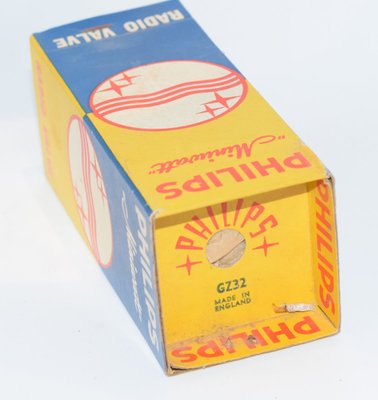
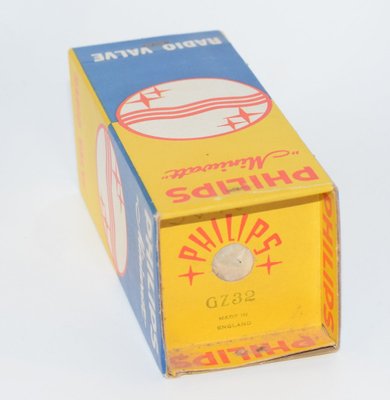
- Philips Miniwatt GZ32: Often manufactured in the same Mullard UK facilities or in Philips' Eindhoven plants, these are considered sonically equivalent to Mullard-branded examples and are equally sought after. NOS sealed-box examples are particularly valuable to collectors.
- CIFTE / Mazda Belvu GZ32 (France): French-manufactured examples are known for a slightly different tonal balance, often described as having a particularly clear and detailed midrange. The CIFTE datasheet attached to this article represents this manufacturing tradition.
- Tungsram GZ32 (Hungary): Some Mullard-branded GZ32 tubes were actually manufactured by Tungsram in Hungary. These are generally considered good-quality tubes with reliable performance, though they may not command the same premium as tubes made in the Mullard UK factories.
Market and Collectibility
NOS (New Old Stock) GZ32 tubes, particularly those from Mullard and Philips Miniwatt in original sealed boxes, are highly collectible and can command significant prices on the vintage tube market. The tube's relative scarcity compared to the more commonly produced GZ34 adds to its desirability. Tested, used examples in good condition also retain strong value, reflecting the ongoing demand from the audio community.
Practical Considerations for Audio Use
When using the GZ32 in audio applications, designers and users should keep the following in mind:
- Respect the maximum filter capacitance limits specified in the datasheet — exceeding 16 µF at 2 × 500 V or 60 µF at 2 × 300 V can damage the tube.
- Ensure adequate series resistance (from the power transformer secondary winding resistance and any added series resistors) to limit peak charging currents.
- The 300 mA maximum rectified current rating makes the GZ32 suitable for amplifiers drawing up to approximately 250–300 mA of total B+ current, which covers most push-pull designs up to around 50 watts.
- The slow warm-up of the indirectly heated cathode means the amplifier will take slightly longer to reach full operating voltage compared to directly heated rectifiers — this is a feature, not a limitation.
- For choke-input filter designs, the GZ32 can operate at higher voltages (up to 2 × 500 V eff) while delivering up to 250 mA, making it an excellent choice for amplifiers that benefit from the superior voltage regulation of choke-input filtering.