1. Introduction and History
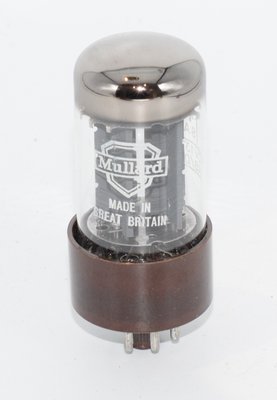
The GZ34, also known by its American RETMA designation 5AR4, is an indirectly heated, full-wave vacuum rectifier tube developed by Mullard (Philips) in the early 1950s. It was designed to meet the growing demand for a high-current, low-voltage-drop rectifier suitable for powering high-fidelity audio amplifiers and other demanding electronic equipment. The tube quickly became the gold standard for rectification in premium audio circuits, and its reputation has only grown in the decades since its introduction.
Mullard's Blackburn factory in Lancashire, England, produced what are widely considered the finest examples of the GZ34, identifiable by their distinctive construction features including copper anodes, thick glass envelopes, and the famous "fat base" or "red base" variants. Philips factories in Eindhoven (Netherlands), Sittard, and Heerlen also produced highly regarded versions, as did the Amperex brand (Philips' American subsidiary). Other notable manufacturers included Mazda, Valvo, Siemens, RFT, and later, various Eastern European and Asian producers.
The GZ34 represented a significant advancement over earlier rectifier designs such as the GZ32 and the directly heated 5U4 and 5Y3 types. Its indirectly heated cathode provided a crucial advantage: a slow warm-up characteristic that allowed the cathode to reach operating temperature gradually, providing a "soft start" that protected filter capacitors and other downstream components from damaging voltage surges. This feature, combined with its high current capability and remarkably low internal voltage drop, made it the rectifier of choice for legendary amplifier designers including David Hafler (Dynaco), Peter Walker (Quad), and many others.
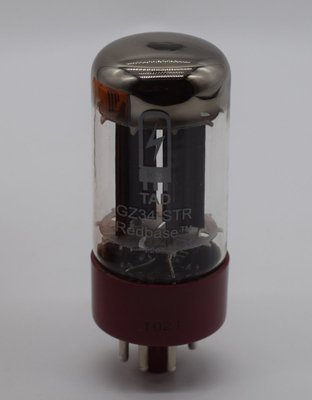
Today, the GZ34/5AR4 remains one of the most sought-after vacuum tubes in the audio world. New-old-stock (NOS) Mullard and Philips examples command premium prices, and several manufacturers — including TAD (Tube Amp Doctor), JJ Electronic, Sovtek, and others — continue to produce new versions to meet ongoing demand from the audiophile and guitar amplifier communities.
2. Technical Specifications and Design
General Description
- Type: Full-wave rectifier (indirectly heated cathode)
- Application: Power supply rectification
- Cathode Type: Indirectly heated (oxide-coated unipotential cathode)
Heater Ratings
- Heater Voltage (Vh): 5.0 V AC
- Heater Current (Ih): 1.9 A
Maximum Ratings (Absolute Maximum Values)
- Maximum RMS Voltage per Plate: 500 V
- Maximum Peak Inverse Voltage (PIV): 1500 V
- Maximum DC Output Current: 250 mA
- Maximum Peak Plate Current (per plate): 750 mA
- Maximum Reservoir (First Filter) Capacitor: 60 µF
Typical Operating Conditions (Full-Wave, Capacitor Input Filter)
| Parameter | Condition 1 | Condition 2 |
|---|---|---|
| RMS Voltage per Plate | 350 V | 450 V |
| DC Output Current | 250 mA | 150 mA |
| Reservoir Capacitor | 60 µF | 60 µF |
| Typical Voltage Drop (per plate) | ~10–15 V | ~8–12 V |
| DC Output Voltage (approx.) | ~380 V | ~500 V |
The GZ34's notably low voltage drop — typically in the range of 10 to 15 volts per plate at 250 mA — is one of its defining characteristics and a key reason for its superiority over competing rectifier types. This low drop means more of the transformer's output voltage is delivered to the amplifier circuit, improving efficiency and reducing wasted power as heat within the rectifier itself.
Note on Amplification Parameters
As a rectifier tube, the GZ34 does not have the signal-amplification parameters associated with triodes, pentodes, or beam tetrodes. It has no control grid, and therefore specifications such as amplification factor (µ), transconductance (gm), plate resistance (rp), and grid bias range are not applicable to this tube type.
Physical Characteristics
- Base Type: International Octal (IO) — 8-pin octal base (Jedec K8A)
- Envelope Type: ST-16 bulb (shouldered glass) or tubular glass, depending on manufacturer and era. Mullard originals typically used a medium-sized shouldered glass envelope.
- Mounting Position: Any (designed for universal mounting orientation)
- Overall Length: Approximately 100–110 mm (varies by manufacturer)
- Maximum Diameter: Approximately 35–38 mm
- Weight: Approximately 50–70 g
Pin-Out (Octal Base, Bottom View)
| Pin | Connection |
|---|---|
| Pin 1 | No Connection (NC) |
| Pin 2 | Heater |
| Pin 3 | No Connection (NC) |
| Pin 4 | Plate 1 (Anode 1) |
| Pin 5 | No Connection (NC) |
| Pin 6 | Plate 2 (Anode 2) |
| Pin 7 | No Connection (NC) |
| Pin 8 | Cathode / Heater |
Note: Pin 2 and Pin 8 are the heater connections, with Pin 8 also serving as the cathode connection. Plates are on Pins 4 and 6. This is the standard octal full-wave rectifier pinout shared by the 5AR4, 5R4, 5U4, and related types.
3. Applications and Usage
The GZ34/5AR4 was designed primarily for use as a power supply rectifier in high-fidelity audio amplifiers, but its excellent performance characteristics have led to its adoption across a wide range of applications:
Audio Amplifiers
The GZ34 is the rectifier of choice in many of the world's most celebrated tube amplifiers. Its high current capacity (250 mA DC) makes it suitable for powering push-pull output stages using tubes such as the EL34, KT66, KT88, 6L6, and 6V6. Classic amplifiers employing the GZ34 include:
- Dynaco ST-70 — Perhaps the most widely sold tube amplifier in history
- Leak Stereo 20 and TL/12+
- Quad II
- Marshall JTM45 and early Bluesbreaker amplifiers
- Hiwatt DR103
- Various Fender, Vox, and Orange amplifier models
- Numerous modern boutique hi-fi and guitar amplifiers
Power Supply Design Considerations
The GZ34's indirectly heated cathode provides a natural "slow start" characteristic. During warm-up, the cathode takes several seconds to reach operating temperature, during which time the B+ voltage rises gradually rather than appearing instantaneously. This behavior:
- Protects electrolytic filter capacitors from voltage surges
- Reduces thermal shock to output tubes and other components
- Eliminates the need for a separate standby switch in many designs (though many amplifiers include one regardless)
- Extends the overall lifespan of the power supply and associated components
Industrial and Instrument Applications
Beyond audio, the GZ34 found use in laboratory power supplies, test equipment, and various industrial electronic instruments where a reliable, high-current rectifier with low voltage drop was required.
4. Sound Characteristics
While a rectifier tube does not directly process the audio signal, it has a profound and well-documented influence on the sonic character of a tube amplifier. The GZ34 is widely regarded as one of the finest-sounding rectifier tubes ever produced, and its sonic signature is frequently described in the following terms:
Tonal Qualities
- Tight, Authoritative Bass: The GZ34's low internal voltage drop and high current capability result in excellent power supply regulation. This translates to firm, well-defined bass response with minimal "sag" — the low-frequency foundation remains solid even during demanding musical passages.
- Dynamic Headroom: The tube's ability to deliver high current with minimal voltage drop means the power supply maintains its voltage under load, providing excellent dynamic range and transient response. Percussive attacks and orchestral crescendos are reproduced with authority and impact.
- Clarity and Transparency: Audiophiles consistently describe the GZ34 as contributing to a clear, transparent, and detailed sound. The low impedance of the rectifier allows the amplifier circuit to perform closer to its theoretical ideal.
- Smooth, Refined Top End: Unlike some directly heated rectifiers that can impart a slightly grainy or rough character to the treble, the GZ34 is praised for its smooth, extended high-frequency response.
- Natural Musicality: Despite its technical excellence, the GZ34 does not sound clinical or sterile. It retains the organic, musical quality that draws listeners to tube amplification in the first place.
Comparison with Other Rectifiers
Compared to the 5U4GB, which has a significantly higher voltage drop and lower current capacity, the GZ34 sounds tighter, more controlled, and more dynamic. The 5U4 tends to produce more "sag" — a compression effect that some guitar players find desirable but that hi-fi listeners generally prefer to minimize.
Compared to solid-state (silicon diode) rectification, the GZ34 provides a subtly softer, more organic presentation. Silicon diodes have essentially zero voltage drop and infinite current capability, resulting in stiffer power supply regulation. While this can sound more precise, many listeners find it less musically engaging than the GZ34's gentle, natural behavior.
NOS vs. New Production
Experienced listeners often note differences between vintage NOS GZ34s and modern production versions. Original Mullard GZ34s (particularly the "fat base" and early "Blackburn" production) are frequently described as having a richer, more three-dimensional soundstage with greater harmonic complexity. Modern production tubes from JJ, Sovtek, and TAD are generally considered very good performers, though some listeners find them slightly less refined in the midrange and treble compared to the finest NOS examples. The TAD Redbase Premium Selected GZ34 is specifically designed to approach the performance of vintage Mullard production, with careful quality control and selection.
5. Equivalent or Substitute Types
The following tubes are genuine equivalents or potential substitutes for the GZ34. However, care must be taken to verify compatibility with the specific amplifier circuit, as electrical characteristics vary between types:
Direct Equivalents
| Type | Notes |
|---|---|
| 5AR4 | American RETMA designation for the GZ34. Electrically and physically identical. Fully interchangeable in all circuits. |
Possible Substitutes (with caveats)
| Type | Notes |
|---|---|
| GZ37 | Mullard/Philips type. Same octal base and pinout. Rated for a maximum DC output current of approximately 250 mA (same as the GZ34). The primary difference is a higher voltage drop compared to the GZ34, which will result in a lower B+ voltage in the amplifier. Can be used as a substitute in many circuits, but the reduced B+ should be considered. May also have different maximum voltage ratings — consult the GZ37 datasheet for the specific application. |
| 5R4 / 5R4GY / 5R4WGB | American directly heated rectifier. Uses the same octal base and standard rectifier pinout (plates on pins 4 and 6, cathode/filament on pin 8). However, the 5R4 is a directly heated type with a significantly higher voltage drop (typically 50+ volts at rated current) and different maximum ratings. It can physically plug into a GZ34 socket, but the substantially lower B+ voltage and different warm-up characteristics must be accounted for. Not a drop-in replacement without circuit evaluation. |
| 5U4 / 5U4G / 5U4GB | Directly heated rectifier with the same octal pinout. Higher voltage drop than the GZ34 (approximately 40–50 V at rated current), which will significantly reduce B+ voltage. Also has a faster warm-up due to its directly heated filament, which may stress filter capacitors in circuits designed for the GZ34's slow-start characteristic. Can be used in some circuits but is not a direct equivalent — verify transformer ratings and expected B+ voltage before substituting. |
| GZ33 | Philips/Mullard type with similar characteristics to the GZ34 but with a rimlock (B8A) base rather than an octal base. Not physically interchangeable without a socket adapter. |
| GZ32 | Earlier Mullard/Philips rectifier. Uses a rimlock (B8A) base — not physically compatible with octal sockets. Lower current rating than the GZ34. Not interchangeable without an adapter and circuit verification. |
Important Note: When substituting any rectifier tube, always verify that the replacement tube's maximum voltage ratings, current ratings, and voltage drop characteristics are compatible with the specific amplifier circuit. Substituting a tube with a significantly different voltage drop will change the B+ voltage, which affects bias points, power output, and component stress throughout the amplifier. Substituting a directly heated rectifier for the indirectly heated GZ34 eliminates the slow-start feature and may require a standby switch to protect filter capacitors.
6. Notable Characteristics
The Indirectly Heated Cathode Advantage
The GZ34's indirectly heated cathode is perhaps its single most important design feature. Unlike directly heated rectifiers (such as the 5U4, 5Y3, and 5R4), where the filament itself serves as the electron-emitting surface, the GZ34 uses a separate heater element to warm an oxide-coated cathode sleeve. This design provides several critical advantages:
- Slow Warm-Up / Soft Start: The thermal mass of the cathode sleeve means it takes approximately 10–15 seconds to reach full operating temperature. During this time, the B+ voltage rises gradually, protecting capacitors and other components.
- Low Voltage Drop: The large, uniformly heated cathode surface provides efficient electron emission with minimal internal resistance, resulting in the characteristically low voltage drop of 10–15 volts at full rated current.
- Reduced Hum: Because the cathode is electrically separate from the heater, AC ripple from the heater supply does not directly modulate the rectified output, resulting in lower hum levels compared to directly heated designs.
Exceptional Longevity
Well-made GZ34s are renowned for their long operational life. Original Mullard and Philips production tubes routinely deliver 10,000+ hours of reliable service, and many NOS examples from the 1950s and 1960s continue to test and perform like new. The robust construction of vintage examples — featuring heavy copper plate structures, thick glass envelopes, and carefully processed cathode coatings — contributes to this remarkable durability.
Construction Variations
Over its long production history, the GZ34 has been manufactured in numerous construction variants, each with its own collector following:
- Mullard "Fat Base" (early 1950s): The earliest production, featuring a wider-than-standard octal base and distinctive internal construction. Extremely rare and highly prized.
- Mullard Blackburn (various eras): Produced at the Blackburn factory with various date codes (f31, f32, f33, etc.). Considered by many to be the finest GZ34s ever made.
- Philips Miniwatt (Heerlen/Sittard): Dutch-made versions with slightly different construction but equally excellent performance.
- Amperex (Hicksville, NY and Heerlen): Philips-made tubes sold under the Amperex brand for the American market.
- Mullard "Red Base": A distinctive variant with a red-colored base, sometimes associated with specific factory runs or quality grades.
- Modern Production (JJ, Sovtek, TAD, etc.): Current-manufacture tubes that aim to replicate the performance of vintage originals with varying degrees of success.
Counterfeit and Relabeled Tubes
Due to the high value of genuine NOS Mullard and Philips GZ34s, the market is unfortunately rife with counterfeit, relabeled, and misrepresented tubes. Buyers should educate themselves on authentic construction features, factory codes, and date markings before purchasing NOS examples. Reputable dealers who guarantee authenticity are strongly recommended.
7. Usage in the Audio Community
High-Fidelity Audio
The GZ34 is a cornerstone of high-fidelity tube audio. It is found in the power supplies of countless audiophile amplifiers, both vintage and modern, including:
- Vintage Classics: Dynaco ST-70, Leak Stereo 20, Quad II, Radford STA-15/25, Rogers Cadet, Pye Mozart
- Modern High-End: Audio Research, Conrad-Johnson, VTL, Cary Audio, PrimaLuna, Line Magnetic, Luxman, and many other contemporary manufacturers continue to specify the GZ34 in their designs
- DIY Community: The GZ34 is one of the most commonly specified rectifiers in DIY tube amplifier projects, valued for its reliability, availability, and excellent performance
Guitar Amplifiers
The GZ34/5AR4 is widely used in guitar amplifiers, where it is valued for its combination of high current delivery and the subtle dynamic compression ("sag") that tube rectification provides. Notable guitar amplifiers using the GZ34 include:
- Marshall JTM45 — The original Marshall amplifier, closely based on the Fender Bassman circuit
- Marshall Bluesbreaker (1962 combo)
- Vox AC30 (various versions)
- Fender Twin Reverb (some versions)
- Hiwatt DR103
- Orange AD30
- Numerous boutique guitar amplifiers from builders such as Matchless, Bad Cat, Dr. Z, Friedman, and others
Guitar players often experiment with different rectifier tubes to alter the feel and response of their amplifiers. Substituting a GZ34 with a 5U4 or 5Y3, for example, increases power supply sag and compression, producing a spongier, more touch-sensitive playing feel. Conversely, the GZ34's tighter regulation provides a firmer, more immediate response that many players prefer for clean tones and aggressive playing styles.
The TAD Redbase Premium Selected GZ34
The TAD (Tube Amp Doctor) Redbase Premium Selected GZ34 is a current-production tube designed to meet the demands of discerning audiophiles and professional musicians. TAD applies rigorous testing and selection criteria to ensure consistent performance, low noise, and reliability. The "Redbase" designation is a nod to the classic Mullard red-base variants, and the tube is designed to deliver performance approaching that of vintage NOS examples at a more accessible price point. Each tube is individually tested and selected, making it a popular choice for those seeking a reliable, high-quality GZ34 without the cost and uncertainty of the NOS market.
Tube Rolling
"Tube rolling" — the practice of swapping different tube brands and vintages to fine-tune an amplifier's sound — is particularly popular with the GZ34 position. Because the rectifier affects the entire amplifier's power supply behavior, changes in the rectifier tube can produce audible differences throughout the frequency range. Audiophiles and guitar players commonly compare:
- NOS Mullard (various eras) vs. NOS Philips/Amperex
- NOS examples vs. modern production (JJ, Sovtek, TAD, Shuguang)
- GZ34 vs. alternative rectifier types (5U4, 5Y3, GZ37) for different sonic flavors
The consensus in the audio community is that while modern GZ34 production has improved significantly in recent years, the finest NOS Mullard and Philips examples remain the benchmark against which all others are measured. However, premium selected modern tubes such as the TAD Redbase offer excellent performance and represent outstanding value for most applications.
Collectibility and Market
The GZ34 is one of the most actively collected and traded vacuum tubes in the world. Genuine NOS Mullard fat-base examples from the early 1950s can command prices of $300–$500 USD or more, while later Mullard Blackburn production typically sells for $100–$250 USD depending on era and condition. Modern production tubes are available for $25–$60 USD, making the GZ34 accessible to enthusiasts at every budget level.