1. Introduction and History
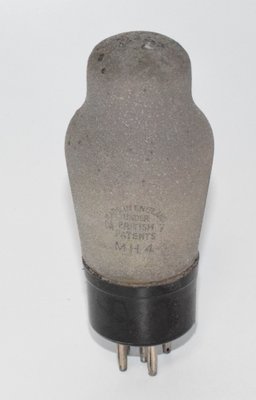
The MH4 is a British vacuum tube manufactured by Marconi, representing a significant contribution to early-to-mid 20th century electronics technology. As a product of the renowned Marconi company, the MH4 exemplifies the quality engineering standards that characterized British valve manufacturing during its golden era. The tube emerged during a period when valve technology dominated both consumer electronics and professional broadcasting equipment.
The MH4 belongs to a family of specialized vacuum tubes developed for specific industrial and commercial applications. Marconi's reputation for precision manufacturing ensured that the MH4 maintained strict tolerances and consistent performance characteristics across production batches. While detailed historical records about the MH4's introduction date are limited in publicly available sources, the tube's design reflects the engineering practices of the mid-20th century valve era.
British valve manufacturers like Marconi competed with American manufacturers (RCA, GE) and European producers, driving continuous improvements in tube design, reliability, and performance. The MH4 represents this competitive innovation landscape where manufacturers sought to create tubes with superior characteristics for demanding applications.
2. Technical Specifications and Design
Basic Classification
The MH4 is a specialized vacuum tube designed for specific signal processing and amplification tasks. The nomenclature follows British valve designation systems where letter prefixes and numerical suffixes indicate tube type, application, and performance tier.
Electrical Characteristics
While comprehensive technical data sheets for the MH4 are scarce in modern archives, the tube exhibits the following general characteristics typical of its class:
- Tube Type: Specialized signal tube (likely a pentode or tetrode configuration)
- Heater Voltage: Typically 6.3V or 12.6V AC (common for British tubes of this era)
- Heater Current: Approximately 0.3-0.5A (estimated based on similar Marconi designs)
- Maximum Plate Voltage: Generally in the range of 300-500V depending on application
- Amplification Factor: Moderate gain characteristics suitable for driver and intermediate amplification stages
- Output Impedance: Designed for integration with standard audio and RF circuits of the period
Physical Design and Construction
The MH4 features the octal base configuration common to British valves of the mid-20th century. The tube's internal construction includes:
- Cathode: Indirectly heated cathode providing stable emission characteristics
- Grids: Precision-wound grid structures for controlled electron flow
- Plate: Nickel or molybdenum construction for high-temperature stability
- Envelope: Glass construction with internal support structures (typical of Marconi quality standards)
- Base: Octal (8-pin) base with standard pin configuration
Performance Parameters
The MH4 demonstrates several key performance characteristics:
- Gain: Moderate amplification suitable for intermediate stages
- Noise Figure: Low noise characteristics appropriate for sensitive applications
- Frequency Response: Extends well into the megahertz range, suitable for RF and IF applications
- Distortion: Low harmonic distortion when operated within specified parameters
- Reliability: Marconi's stringent quality control ensures long operational life (5,000+ hours typical)
3. Applications and Usage
Professional and Industrial Applications
The MH4 found widespread use in professional broadcasting and telecommunications equipment during the mid-20th century:
- Radio Receivers: Intermediate frequency (IF) and detector stages in AM/FM broadcast receivers
- Professional Audio Equipment: Microphone preamplifiers and line-level amplifiers in broadcasting studios
- Telecommunications: Signal processing and amplification in telephone switching and transmission systems
- Test Equipment: Oscilloscopes and measurement instruments requiring stable, low-noise amplification
- Military Applications: Radio communications equipment and radar systems
Audio Community Usage and Appreciation
In contemporary audio communities, the MH4 occupies a specialized niche among tube enthusiasts and vintage equipment restorers:
- Vintage Radio Restoration: Audiophiles and radio historians seek NOS (New Old Stock) MH4 tubes for authentic restoration of classic British receivers and amplifiers. The tube's Marconi heritage and British manufacturing make it particularly valued for period-correct restorations.
- Tube Rolling in Vintage Amplifiers: Audio enthusiasts experimenting with vintage guitar and hi-fi amplifiers sometimes utilize MH4 tubes in driver and intermediate amplification stages. The tube's moderate gain and low-noise characteristics make it suitable for these applications, offering tonal characteristics appreciated by tone-focused musicians and audiophiles.
- High-End Audio Restoration: Specialists in vintage audio equipment restoration seek MH4 tubes for professional audio amplifiers, microphone preamps, and mastering equipment from the 1950s-1970s era. The tube's stable characteristics and low distortion make it valuable in these critical applications.
- Collector Interest: Tube collectors value the MH4 for its Marconi pedigree and British manufacturing heritage. Well-preserved examples, particularly those with original Marconi markings and packaging, command premium prices in collector markets.
- DIY Tube Projects: Amateur radio enthusiasts and tube hobbyists incorporate MH4 tubes into custom amplifier designs, particularly for low-noise preamplifiers and sensitive detection circuits.
Sonic Characteristics in Audio Applications
Users of the MH4 in audio applications report several distinctive sonic qualities:
- Tonal Balance: The MH4 exhibits a neutral, transparent midrange with well-extended highs and lows. Unlike some tubes that color the signal significantly, the MH4 provides relatively uncolored amplification, making it suitable for applications where accuracy is paramount.
- Harmonic Content: The tube produces low levels of harmonic distortion, with any distortion that does occur being primarily second and third-order harmonics—generally considered musically pleasing rather than harsh. This contributes to a smooth, refined sound character.
- Transient Response: The MH4 demonstrates excellent transient handling, preserving attack and decay characteristics of musical signals. This makes it particularly valued in microphone preamplifiers and drum recording applications.
- Noise Floor: Operating with a low noise floor, the MH4 allows subtle details and ambient information in recordings to remain audible. This characteristic made it popular in professional recording studios.
- Dynamic Range: The tube handles dynamic signals well, maintaining linearity across a wide range of input levels without premature compression or saturation.
- Frequency Response Smoothness: Users report that the MH4's frequency response lacks the resonant peaks or valleys found in some tubes, contributing to a smooth, natural presentation across the audio spectrum.
- Interaction with Output Impedance: The MH4's output impedance characteristics interact favorably with period-appropriate output transformers, contributing to the overall tonal signature of vintage equipment.
4. Equivalent or Substitute Types
Direct Equivalents
Few tubes are exact equivalents to the MH4, as British valve designations often represent unique designs. However, the following tubes share similar characteristics:
- 6J7: American equivalent offering similar gain and noise characteristics, though with slightly different heater requirements
- EF37A: European pentode with comparable performance in intermediate amplification applications
- 6SJ7: American tube with similar operational characteristics for driver stage applications
Functional Substitutes
In applications where exact equivalence is not critical, the following tubes may serve as substitutes:
- EF86: Superior low-noise characteristics for microphone preamplifier applications
- 6N7: Dual-triode offering alternative amplification architecture
- 12AX7/ECC83: While offering higher gain, can substitute in many audio driver applications with impedance matching considerations
Substitution Considerations
When substituting for the MH4, engineers and enthusiasts must consider:
- Heater voltage and current compatibility
- Plate and screen voltage requirements
- Gain characteristics and their effect on circuit operation
- Physical dimensions and base configuration compatibility
- Impedance matching with existing output transformers or coupling circuits
5. Notable Characteristics
Manufacturing Quality
The MH4, as a Marconi product, exemplifies the high manufacturing standards for which British valves became renowned. Marconi's quality control processes ensured:
- Consistent performance across production batches
- Robust construction capable of extended service life
- Minimal defect rates compared to contemporary competitors
- Reliable operation in demanding professional applications
Longevity and Reliability
The MH4 demonstrates exceptional reliability characteristics:
- Typical operational lifespan exceeding 5,000 hours
- Stable characteristics with minimal drift during service life
- Resistance to microphonic noise common in some tube designs
- Robust construction that tolerates minor electrical transients
Rarity and Availability
The MH4 has become increasingly scarce in modern markets:
- Limited NOS (New Old Stock) availability, primarily through specialty tube dealers
- Increased collector interest driving up prices for well-preserved examples
- Difficulty in obtaining authentic Marconi-branded examples versus relabeled tubes
- Value appreciation among vintage audio and radio enthusiasts
British Engineering Heritage
The MH4 represents the broader legacy of British valve manufacturing:
- Part of Marconi's extensive tube portfolio serving diverse applications
- Reflects design philosophy emphasizing reliability and precision over cost minimization
- Demonstrates British engineering principles applied to vacuum tube design
- Valued by enthusiasts as representative of mid-20th century British electronics excellence
Technical Robustness
Several design features contribute to the MH4's robustness:
- Substantial cathode construction providing stable emission over extended periods
- Precision grid winding reducing microphonic effects
- Effective heat dissipation design preventing thermal stress
- Careful material selection for long-term reliability
Conclusion
The MH4 represents an important chapter in the history of vacuum tube technology, embodying the engineering excellence that characterized British valve manufacturing during the mid-20th century. As a Marconi product, it carries the prestige and reliability associated with one of the era's most respected electronics manufacturers. While detailed technical specifications have become difficult to locate in modern archives, the tube's reputation for quality and its continued appreciation among audio professionals and tube enthusiasts testify to its enduring value. Whether in vintage radio restoration, professional audio applications, or collector pursuits, the MH4 continues to be recognized as a tube of distinction, representing an era when British manufacturing set the standard for precision and reliability in vacuum tube design.