1. Introduction and History
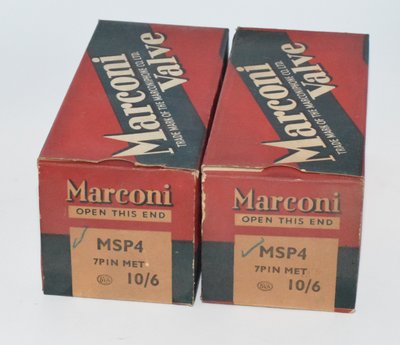
The MSP4 is a British vacuum tube manufactured primarily by Marconi, MO Valve Company, and GEC (General Electric Company) during the mid-20th century. As a medium-mu triode, the MSP4 represents an important class of vacuum tubes that found widespread use in audio amplification, radio frequency applications, and general-purpose electronic circuits throughout the 1950s and 1960s.
The tube emerged during a golden era of British valve manufacturing, when companies like Marconi and GEC were producing some of the world's finest vacuum tubes. The MSP4 became particularly valued in professional audio equipment and high-fidelity applications, where its sonic characteristics made it a preferred choice among engineers and audiophiles.
Originally designed for both commercial and military applications, the MSP4 has become increasingly sought after by vintage audio enthusiasts and restoration specialists. New Old Stock (NOS) examples from original manufacturers command premium prices due to their scarcity and exceptional performance characteristics.
2. Technical Specifications and Design
Basic Parameters
The MSP4 is a medium-mu triode with the following primary specifications:
- Tube Type: Medium-Mu Triode
- Heater Voltage: 6.3V AC/DC
- Heater Current: Approximately 0.3A
- Amplification Factor (μ): 16-20 (medium-mu classification)
- Plate Dissipation: 2.5W typical
- Maximum Plate Voltage: 330V
- Maximum Grid Voltage: -15V
- Typical Plate Current: 25-35mA at operating conditions
- Transconductance (gm): Approximately 2.5-3.5 mA/V
Physical Characteristics
The MSP4 features a standard noval base configuration (9-pin), making it compatible with standard tube sockets of the era. The tube measures approximately 2.75 inches (70mm) in height and 0.9 inches (23mm) in diameter, with a robust construction typical of British manufacturing standards.
The internal structure consists of a directly heated cathode, a control grid, and a plate electrode arranged in a classic triode configuration. The tube's construction emphasizes mechanical stability and thermal management, with carefully designed electrode spacing to minimize microphonics and ensure consistent performance.
Electrical Characteristics
The MSP4's medium-mu classification means it offers a balance between voltage gain and output impedance, making it suitable for both voltage amplification and driver stages. The tube exhibits excellent linearity across its operating range, with minimal distortion when properly biased.
The plate resistance (rp) typically ranges from 8,000 to 12,000 ohms, while the grid-to-cathode capacitance is approximately 1.6pF. These characteristics make the MSP4 suitable for applications requiring moderate gain with good frequency response.
The tube's transconductance characteristics remain stable across its operating range, providing predictable gain and minimal frequency-dependent behavior. This stability was highly valued in professional audio applications where consistency and reliability were paramount.
3. Applications and Usage
Audio Amplification
The MSP4 found extensive use as a voltage amplifier and driver tube in audio equipment. Its moderate gain and excellent linearity made it ideal for pre-amplifier stages in tube audio equipment, including:
- High-fidelity preamplifiers
- Microphone preamplifiers for professional recording
- Phono preamp stages
- Tone control circuits
- Line amplification stages
Radio Frequency Applications
Beyond audio, the MSP4 served in RF amplification circuits, oscillators, and frequency conversion stages in radio receivers and transmitters. Its moderate mu value and reasonable output impedance made it suitable for intermediate frequency (IF) amplification and detection circuits.
Professional Audio Equipment
British audio manufacturers including Leak, Quad, and other premium brands incorporated MSP4 tubes into their designs. The tube's British origin and manufacturing quality made it a natural choice for equipment destined for the British and European markets.
Professional broadcast and recording equipment utilized MSP4 tubes for their reliability and consistent performance. The tube's ability to maintain stable characteristics over extended operating periods made it particularly valuable in 24/7 broadcast applications.
4. Sound Characteristics in Audio Applications
The MSP4 is highly regarded among audio enthusiasts for its distinctive sonic signature. Users consistently report the following characteristics:
Tonal Balance
The MSP4 is known for producing a warm, slightly rounded midrange with excellent vocal clarity. The tube exhibits a natural, uncolored presentation that allows source material to shine without imposing excessive character. High-frequency response is smooth and refined rather than analytical, making the MSP4 particularly forgiving of lower-quality recordings.
Harmonic Structure
When properly biased, the MSP4 generates predominantly even-order harmonics, which are perceived as musically pleasant and transparent. This harmonic signature contributes to the tube's reputation for musicality and long-term listening comfort. The harmonic distortion profile is gentle and non-fatiguing even at higher signal levels.
Dynamics and Transient Response
The MSP4 exhibits quick transient response with excellent dynamic range. The tube's internal design minimizes distortion during rapid signal changes, making it particularly suitable for instruments with complex transient structures such as drums, percussion, and plucked strings.
Noise Floor
NOS examples of the MSP4, particularly those manufactured by Marconi and GEC, are noted for exceptionally low noise floors. The tube's robust construction and careful manufacturing tolerances result in minimal microphonic noise and background hum, crucial for sensitive audio applications.
Frequency Response
The MSP4 demonstrates relatively flat frequency response from 20Hz to 20kHz when properly implemented in a circuit. The tube exhibits subtle presence peak around 3-5kHz that many listeners find adds clarity and definition without becoming harsh or fatiguing. Bass response is tight and well-defined, while treble remains smooth and extended.
5. Usage in the Audio Community
Vintage Audio Restoration
The MSP4 is highly sought after by vintage audio enthusiasts restoring classic British audio equipment. Collectors and restoration specialists actively search for NOS examples, particularly those with Marconi or GEC branding, as these are considered the finest examples of the type.
High-Fidelity Preamplifier Design
Contemporary tube audio designers continue to specify MSP4 tubes in new preamplifier designs, particularly those targeting the premium market segment. The tube's excellent performance characteristics and proven reliability make it an attractive choice for modern tube audio equipment.
Collector Value and Pricing
MSP4 tubes command significant prices in the current market, particularly NOS pairs from reputable British manufacturers. A matched pair of NOS Marconi or GEC MSP4 tubes typically sells for $150-$300 or more, reflecting strong collector demand and limited availability.
Audio Forum Reputation
Within audio enthusiast communities and forums, the MSP4 is consistently praised for its musicality and reliability. Many users report that the sonic benefits of upgrading to quality MSP4 tubes justify the premium pricing, particularly in sensitive preamplifier applications where tube quality directly impacts overall system performance.
Professional Audio Applications
Mastering studios and professional recording facilities occasionally specify MSP4 tubes for monitoring amplifiers and control room equipment. The tube's refined sonic characteristics and low noise floor make it suitable for critical listening applications where accuracy and musicality must be balanced.
DIY and Hobbyist Projects
Audio hobbyists and DIY tube amplifier builders frequently incorporate MSP4 tubes into custom designs. The tube's moderate characteristics and availability of detailed specifications from original datasheets make it relatively straightforward to design circuits around.
6. Equivalent or Substitute Types
Direct Equivalents
- ECC83/12AX7: Higher-mu alternative with greater gain, though different sonic signature
- 6N1P: Soviet-era equivalent with similar specifications and sonic characteristics
- EF86: Pentode equivalent for applications requiring higher gain
- 6SN7: Higher-power triode with different impedance characteristics
Functional Substitutes
While direct substitutes exist, the MSP4's specific combination of characteristics means that replacement tubes may require circuit modifications. The ECC83/12AX7 is more commonly available but provides approximately 3-4 times the voltage gain, potentially requiring circuit redesign. The 6N1P offers more similar gain characteristics and is sometimes used as a budget alternative, though many audiophiles report sonic differences.
Compatibility Considerations
Any tube substitution should be undertaken carefully, with consideration given to maximum ratings and circuit operating points. The MSP4's plate dissipation and voltage ratings must not be exceeded by substitute tubes, and bias adjustments may be necessary.
7. Notable Characteristics
Manufacturing Quality
Marconi and GEC MSP4 tubes are renowned for exceptional manufacturing quality and consistency. These British manufacturers maintained rigorous quality control standards, resulting in tubes with extremely tight tolerances and minimal variation between examples.
Longevity
The MSP4 is known for exceptional longevity, with many tubes remaining functional after 50+ years of storage. Properly stored NOS examples often exhibit minimal degradation, a testament to the quality of British tube manufacturing during this era.
Microphonic Characteristics
The MSP4's robust construction and careful electrode design minimize microphonic noise. This characteristic made it particularly valuable in sensitive audio applications where external vibrations could otherwise degrade signal quality.
Thermal Stability
The tube exhibits excellent thermal stability, with minimal drift in electrical characteristics as it warms from cold start to thermal equilibrium. This stability made it suitable for applications requiring consistent performance throughout extended operating sessions.
Rarity and Desirability
As production ceased decades ago and tubes gradually failed in service, NOS examples have become increasingly rare. This scarcity, combined with the tube's excellent reputation, has made it one of the more sought-after vintage tubes among audio enthusiasts and collectors.
Conclusion
The MSP4 represents an important chapter in the history of British tube manufacturing. Its medium-mu triode design, combined with excellent manufacturing quality and refined sonic characteristics, has ensured its continued relevance in contemporary audio applications. Whether restoring vintage equipment or designing new tube audio circuits, the MSP4 remains a highly respected choice among audio professionals and enthusiasts.
For those seeking to experience the best characteristics of mid-century British audio engineering, the MSP4 offers a compelling combination of technical excellence and musical performance. While premium pricing reflects its rarity and desirability, many users consider a quality pair of MSP4 tubes a worthwhile investment in audio quality and historical significance.