Introduction and History
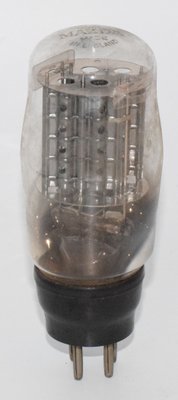
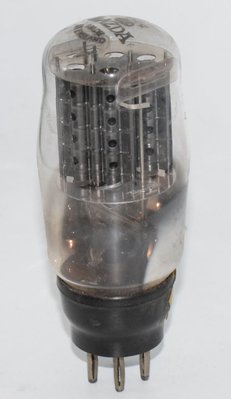
The Mazda UU4 is an indirectly heated, full-wave rectifier valve designed for use in A.C. mains-powered equipment. Manufactured by the British Thomson-Houston Co. Ltd. (BTH) in Great Britain under the Mazda Radio brand, the UU4 was produced at their facilities in London and Rugby. The datasheet is dated 1.3.39 (March 1st, 1939), placing this valve firmly in the late pre-war era of British radio manufacturing.
The UU4 was designed as a replacement for both the earlier Mazda UU3 and the UU.120/350, offering improved reliability and standardised construction. It was part of a family that included the higher-voltage UU5, both sharing the same physical dimensions and base configuration but differing in their maximum voltage ratings and heater current requirements. These valves were workhorses of British radio receivers and amplifiers throughout the late 1930s and into the post-war period, providing the essential rectified DC supply from the AC mains.
The UU4 is fitted with a standard 4-pin base, making it mechanically compatible with a wide range of British radio chassis of the era. Today, the UU4 is considered a rare and collectible valve, particularly sought after by restorers of vintage British radio equipment and by audiophiles interested in period-correct power supply designs.
Technical Specifications and Design
Electrical Ratings
| Parameter | UU4 Value |
|---|---|
| Heater Voltage | 4.0 V |
| Heater Current | 2.2 A |
| Maximum Anode Volts, RMS (per anode) | 350 V |
| Maximum Mean Anode Current (2 anodes combined) | 120 mA |
| Typical RMS Volts per Anode | 350 V |
| Typical D.C. Output Current | 120 mA |
| Typical D.C. Output Volts (approx.) | 400 V |
| Reservoir Condenser (recommended) | 8 µF |
Note: As a rectifier valve, the UU4 does not have specifications for amplification factor (µ), transconductance (gm), plate resistance (rp), or grid bias, as these parameters apply to amplifying valves. The UU4 is a diode rectifier with two anodes and a common cathode.
Physical Specifications
| Parameter | Value |
|---|---|
| Maximum Overall Length | 122 mm |
| Maximum Diameter | 45 mm |
| Base Type | Standard 4-pin base (British 4-pin UX-type) |
| Envelope Type | Glass, ST-shape (shouldered) |
| Heating Method | Indirectly heated cathode |
| Number of Anodes | 2 (full-wave rectifier) |
Pin-Out (Viewed from the free end of the base)
| Pin Number | Connection |
|---|---|
| Pin 1 | Anode |
| Pin 2 | Anode |
| Pin 3 | Heater and Cathode |
| Pin 4 | Heater |
Note that Pin 3 serves a dual function, connecting both one side of the heater and the cathode. This is characteristic of indirectly heated rectifiers where the cathode is internally connected to one heater pin. Some examples of the UU4 have been noted with loose bases — a known issue with aged British valves of this era, where the adhesive securing the Bakelite base to the glass envelope can deteriorate over time.
Characteristic Curves
The manufacturer's datasheet provides characteristic curves for the UU4 showing D.C. output voltage versus D.C. output current at various RMS input voltages (200-0-200, 250-0-250, 300-0-300, and 350-0-350 V RMS) with an 8 µF smoothing condenser. These curves demonstrate the typical voltage regulation behaviour: at 350-0-350 V RMS input with 120 mA output current, the D.C. output voltage is approximately 400 V. At lower current draws, the output voltage rises, while at higher currents it drops — a characteristic regulation curve typical of valve rectifiers.
Applications and Usage
The Mazda UU4 was designed primarily as a mains rectifier for radio receivers and audio amplifiers of the late 1930s and 1940s. Its principal applications include:
- Radio Receiver Power Supplies: The UU4 was the standard rectifier in many British Mazda-equipped radio sets, providing the high-tension (HT) DC supply from the AC mains via a centre-tapped power transformer. The full-wave rectification configuration using both anodes provided smoother DC output than half-wave designs.
- Audio Amplifier Power Supplies: With its 120 mA maximum current capability and 350 V RMS per anode rating, the UU4 was well-suited to powering small to medium push-pull amplifier designs using valves such as the Mazda Pen45 or similar output pentodes.
- Replacement Applications: According to the manufacturer, the UU4 may be used to replace both the UU3 and the UU.120/350, making it a versatile service replacement valve for radio repair technicians of the era.
- General Laboratory and Test Equipment: Any application requiring a regulated DC supply of up to approximately 400 V at up to 120 mA from an AC mains transformer could employ the UU4.
The recommended reservoir (smoothing) condenser value of 8 µF should be observed, as exceeding this value can cause excessive peak charging currents that may damage the cathode coating and shorten valve life. This is a critical consideration in any circuit design or restoration project using the UU4.
Sound Characteristics
As a rectifier valve, the UU4 does not directly amplify the audio signal, yet it has a significant and often underappreciated influence on the sonic character of an amplifier. The UU4's contribution to sound quality comes through its effect on the power supply's behaviour:
- Soft, Gradual Power-Up: Being an indirectly heated rectifier, the UU4 provides a slow, gentle rise in HT voltage as the cathode reaches operating temperature. This "soft start" characteristic protects other valves in the circuit from voltage surges and contributes to the longevity of the entire amplifier. Sonically, this gradual warm-up is associated with a smooth, unhurried presentation.
- Natural Compression and Sag: Like all valve rectifiers, the UU4 exhibits a degree of internal resistance and voltage regulation that is inherently "softer" than solid-state rectification. Under dynamic musical passages that demand higher current, the output voltage sags slightly, creating a subtle natural compression effect. This "sag" is often described by audiophiles as contributing to a more musical, organic, and less fatiguing listening experience compared to silicon diode rectification.
- Warmth and Body: The impedance characteristics of the UU4 contribute a slight warmth and fullness to the overall tonal balance. The power supply ripple and regulation characteristics of valve rectifiers like the UU4 tend to add a sense of body and three-dimensionality to the sound that many listeners find appealing.
- Smooth Transients: The inherent impedance of the UU4 acts as a natural current limiter, softening sharp transient peaks in the power supply demand. This translates to a slightly smoother, more rounded transient response in the audio output — a quality that can be either desirable or undesirable depending on the listener's preferences and the type of music being reproduced.
- Period-Correct Character: For those restoring and listening to vintage British equipment, the UU4 provides the authentic power supply characteristics that the original amplifier or radio was designed around. Using a solid-state replacement would alter the dynamic behaviour of the power supply and, consequently, the sonic character of the equipment.
It should be noted that the sonic influence of a rectifier valve, while real and measurable, is subtle compared to the influence of the signal-amplifying valves in the circuit. The UU4's contribution is best understood as setting the "foundation" upon which the rest of the amplifier's sound is built.
Equivalent or Substitute Types
The UU4 has a limited number of direct equivalents, owing to its specifically British design and 4-volt heater specification:
| Type | Notes |
|---|---|
| Mazda UU3 | The UU4 is specified by Mazda as a direct replacement for the UU3. The UU4 may be used in any UU3 socket. |
| Mazda UU.120/350 | The UU4 is specified by Mazda as a direct replacement for the UU.120/350. |
| Mazda UU5 | The UU5 is the higher-voltage sibling (500 V RMS per anode, 2.3 A heater current). The UU5 can replace the UU4 in most circuits as it exceeds the UU4's voltage rating, but the slightly higher heater current (2.3 A vs. 2.2 A) should be verified against the power transformer's heater winding capacity. The UU4 should not be used to replace the UU5 in circuits operating above 350 V RMS per anode. |
Important Caution: The UU4 uses a British 4-pin base and a 4.0 V heater. It is not directly interchangeable with American octal-based rectifiers such as the 5U4G, 5Y3GT, or 5V4G without socket adaptation and careful verification of heater voltage and current requirements. Any substitution should be made only after confirming that the replacement valve's heater voltage, heater current, maximum anode voltage, and maximum current ratings are compatible with the circuit.
Notable Characteristics
- Dual-Purpose Pin 3: The UU4's Pin 3 serves as both heater connection and cathode connection. This internal connection between cathode and one heater terminal is a design feature that simplifies the external wiring but means the cathode is not fully isolated from the heater circuit — a consideration in some sensitive applications.
- Robust Construction: The UU4's compact dimensions (122 mm length, 45 mm diameter) and sturdy 4-pin base made it a reliable component in the often-vibration-prone environment of domestic radio receivers. However, as noted in collector reports, some surviving examples exhibit loose bases due to age-related deterioration of the base cement.
- Full-Wave Rectification: With two separate anodes fed from a centre-tapped transformer secondary, the UU4 provides full-wave rectification, significantly reducing the ripple content compared to half-wave designs and easing the demands on the smoothing circuit.
- Conservative Ratings: The 120 mA maximum mean anode current rating (shared across both anodes) and 350 V RMS per anode rating position the UU4 as a medium-duty rectifier, suitable for receivers and small to medium amplifiers but not for high-power applications.
- Rarity: The UU4 is now considered a rare valve. It is primarily found through specialist vintage radio component dealers and is sought after by collectors and restorers of pre-war and early post-war British radio equipment. Its scarcity makes it a valued find for those maintaining period-correct restorations.
- Pre-War Heritage: With its datasheet dated March 1939, the UU4 represents the final generation of British valve design before World War II disrupted civilian electronics production. This gives it particular historical significance in the timeline of British electronic component development.
Usage in the Audio Community
The Mazda UU4's role in the modern audio community is primarily centred around three areas:
Vintage Equipment Restoration
The most common use of the UU4 today is in the faithful restoration of vintage British radio receivers and amplifiers from the late 1930s through the 1950s. Restorers of equipment by manufacturers such as Murphy, Bush, Ekco, and others who used Mazda valve line-ups seek out the UU4 to maintain the original specification of these sets. Using the correct rectifier is considered essential for both authenticity and proper circuit operation, as the power supply characteristics directly affect the operating points of all other valves in the equipment.
Vintage Hi-Fi and Audiophile Applications
Among audiophiles who specialise in vintage British hi-fi equipment, the UU4 is valued for its contribution to the characteristic "British sound" of the era. Amplifiers designed around Mazda valve complements, including the UU4 rectifier, are appreciated for their warm, musical presentation. Some enthusiasts specifically seek out amplifiers using 4-volt heater Mazda valves, considering them to have a distinct sonic character compared to equipment using the more common American 5-volt or 6.3-volt heater valve families.
DIY and Custom Amplifier Building
A small but dedicated community of DIY amplifier builders incorporates the UU4 into custom designs, particularly those inspired by vintage British circuit topologies. The appeal lies in the UU4's well-documented characteristics, its manageable voltage and current ratings for small amplifier projects, and the desire to explore the sonic qualities of less common valve types. However, the rarity and cost of the UU4 means that most new-build projects tend to use more readily available rectifier types unless the builder specifically desires the UU4's characteristics or is building a replica of a period design.
Collecting
The UU4 is a collectible item in its own right. Mazda valves, with their distinctive branding and British manufacturing heritage, are popular with valve collectors. The UU4's relative rarity, particularly in new-old-stock (NOS) condition with intact bases, makes it a prized addition to any collection of British valves. Examples with original Mazda boxes command premium prices among collectors.
For any application, users should be aware that the UU4's 4-pin base requires the appropriate British 4-pin valve holder, which itself may need to be sourced from specialist suppliers. The 4.0 V, 2.2 A heater requirement also necessitates an appropriate transformer winding — standard American transformer designs with 5 V or 6.3 V heater windings are not suitable without modification.