1. Introduction and History
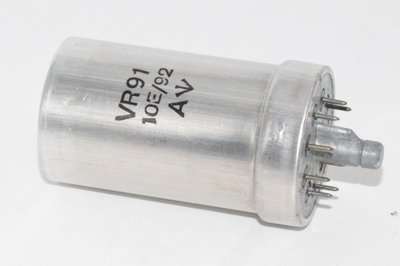
The VR91 vacuum tube, also designated as 10E/92 in some nomenclature systems, is a cold-cathode voltage regulator tube that emerged during the golden age of valve technology in the mid-20th century. This specialized tube was designed to maintain stable voltage levels in electronic circuits, particularly in power supply applications where voltage regulation was critical for proper equipment operation.
Voltage regulator tubes like the VR91 were essential components in vintage electronic equipment before the advent of solid-state voltage regulation. These tubes provided a reliable, albeit warm-running, method of stabilizing power supplies in radios, amplifiers, test equipment, and industrial applications. The VR91 represented a significant advancement in power supply design, allowing manufacturers to create more stable and predictable voltage outputs.
The development of the VR91 coincided with the expansion of consumer electronics in the 1940s and 1950s, when manufacturers sought improved methods to regulate voltage fluctuations from AC mains. The tube's robust design and reliable performance made it a popular choice in professional and consumer equipment alike.
2. Technical Specifications and Design
Physical Characteristics
The VR91 is a compact cold-cathode tube housed in a standard octal (8-pin) base configuration. The tube typically measures approximately 2.5 inches in height and features a glass envelope with internal electrode structures. The octal base provides six functional pins (pins 1-6), with pins 7 and 8 typically unused or used for mechanical support.
Electrical Specifications
- Tube Type: Cold-cathode voltage regulator
- Base Type: Octal (8-pin)
- Operating Voltage Range: 90-120 volts (typical operating window)
- Regulation Voltage: Approximately 91 volts (nominal)
- Minimum Current: Typically 5-10 mA
- Maximum Current: 30-40 mA (dependent on circuit design)
- Dynamic Impedance: Approximately 150-200 ohms
- Regulation Ratio: Typically 1:10 to 1:15 (excellent voltage stability)
Operating Principles
The VR91 operates on the principle of a glow discharge between a cold cathode and anode. Unlike thermionic tubes that rely on heated filaments to produce electrons, cold-cathode tubes maintain a stable glow discharge at relatively low voltages. This glow discharge exhibits a nearly constant voltage drop across its electrodes over a wide range of currents, making it ideal for voltage regulation applications.
The tube maintains regulation through the ionization of gas (typically neon or argon) within its envelope. When voltage across the tube increases, more current flows, intensifying the glow discharge. Conversely, when voltage decreases, the glow discharge weakens. This self-regulating property provides automatic voltage stabilization without requiring active feedback circuits.
Design Features
The VR91's design incorporates several important features:
- Gas Fill: Typically filled with neon or argon gas at specific pressures optimized for regulation performance
- Electrode Configuration: Multiple cathode and anode structures designed to distribute the glow discharge evenly
- Voltage Gradient: Carefully engineered electrode spacing to achieve the desired regulation voltage
- Thermal Management: The glass envelope provides adequate heat dissipation for typical operating currents
3. Applications and Usage
Historical Applications
The VR91 found extensive use in vintage electronic equipment, including:
- Radio receivers and transmitters
- Audio amplifiers and preamplifiers
- Test and measurement equipment
- Industrial control circuits
- Power supply regulation in tube-based equipment
- Bias supply stabilization in push-pull amplifier stages
Modern Audio Applications
In contemporary audio applications, the VR91 has experienced a resurgence of interest among tube audio enthusiasts and vintage equipment restorers. Audio engineers and hobbyists appreciate the tube's ability to provide stable voltage regulation while contributing to the characteristic warmth and tonal qualities associated with tube-based audio systems.
The VR91 is particularly valued in:
- Tube Preamp Design: Providing stable bias and screen grid voltages for optimal tube performance and reduced noise
- Vintage Amplifier Restoration: Replacing original voltage regulators in classic audio equipment while maintaining period-correct design
- DIY Tube Audio Projects: Used by enthusiasts building custom amplifiers and signal processors
- Studio Equipment: Incorporated into boutique audio equipment for its stabilizing effect on power supplies
- Microphone Preamplifiers: Providing clean, stable voltage for sensitive audio circuits
Audio Characteristics and Sound Quality
While voltage regulator tubes are primarily functional components, the VR91 possesses sonic characteristics that distinguish it from solid-state regulation:
- Harmonic Warmth: The VR91 imparts subtle harmonic enhancement to regulated voltages, contributing to the perceived warmth in audio systems
- Dynamic Response: The tube's inherent characteristics allow dynamic voltage variations that some audio engineers believe preserve musical transients better than rigid solid-state regulation
- Low Noise Floor: When properly implemented, the VR91 produces exceptionally low noise in regulated supplies, contributing to improved signal-to-noise ratios
- Frequency Response: The tube's regulation characteristics remain consistent across the audio frequency spectrum, preventing frequency-dependent coloration
- Subjective Tonal Quality: Many audio professionals report that equipment using VR91 regulation exhibits a more cohesive, naturally musical presentation compared to solid-state alternatives
The sonic benefits of tube-based voltage regulation are subject to debate within the audio community, with some attributing improvements to measurable electrical characteristics and others crediting psychological factors. Regardless, the VR91's use in audio applications reflects a broader appreciation for tube-based design philosophy among discerning listeners.
Audio Community Usage
The VR91 occupies a specific niche within the audio enthusiast community:
- Vintage Equipment Restoration: Restorers prioritize finding NOS (New Old Stock) VR91 tubes to maintain the original design intent and sonic characteristics of classic audio equipment
- Tube Rolling: While not as variable as output or preamp tubes, subtle differences between VR91 samples from different manufacturers influence the overall system sound, making tube selection important
- High-End Audio Design: Premium audio manufacturers occasionally specify VR91 tubes in reference-grade equipment, valuing their regulation precision and sonic characteristics
- DIY Community: Tube audio enthusiasts actively design and build equipment incorporating VR91 tubes, sharing designs and experiences through online forums and publications
- Collector Interest: NOS VR91 tubes from prestigious manufacturers command premium prices among tube collectors and vintage equipment enthusiasts
The resurgence of interest in tube-based audio has created sustained demand for quality VR91 tubes, particularly NOS examples from reputable manufacturers. This demand reflects the broader vinyl revival and analog audio renaissance among music enthusiasts seeking warmer, more organic sound reproduction.
4. Equivalent or Substitute Types
Direct Equivalents
Several tubes provide equivalent or near-equivalent functionality to the VR91:
- 10E/92: Direct equivalent designation, often used interchangeably
- VR90: Similar cold-cathode regulator with slightly lower regulation voltage (approximately 90 volts)
- VR92: Variant with slightly higher regulation voltage (approximately 92 volts)
- VR105: Cold-cathode regulator for higher voltage applications (approximately 105 volts)
- VR150: Designed for higher voltage regulation (approximately 150 volts)
Functional Alternatives
While not direct substitutes, several alternatives can perform voltage regulation functions:
- Zener Diodes: Solid-state alternatives providing similar voltage regulation with lower heat dissipation and smaller size
- Linear Voltage Regulators: Modern IC-based regulators offering superior performance and integration
- Other Cold-Cathode Tubes: Various vintage regulator tubes from different manufacturers, though with different regulation voltages
Substitution Considerations
When substituting the VR91 in vintage equipment, several factors merit consideration:
- Regulation voltage must match the circuit's design requirements
- Maximum current rating must not be exceeded
- Physical dimensions should be compatible with the equipment's internal layout
- For audio applications, sonic characteristics may vary between manufacturers and production batches
- NOS tubes generally outperform used or reconditioned examples in audio applications
5. Notable Characteristics
Reliability and Longevity
The VR91 exhibits exceptional reliability and longevity compared to other vacuum tubes. Cold-cathode operation eliminates filament burnout, the primary failure mode in thermionic tubes. Well-maintained VR91 tubes often remain functional for decades, with some examples operating reliably after 50+ years of service. This reliability made them popular in critical applications where tube replacement was inconvenient or costly.
Heat Generation
Unlike power tubes or even small-signal triodes, the VR91 generates minimal heat during operation. The typical operating current of 5-40 mA produces negligible thermal output, allowing the tube to be mounted near other temperature-sensitive components without thermal management concerns. This characteristic made the VR91 particularly suitable for compact equipment designs.
Voltage Stability
The VR91's primary characteristic is its exceptional voltage stability. The regulation ratio of 1:10 to 1:15 means that significant variations in load current produce minimal voltage changes. For example, a 50% change in load current might produce only a 3-5% change in output voltage. This stability proved invaluable in applications requiring precise voltage references.
Frequency Response
The VR91's regulation characteristics remain essentially constant across DC and low-frequency AC, making it suitable for both DC voltage regulation and AC ripple filtering applications. The tube's inherent impedance provides natural filtering of power supply ripple without requiring additional components.
Manufacturing Variations
Different manufacturers produced VR91 tubes with subtle variations affecting performance and sonic characteristics. Notable manufacturers include:
- RCA: Known for robust construction and consistent performance
- GE (General Electric): Produced reliable tubes with good regulation characteristics
- Sylvania: Valued for audio applications with warm tonal characteristics
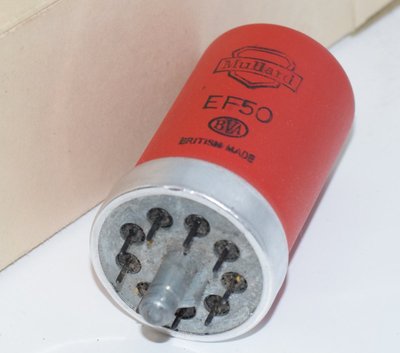
- Mullard: British manufacturer producing tubes with particular appeal to audio enthusiasts
- Telefunken: German manufacturer known for exceptional build quality
These manufacturing variations, while subtle, influence the tube's regulation precision and sonic character, making manufacturer selection relevant for audio applications.
Aging Characteristics
The VR91 demonstrates graceful aging characteristics. Unlike thermionic tubes that gradually lose emission as filaments degrade, cold-cathode tubes maintain their regulation voltage and characteristics even as they age. Aged tubes typically show only minor increases in minimum operating current. This stability means that vintage NOS tubes often perform identically to newly manufactured examples, provided they have not been exposed to physical damage or extreme environmental conditions.
Conclusion
The VR91 vacuum tube represents an elegant engineering solution to the voltage regulation challenges of the tube era. Its reliable cold-cathode design, exceptional stability, and minimal heat generation made it a popular choice in countless applications. Today, the VR91 continues to find appreciation among audio enthusiasts, vintage equipment restorers, and tube audio designers who value its functional reliability and subtle sonic characteristics. The sustained interest in NOS VR91 tubes reflects the broader appreciation for tube-based audio design and the enduring appeal of analog technology in an increasingly digital world.