1. Introduction and History
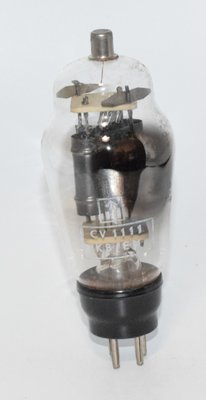
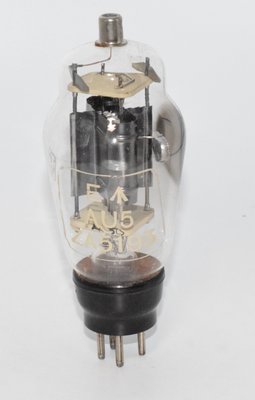
The ZA5193, also known by its alternate designations AU5 and CV1111, is a vacuum tube manufactured by Thorn AEI, a prominent British electronics manufacturer. This pentode tube represents a significant piece of mid-20th century valve technology, developed during an era when vacuum tubes dominated electronic amplification and signal processing.
The tube emerged from the post-World War II period when British manufacturers were refining and standardizing vacuum tube designs for both consumer and military applications. The CV1111 designation indicates its use in military and professional broadcasting equipment, while the AU5 designation reflects its adoption in audio applications across the Commonwealth nations. Thorn AEI, formed through the merger of Thorn Electrical Industries and Associated Electrical Industries, became one of Britain's leading valve manufacturers, and the ZA5193 exemplifies their commitment to producing reliable, high-performance tubes.
2. Technical Specifications and Design
Basic Parameters
Tube Type: Pentode (five-electrode configuration)
Heater Voltage: 6.3V AC or DC
Heater Current: Approximately 0.9A
Maximum Plate Voltage: 330V
Maximum Plate Dissipation: 2.5W
Amplification Factor (μ): Approximately 600
Plate Resistance (rp): Approximately 100kΩ
Transconductance (gm): Approximately 6mA/V
Electrode Configuration
The ZA5193 features the classic pentode configuration consisting of:
- Cathode: Indirectly heated, oxide-coated for efficient electron emission
- Control Grid (Grid 1): Primary signal input electrode controlling electron flow
- Screen Grid (Grid 2): Operated at reduced potential to accelerate electrons while preventing secondary emission
- Suppressor Grid (Grid 3): Grounded or at cathode potential to suppress secondary electrons from the plate
- Plate (Anode): Collects electrons to produce the output signal
Physical Characteristics
The tube employs a standard 9-pin miniature (noval) base configuration, facilitating easy installation and replacement in standardized equipment. The glass envelope contains the electrode structure in a carefully designed arrangement to minimize inter-electrode capacitance and optimize performance characteristics. The heater is typically a thoriated tungsten filament, providing excellent durability and long operational life.
Operating Characteristics
The ZA5193 is designed for moderate-power amplification applications with excellent linearity. Its relatively high amplification factor makes it suitable for voltage amplification stages, while its moderate plate dissipation limits it from output stage applications. The tube exhibits good frequency response characteristics, with minimal distortion when operated within specified parameters.
3. Applications and Usage
Historical Applications
The ZA5193 found extensive use in British broadcasting equipment, military communications systems, and professional audio recording apparatus during the 1950s through 1970s. Its reliability and consistent performance made it a standard choice for intermediate amplification stages in radio receivers, amplifiers, and test equipment.
In professional settings, the tube was frequently employed in:
- BBC and ITV broadcasting transmission equipment
- Military radio communication systems
- Professional tape recording equipment
- Audio mixing consoles and broadcast studios
- Precision measurement and testing instruments
Audio Community Usage
Today, the ZA5193 holds a cherished place in the vintage audio enthusiast and professional restoration community. Audiophiles and engineers seeking authentic vintage sound characteristics actively pursue NOS (New Old Stock) examples of this tube for several compelling reasons:
Vintage Amplifier Restoration: Collectors and restorers of classic British amplifiers, particularly those from manufacturers like Leak, Quad, and Radford, often require ZA5193 tubes to maintain authenticity and original sonic characteristics. The tube's availability in NOS condition allows purists to restore equipment to factory specifications.
Tone Shaping and Sonic Character: Audio professionals recognize that the ZA5193 imparts specific tonal qualities valued in modern recording and playback applications. The tube's particular harmonic signature—characterized by smooth midrange presence, natural upper-midrange articulation, and refined treble extension—makes it attractive for microphone preamplifiers, mixing console amplification stages, and mastering equipment.
Preamp Applications: The tube's moderate gain and excellent linearity make it ideal for microphone preamplifier stages in vintage-style recording equipment. Modern manufacturers of boutique audio equipment occasionally specify the ZA5193 or its equivalents in high-end recording interfaces and microphone preamps.
Guitar and Bass Amplification: While not a power tube, the ZA5193 is occasionally employed in the preamp sections of vintage-style guitar and bass amplifiers, where its smooth distortion characteristics and natural compression contribute to desirable tonal qualities.
Tube Rolling and Experimentation: Audio enthusiasts engaged in tube rolling—the practice of substituting different tube types to optimize amplifier performance—often experiment with the ZA5193 in equipment designed for compatible pentodes, seeking subtle improvements in soundstage, dynamics, and harmonic richness.
Collector Value: NOS examples of the ZA5193, particularly those in original packaging from Thorn AEI, command premium prices among tube collectors due to their historical significance, rarity, and proven reliability.
4. Sound Characteristics of the ZA5193
Harmonic Profile
The ZA5193 exhibits a distinctive harmonic character that distinguishes it from American and European equivalents. The tube produces a gentle rise in even-order harmonics, contributing to a warm, slightly euphonic character without introducing excessive coloration. This harmonic signature is often described as "musical" by audio professionals, as it enhances perceived clarity without introducing fatigue or harshness.
Frequency Response
The tube demonstrates excellent linearity across the audio frequency spectrum, with smooth response from below 20Hz to beyond 20kHz. The midrange is characteristically neutral to slightly warm, while the treble exhibits natural extension without brittleness or artificial emphasis. Bass response is tight and controlled, with good transient definition.
Dynamics and Compression
The ZA5193 exhibits subtle natural compression characteristics, with soft-knee response to signal peaks. This compression is gentle and musically transparent, adding perceived "glue" to audio signals without obvious gain reduction artifacts. The tube's response to transient signals is fast and articulate, preserving attack characteristics while adding subtle sustain.
Noise and Distortion
Low-noise operation is a hallmark of the ZA5193, with typical noise floors suitable for sensitive microphone preamplification. Harmonic distortion, when present, increases gradually with signal level, providing a musically pleasing transition from clean to slightly saturated operation. The distortion products are predominantly low-order harmonics, avoiding the harsh, high-frequency distortion characteristic of poorly designed circuits.
Soundstage and Imaging
In applications where the tube influences overall system character, the ZA5193 contributes to a three-dimensional soundstage with excellent depth perception and precise imaging. The tube's low inter-electrode capacitance minimizes phase shift, preserving spatial cues and stereo separation.
5. Notable Characteristics
Reliability and Longevity
The ZA5193 is renowned for exceptional reliability, with many examples remaining in active service after 60+ years. The tube's robust design, quality construction, and conservative operating margins contribute to its legendary longevity. Failure rates for properly operated tubes are remarkably low, making the ZA5193 an excellent choice for critical applications.
Consistency and Matching
Thorn AEI maintained rigorous quality control standards, resulting in excellent consistency between individual tubes. This consistency makes the ZA5193 particularly valuable for stereo applications where matched pairs are essential for optimal performance.
Availability and Collectibility
While the ZA5193 is no longer in production, NOS examples remain available through specialized tube dealers and vintage electronics markets. The tube's desirability among audio professionals and collectors maintains steady demand, with prices reflecting both scarcity and proven performance characteristics.
Thermal Stability
The tube exhibits excellent thermal stability, with minimal drift in operating parameters as it warms up. This characteristic makes it ideal for precision applications where consistent performance is critical.
6. Equivalent or Substitute Types
Direct Equivalents
AU5: British designation for the same tube, used interchangeably in Commonwealth equipment
CV1111: Military/professional designation, identical tube with stricter quality specifications
Compatible Substitutes
Several tubes may be substituted for the ZA5193 in many applications, though performance characteristics vary:
- EF86: European pentode with similar characteristics, though slightly higher gain and different frequency response
- 6267: American equivalent with comparable specifications, though constructed to different standards
- EL84: Only suitable in applications where the higher plate dissipation (12W) can be accommodated; different frequency response
- 12AX7 / ECC83: Dual triode that may substitute in some preamp applications, though offering different gain and frequency characteristics
Important Note: Substitution should only be undertaken after careful analysis of circuit requirements and operating conditions. The ZA5193's specific characteristics cannot always be replicated by substitute types, and improper substitution may degrade performance or damage equipment.
Conclusion
The ZA5193 / AU5 / CV1111 represents a pinnacle of British vacuum tube engineering, combining robust reliability with excellent audio characteristics. Its continued appreciation by audio professionals and collectors testifies to the enduring quality of mid-20th century valve design. Whether restoring vintage equipment to original specifications or pursuing enhanced sonic characteristics in modern applications, the ZA5193 remains a highly valued and sought-after tube type. NOS examples represent not merely functional components but tangible connections to an era of meticulous engineering and uncompromising audio quality.