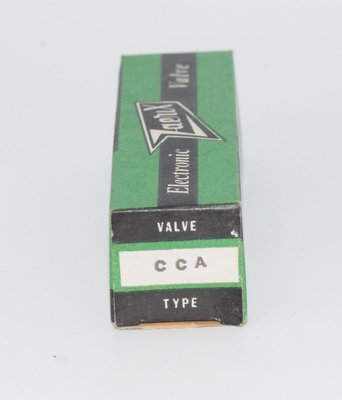
Introduction and History
The CCA is one of the most revered and sought-after vacuum tubes in the audio world. Manufactured by Siemens & Halske (later Siemens AG) in Germany, the CCA designation stands for a specially selected and tested version of the E88CC double triode, produced to meet the exacting requirements of the German Federal Post Office (Deutsche Bundespost) and telecommunications infrastructure. The designation "CCA" is a Siemens internal type code that was used for tubes meeting their most stringent quality specifications.
The CCA was produced primarily during the late 1950s through the 1970s at Siemens' Munich factory. It represents the pinnacle of E88CC production — tubes that passed the most rigorous testing protocols for noise, microphonics, matched sections, and long-term reliability. While the E88CC itself was already a "special quality" (Zvláštní jakost) tube designed for professional and military applications, the CCA went a step further with even tighter selection criteria.
The tube was originally designed for high-frequency applications in telecommunications equipment, including use in cascode amplifier stages of television receivers, as pulse amplifiers, mixers, phase inverters, multivibrators, and similar demanding circuits. The Tesla datasheet for the E88CC (dated 26 April 1960) explicitly describes it as a "vysokofrekvenční dvojitá trioda" — a high-frequency double triode — intended for VHF and IF stages in cascode configurations, as well as general-purpose high-frequency amplification.
Today, the Siemens CCA is considered one of the holy grail tubes among audiophiles and commands premium prices on the vintage tube market, often exceeding several hundred dollars per tube for verified, tested examples.
Technical Specifications and Design
The CCA is electrically identical to the E88CC and shares the same fundamental specifications. The following data is drawn from the verified manufacturer datasheet:
Heater Data
| Parameter | Symbol | Value | Unit |
|---|---|---|---|
| Heater Voltage | Vh | 6.3 | V |
| Heater Current | Ih | 0.3 | A |
| Heater Type | — | Indirect, oxide-coated cathode; parallel feed with AC or DC | |
Interelectrode Capacitances (per section)
| Parameter | Symbol | Value | Unit |
|---|---|---|---|
| Grid to Cathode (+ heater + shield) | Cgk | 3.3 (3.1 ± 0.6 per Tesla) | pF |
| Anode to Cathode | Cak | 0.18 (0.18 ± 0.4 per Tesla) | pF |
| Grid to Anode | Cga | 1.4 (1.4 ± 0.2 per Tesla) | pF |
The very low grid-to-anode capacitance of 1.4 pF is a key design feature enabling stable high-frequency operation, particularly in cascode configurations.
Characteristic Data (Condition 1: Ua = 90 V, Rk = 120 Ω)
| Parameter | Symbol | Value | Unit |
|---|---|---|---|
| Anode Voltage | Ua | 90 | V |
| Grid Voltage | Ug1 | 0 (self-bias via Rk) | V |
| Cathode Resistor | Rk | 120 | Ω |
| Anode Current | Ia | 15 ± 0.8 | mA |
| Transconductance (gm) | S | 12.5 (+2.5/−2) | mA/V |
| Amplification Factor | μ | 33 ± 5 | — |
Characteristic Data (Condition 2: Ua = 100 V, Rk = 680 Ω)
| Parameter | Symbol | Value | Unit |
|---|---|---|---|
| Anode Voltage | Ua | 100 | V |
| Grid Voltage | Ug1 | +9 (via Rk) | V |
| Cathode Resistor | Rk | 680 | Ω |
| Anode Current | Ia | 15 ± 0.8 | mA |
| Transconductance (gm) | S | 12.5 (+2.5/−2) | mA/V |
| Amplification Factor | μ | 33 ± 5 | — |
Additional Electrical Characteristics
| Parameter | Symbol | Value | Unit |
|---|---|---|---|
| Anode Cutoff Current (Ua=90V, −Ug=4V) | Iaz | <1 | mA |
| Equivalent Noise Resistance (f=45 MHz) | Req | 300 | Ω |
| Grid Voltage for Positive Grid Current Onset (Ig1=+0.3 μA) | Ug1 ef | 0.75 | V |
| Noise Figure (measured in cascode, f=200 MHz) | F | 4.6 | dB |
| Interelectrode Leakage Current (Uf=6.3V, Uss=200V) | Iis | <2 | μA |
Computer Circuit Application Data (Ua = 150 V)
| Parameter | Symbol | Value | Unit |
|---|---|---|---|
| Anode Voltage | Uba | 150 | V |
| External Anode Resistance | Ra | 2.5 | kΩ |
| Grid Circuit Resistance | Rg1/a | 300 | kΩ |
| Anode Current | Ia | 33 ± 5 | mA |
Additive Mixer Application Data
| Parameter | Symbol | Ub=50V | Ub=90V | Ub=150V | Unit |
|---|---|---|---|---|---|
| External Anode Resistance (capacitively bypassed) | Ra | 0 | 1 | 4 | kΩ |
| Grid Leak Resistance | Rg1 | 1 | 1 | 1 | MΩ |
| Oscillator Voltage | Uosc ef | 2 | 2.5 | 3 | V |
| Anode Current | Ia | 4.7 | 7.7 | 11 | mA |
| Conversion Transconductance | Sc | 2.9 | 3.5 | 4.1 | mA/V |
| Internal Resistance | Ri | 8.3 | 7 | 6.1 | kΩ |
Class A Amplifier Data (Single Section)
| Parameter | Symbol | Value | Unit |
|---|---|---|---|
| Anode Voltage | Ua | 220 | V |
| External Anode Resistance | Ra | 20 | kΩ |
| Grid Bias | Ug1 | −6.8 | V |
| Quiescent Anode Current | Ia0 | 6.5 | mA |
| Anode Current at Full Drive | Ia | 9.2 | mA |
| AC Drive Voltage | Ug1 ef | 4.5 | V |
| Output Power | Po | 0.5 | W |
| Distortion | k | 7 | % |
| Drive Voltage for 50 mW Output | Ug1 ef | 1.5 | V |
Class B Push-Pull Data (Both Sections)
| Parameter | Symbol | Condition A | Condition B | Unit |
|---|---|---|---|---|
| Anode Voltage | Ua | 200 | 200 | V |
| Anode-to-Anode Load Resistance | Ra-a | 22 | 10 | kΩ |
| Grid Bias | Ug1 | −6 | −6 | V |
| Quiescent Anode Current | Ia0 | 2 × 5 | 2 × 5 | mA |
| Anode Current at Full Drive | Ia | 2 × 9 | 2 × 13.5 | mA |
| AC Drive Voltage | Ug1 ef | 4 | 4 | V |
| Output Power | Po | 1.2 | 1.5 | W |
| Distortion | k | 3 | 4 | % |
| Drive Voltage for 50 mW Output | Ug1 ef | 0.9 | 0.9 | V |
Condition A: Continuous sinusoidal drive. Condition B: Music or speech modulation drive.
Absolute Maximum Ratings (per section)
| Parameter | Symbol | Max Value | Unit |
|---|---|---|---|
| Anode Voltage (cold, no current) | Ua0 | 550 | V |
| Anode Voltage (Ia = 0) | Ua | 400 | V |
| Anode Voltage (operating) | Ua | 220 | V |
| Anode Voltage (Wa ≤ 0.8 W) | Ua | 250 | V |
| Anode Dissipation | Wa | 1.5 | W |
| Negative Grid Voltage | −Ug1 | 100 | V |
| Negative Grid Voltage (peak) | −Ug1 sp | 200 | V |
| Grid Dissipation | Wg1 | 0.03 | W |
| Cathode Current | Ik | 20 | mA |
| Peak Cathode Current | Ik sp | 100 | mA |
| Grid Leak Resistance | Rg1 | 1 | MΩ |
| Cathode-to-Heater Voltage (+) | U+k/f− | 120 | V |
| Cathode-to-Heater Voltage (−) | U−k/f+ | 60 | V |
| External Cathode-to-Heater Resistance | Rk/f | 20 | kΩ |
| Bulb Temperature | Tb | 170 | °C |
| Heater Voltage (min) | Uf | 6 | V |
| Heater Voltage (max) | Uf | 6.6 | V |
Note: Maximum combined anode dissipation for both sections: WaI + WaII ≤ 2 W (if one section dissipates up to 1.8 W).
End-of-Life Limits
| Parameter | Symbol | Limit | Unit |
|---|---|---|---|
| Anode Current | Ia | >13.5 | mA |
| Transconductance | S | >9 | mA/V |
| Reverse Grid Current | −Ig1 | <1 | μA |
| Interelectrode Leakage | Iis | <7 | μA |
| Heater-Cathode Leakage (+) | I+k/f− | <12 | μA |
| Heater-Cathode Leakage (−) | I−k/f+ | <12 | μA |
The guaranteed average life expectancy is stated as approximately 10,000 hours (calculated as a mean value across 100 tubes).
Physical Construction
- Base Type: Noval (B9A) — 9-pin miniature base, per ČSN 35 8904 (S 9/12)
- Envelope: All-glass miniature construction (celoskleněné miniaturní)
- Internal Shielding: Both triode systems are individually shielded from each other with internal shields brought out to separate pins on the base
- Weight: Maximum 12 g
- Maximum Diameter: 22.2 mm
- Maximum Height (seated): 56.3 mm (from base seating plane)
- Pin Connections: Pin 1 = Anode I; Pin 2 = Grid I; Pin 3 = Cathode I; Pin 4 & 5 = Heater; Pin 6 = Anode II; Pin 7 = Grid II; Pin 8 = Cathode II; Pin 9 = Internal Shield (center pin on base = shield/ground)
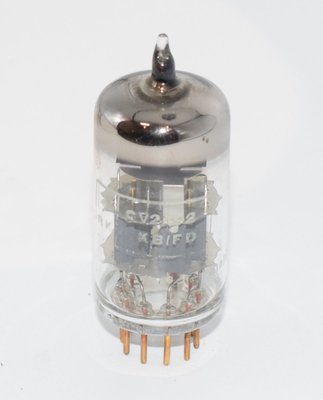
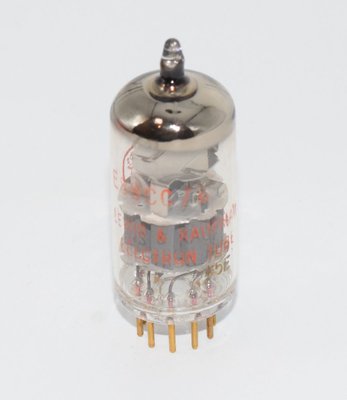
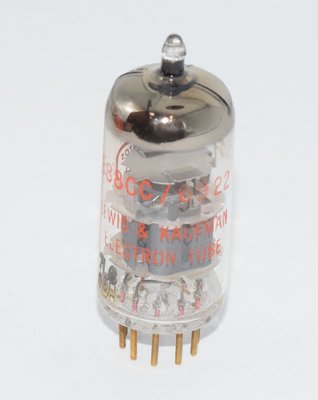
The Siemens CCA is typically identified by its grey-plate construction, Siemens logo, and the "CCA" marking on the glass envelope. Early production examples feature the distinctive Siemens "haloed" getter and precision-wound grid structures that are hallmarks of German manufacturing excellence.
Special Quality Requirements
As documented in the datasheet, the E88CC/CCA meets special quality ("zvláštní jakost") requirements for national economic purposes, including:
- Long-term vibration resistance: 96 hours at 2.5 g acceleration, 50 Hz
- Single shock resistance: 500 g acceleration, 1 ms duration
- Multiple shock resistance: 5000 shocks at 12 g acceleration
- Constant centrifugal acceleration: 12 g
- Tight parameter tolerances
- Operational reliability
- Guaranteed long life
Applications and Usage
The CCA/E88CC was originally designed for demanding professional applications:
Original Professional Applications
- Television Receivers: VHF and IF cascode amplifier stages, where the low interelectrode capacitances and high transconductance provided excellent gain with stability
- Pulse Amplifiers: The high transconductance of 12.5 mA/V and fast response made it ideal for pulse circuits
- Mixers: Additive mixer applications with conversion transconductance of 2.9–4.1 mA/V depending on supply voltage
- Phase Inverters: The matched dual-triode construction with tight tolerances made it excellent for balanced phase-splitter circuits
- Multivibrators: Timing and switching circuits in instrumentation
- Computer Circuits: Digital switching applications at 150V supply with 2.5 kΩ anode load
- Telecommunications: Carrier frequency equipment, telephone exchange amplifiers, and broadcast transmission equipment — the primary application for the Siemens CCA designation
Modern Applications
- High-End Audio Preamplifiers: The CCA's low noise, high gain, and musical characteristics make it a premium choice for line-stage and phono-stage preamplifiers
- Headphone Amplifiers: Many boutique headphone amplifiers are designed around the 6922/E88CC family, and the CCA is considered the ultimate tube for these circuits
- DAC Output Stages: Tube-buffered digital-to-analog converters frequently use 6922-family tubes in their output stages
- Microphone Preamplifiers: The low equivalent noise resistance of 300 Ω (at 45 MHz) and excellent microphonic rejection make the CCA suitable for sensitive microphone amplifier circuits
- Test and Measurement Equipment: Vintage oscilloscopes, voltmeters, and signal generators from Hewlett-Packard, Tektronix, and others used 6922/E88CC tubes extensively
Sound Characteristics
The Siemens CCA is widely regarded as one of the finest-sounding small-signal tubes ever produced. Audiophiles and recording engineers who have extensively compared it against other E88CC/6922 variants consistently describe its sonic signature in the following terms:
Tonal Balance and Timbre
The CCA is praised for its exceptionally neutral and transparent tonal balance. Unlike some tubes that impose a noticeable coloration, the Siemens CCA is often described as having a "window on the music" quality — it reveals the character of the recording and upstream components without adding significant editorializing of its own. The midrange is frequently described as having a natural, lifelike quality with excellent presence and articulation.
Frequency Extremes
The high-frequency response is characteristically extended, airy, and detailed without becoming harsh or fatiguing. This is consistent with the tube's original design for VHF applications — the low interelectrode capacitances (Cga = 1.4 pF, Cak = 0.18 pF) contribute to excellent high-frequency performance that translates into superior treble extension in audio circuits. The bass response is described as tight, well-defined, and authoritative — not bloated or loose as can sometimes occur with lesser-quality tubes in the same family.
Dynamics and Transient Response
The high transconductance of 12.5 mA/V gives the CCA excellent dynamic capability. Listeners note fast, clean transient attacks and a sense of effortless dynamic range. Micro-dynamics — the subtle volume shadings that convey musical expression — are a particular strength, lending the CCA a sense of "aliveness" that distinguishes it from more pedestrian alternatives.
Soundstage and Imaging
The CCA is renowned for producing a wide, deep, and precisely focused soundstage. The tight section matching inherent in the CCA selection process (tighter than standard E88CC tolerances of ±0.8 mA on anode current and the amplification factor tolerance of 33 ± 5) contributes to excellent channel balance and stereo imaging when used in dual-mono configurations.
Noise Floor
With an equivalent noise resistance of 300 Ω and a noise figure of 4.6 dB (measured in cascode at 200 MHz), the CCA exhibits an exceptionally low noise floor. In audio applications, this translates to a black, silent background from which musical details emerge with startling clarity. The special quality selection process ensures that microphonic noise — a common problem with lesser tubes — is virtually eliminated.
Comparison to Other E88CC/6922 Variants
Compared to standard Amperex or Philips 6922 tubes, the Siemens CCA is generally described as slightly more neutral and less warm, with greater resolution and transparency. Where an Amperex 6922 might be described as "lush" or "romantic," the CCA tends toward "precise" and "revealing." Compared to Telefunken E88CC, the CCA is often considered to have a slightly fuller body in the midrange while maintaining comparable detail retrieval. These are subtle differences, and individual tube specimens will vary.
Equivalent or Substitute Types
Direct/Identical Substitutes (Drop-in Replacements)
The following types are electrically identical to the CCA and can be used as direct replacements without circuit modifications:
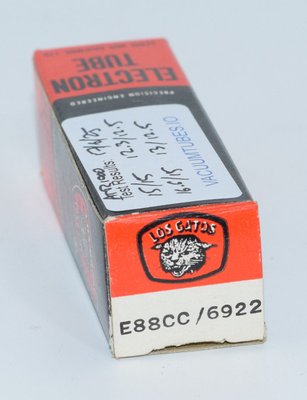
- E88CC — The standard European Pro-Electron designation; the CCA is a specially selected E88CC
- E88CC-01 — An even more tightly selected variant of the E88CC
- 6922 — The American RETMA equivalent designation
- 6922WA — Ruggedized/military version of the 6922
- CV2492 — British military designation for E88CC
- CV2493 — British military designation (alternate)
- CV10320 — British military designation
- CV8065 — British military designation
- ECC868 — Alternate Philips designation
Similar but NOT Identical Types (Use with Caution)
The following types share the same pinout and general characteristics but have different ratings and should not be considered true drop-in replacements without verifying circuit compatibility:
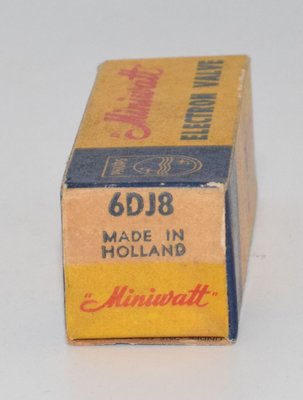
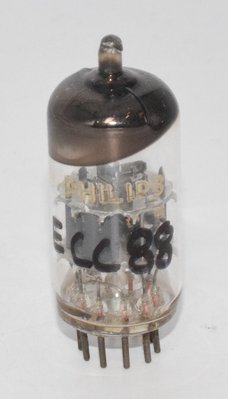
- 6DJ8 / ECC88 — The commercial-grade version with lower maximum ratings (particularly lower maximum anode voltage and less stringent tolerances). While physically interchangeable, the ECC88 was not designed for the same demanding service conditions. Many audio circuits designed for 6922/E88CC will work with 6DJ8/ECC88, but reliability and longevity may be reduced.
- 6N23P (6Н23П) — The Soviet equivalent. While broadly similar in specifications, manufacturing tolerances and quality control differ. Some variants may have slightly different bias points. Should be verified against circuit requirements before substitution.
- CV5358 — British military designation for the ECC88/6DJ8 (not the E88CC), with correspondingly lower ratings.
Important Note: The 7308/E188CC is an enhanced version of the E88CC with even higher maximum ratings and tighter tolerances. It can always substitute for a CCA/E88CC, but the reverse is not necessarily true in circuits designed specifically for 7308 ratings.
Notable Characteristics
Exceptional Vibration and Shock Resistance
The CCA/E88CC was designed to withstand extreme mechanical stress. The datasheet specifies resistance to:
- 96 hours of continuous vibration at 2.5 g, 50 Hz
- Single shocks of 500 g for 1 ms duration
- Multiple shocks of 5000 impacts at 12 g
- Constant centrifugal acceleration of 12 g
This extraordinary mechanical robustness makes the CCA virtually immune to microphonic noise in normal audio applications — a significant advantage over standard commercial tubes.
Tight Section Matching
The CCA's selection criteria ensure that both triode sections within a single envelope are closely matched. The datasheet specifies anode current tolerance of 15 ± 0.8 mA (approximately ±5.3%) and transconductance of 12.5 (+2.5/−2) mA/V. In practice, Siemens CCA tubes typically exhibit even tighter matching than these specifications suggest, as the CCA designation represented the cream of production.
Internal Shielding
Both triode systems are individually shielded from each other by internal electrostatic shields, each brought out to a separate pin on the noval base. This design feature minimizes crosstalk between sections and reduces susceptibility to external electromagnetic interference. The inter-system capacitances are remarkably low: anode I to anode II is less than 0.045 pF, and grid-to-grid coupling between systems is less than 0.005 pF.
Low Noise Performance
The equivalent noise resistance of 300 Ω at 45 MHz and noise figure of 4.6 dB represent excellent performance for a frame-grid triode of this era. The grid voltage for onset of positive grid current (at Ig1 = +0.3 μA) is specified at 0.75 V, indicating clean grid behavior and low contact potential.
Reverse Grid Current
At the standard test condition (Ua = 90 V, Ia = 15 mA, Rg1 = 100 kΩ), the reverse grid current is specified at less than 0.1 μA — an exceptionally low value that indicates high-quality cathode and grid materials and excellent vacuum integrity.
Temperature and Environmental Resilience
The CCA is tested across a temperature range of −60°C to +90°C at 95% relative humidity per ČSN 35 8501, article 162. No corrosion or degradation phenomena may be observed. The maximum bulb temperature during operation is 170°C.
Atmospheric Pressure Resistance
The tube is tested at Uf = 6.3 V, Ua = 200 V, Ug1 = −5 V at reduced atmospheric pressure (50 Torr) for 10 minutes. No discharge or anomalous current behavior between pins may occur.
Usage in the Audio Community
Preamplifier Applications
The Siemens CCA has become the tube of choice for discerning audiophiles using preamplifiers designed around the 6922/E88CC tube family. Notable preamplifier designs that benefit from the CCA include:
- Audio Research SP-series: The SP-6, SP-8, SP-10, SP-11, and later models use 6922-family tubes in critical gain stages. Rolling in Siemens CCA tubes is one of the most recommended upgrades.
- Conrad-Johnson Premier series: Various C-J preamplifiers use 6922 tubes and respond beautifully to CCA substitution.
- BAT (Balanced Audio Technology): The VK-series preamplifiers use multiple 6922-type tubes and are popular platforms for tube rolling with CCA tubes.
- Sonic Frontiers / Anthem: The SFL-1 and SFL-2 preamplifiers are well-known 6922-based designs.
- ARC Reference series: The Reference 1, 2, 3, and subsequent models use 6922/6H30 tubes.
Headphone Amplifier Applications
The modern headphone amplifier renaissance has created enormous demand for premium 6922-family tubes. Popular headphone amplifiers using this tube type include designs from Bottlehead, Woo Audio, Schiit (Lyr series), and numerous DIY projects. The CCA's low noise floor is particularly valued in headphone applications where the listener is in intimate proximity to the transducers and any noise or microphonics would be immediately apparent.
DAC Buffer Stages
Many high-end DACs use 6922-family tubes in their analog output stages to provide a tube-buffered output. Products from manufacturers like Audio Research, Aesthetix, Lampizator, and others benefit from CCA tube rolling. The CCA's transparency and neutrality are especially valued here, as the goal is typically to preserve the detail retrieved by the digital conversion process while adding the natural harmonic richness of tube amplification.
Phono Stages
The CCA's low noise characteristics make it an excellent choice for phono preamplifier stages, where the very small signals from a phono cartridge (typically 0.2–5 mV) demand the lowest possible noise floor. The tube's microphonic rejection is also critical in phono applications, where the preamplifier is often located near the turntable and subject to acoustic feedback.
Guitar Amplifiers
While less common in guitar amplifiers than the 12AX7 family, some boutique guitar amplifier builders have designed circuits around the 6922/E88CC for its unique tonal characteristics. The lower amplification factor (μ = 33 vs. μ = 100 for 12AX7) provides a different gain structure and clipping behavior that some players find musically appealing for clean tones and mild overdrive.
Tube Rolling Culture
The CCA occupies a special place in the tube rolling hierarchy. In the community's informal ranking of 6922-family tubes, the Siemens CCA typically sits at or near the top, alongside the Amperex PQ 6922 (USA white label), Telefunken E88CC, and Philips SQ E88CC. The CCA's relative scarcity compared to these alternatives has contributed to its mystique and premium pricing.
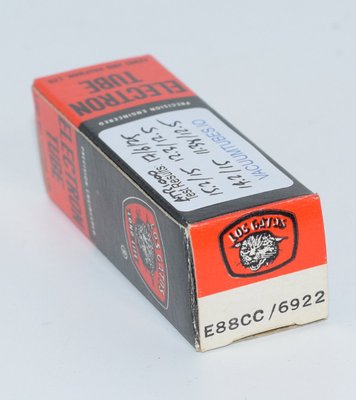
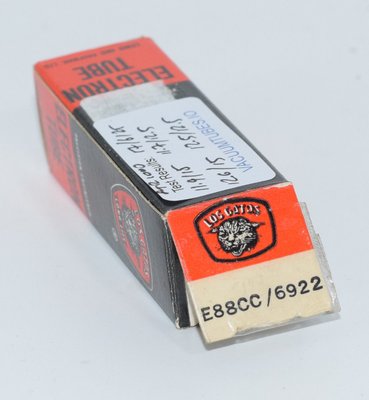
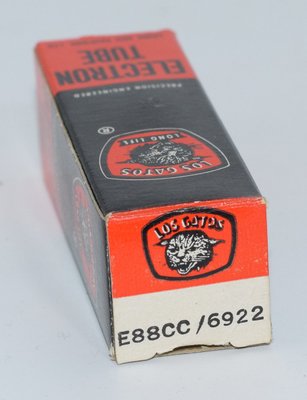
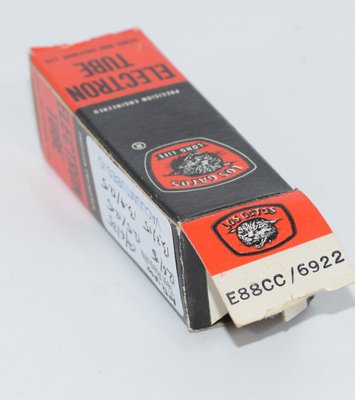
Collectors and audiophiles identify genuine Siemens CCA tubes by several features: the Siemens logo and "CCA" marking on the glass, grey-plate construction, specific getter shapes and positions, and date codes that can be decoded to determine the manufacturing date and factory of origin. As with all premium vintage tubes, counterfeits and relabeled tubes exist, and buyers are advised to purchase from reputable dealers who test and guarantee their tubes.
Pricing and Availability
As of the 2020s, genuine tested Siemens CCA tubes command prices ranging from approximately $150 to $400+ per tube depending on condition, test results, and matched-pair status. NOS (New Old Stock) matched pairs in original packaging can exceed $800. This represents a significant premium over current-production 6922 equivalents, which typically retail for $15–50 per tube. The premium reflects both the superior sonic performance and the finite, dwindling supply of these vintage tubes.
For those unable to justify the cost of genuine Siemens CCA tubes, current-production alternatives from manufacturers such as JJ Electronic (E88CC), Electro-Harmonix (6922EH), Genalex Gold Lion (E88CC), and Mullard (reissue E88CC) offer reasonable performance at a fraction of the cost, though most experienced listeners note a clear sonic difference when compared directly to vintage Siemens CCA examples.