1. Introduction and History
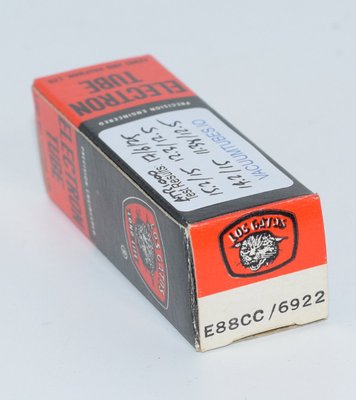
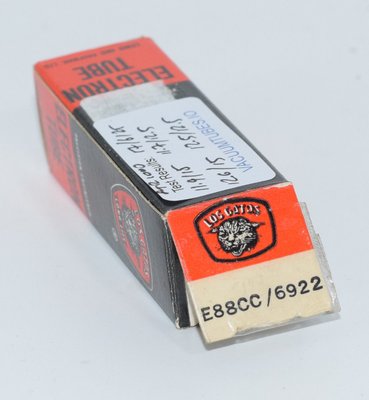
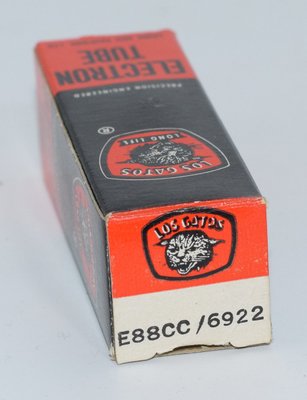
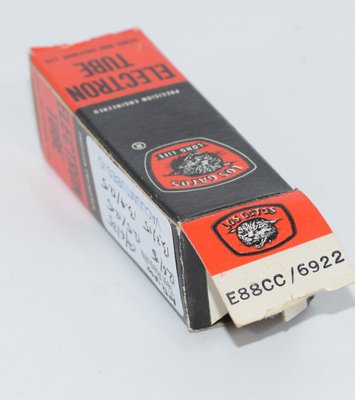
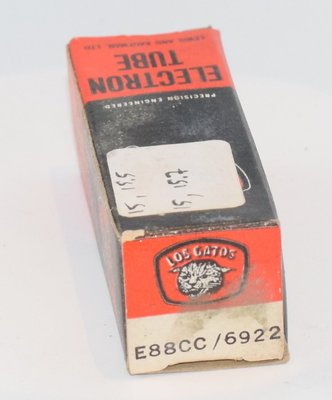
The CV2492 is a British military-specification (CV = Common Valve) designation for a high-quality double triode vacuum tube. It is the UK Ministry of Defence registered equivalent of the E88CC, the premium long-life version of the ECC88/6DJ8 frame-grid double triode originally developed by Philips/Mullard in the late 1950s. The CV2492 was manufactured primarily by Mullard, Brimar (STC), and other approved UK suppliers to meet stringent military and professional standards for reliability, consistency, and longevity.
The E88CC family was designed as a significant improvement over the earlier ECC88/6DJ8, featuring tighter manufacturing tolerances, selected materials, and a guaranteed minimum lifespan of 10,000 hours — roughly ten times that expected of standard commercial tubes. The CV2492 designation ensured that tubes met or exceeded these specifications under the rigorous British military qualification process, which included extensive burn-in testing, vibration testing, and parametric screening.
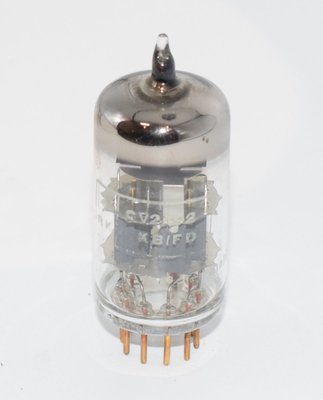
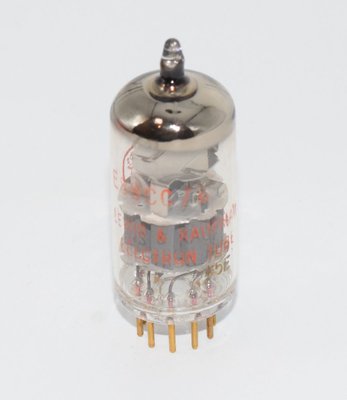
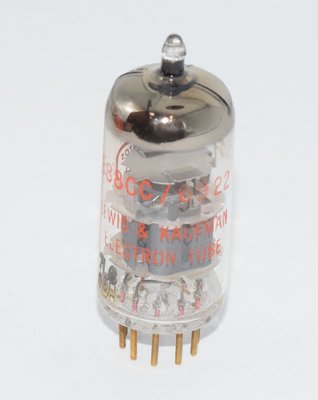
Historically, the CV2492 found widespread use in military communications equipment, radar systems, precision instrumentation, and early computing applications where reliability was paramount. Manufacturers such as Brimar (Standard Telephones and Cables / STC) produced particularly well-regarded examples, some featuring gold-plated pins for enhanced contact reliability — a hallmark of military-grade production. Today, the CV2492 is highly sought after by audiophiles and hi-fi enthusiasts who prize its exceptional build quality and sonic characteristics.
2. Technical Specifications and Design
Heater / Filament
| Heater Voltage (Vh) | 6.3 V |
| Heater Current (Ih) | 0.3 A |
| Heater Configuration | Series/parallel; can also be operated at 12.6 V / 0.15 A with heaters in series (confirm with specific manufacturer datasheet) |
Inter-electrode Capacitances
| Grid-to-Cathode Capacitance (Cgk) | 3.3 pF |
| Anode-to-Cathode Capacitance (Cak) | 0.18 pF |
| Grid-to-Anode Capacitance (Cga) | 1.4 pF |
Maximum Ratings (Per Section)
| Maximum Anode (Plate) Voltage | 130 V (as per E88CC specification; some sources cite 150 V absolute maximum — confirm against specific manufacturer datasheet) |
| Maximum Anode Dissipation | 1.8 W per section |
| Maximum Cathode Current | 20 mA per section |
| Maximum Heater-to-Cathode Voltage | ±100 V (typical for E88CC family; confirm with datasheet) |
Typical Operating Conditions (Per Section)
| Anode Voltage (Va) | 90 V |
| Grid Voltage (Vg1) | −1.2 V |
| Anode Current (Ia) | 15 mA |
| Amplification Factor (μ) | 33 (typical) |
| Transconductance (gm) | 12.5 mA/V (12,500 µS) |
| Plate Resistance (rp) | 2.65 kΩ (typical; derived from μ/gm) |
Note: The amplification factor, transconductance, and plate resistance values are typical for the E88CC operating at Va = 90 V, Vg = −1.2 V. These values are consistent across the E88CC/6922/CV2492 family. The grid bias range for Class A1 operation typically spans from 0 V to approximately −3 V depending on the chosen anode voltage and operating point. At Va = 90 V, the typical bias is −1.2 V; at Va = 100 V, bias is approximately −1.3 V.
Physical Construction
| Base Type | Noval (B9A) — 9-pin miniature |
| Envelope Type | Miniature glass envelope (typically T-6½ or similar small-diameter glass) |
| Mounting | Vertical or horizontal with appropriate socket |
| Construction | Frame-grid construction for high transconductance and low noise |
| Pin Material | Standard nickel-plated or gold-plated pins (military-grade examples, notably Brimar/STC, often feature gold pins) |
Pin-Out (B9A Noval Base — Bottom View)
| Pin | Function |
|---|---|
| 1 | Anode (Plate) — Triode Section 1 |
| 2 | Grid — Triode Section 1 |
| 3 | Cathode — Triode Section 1 |
| 4 | Heater |
| 5 | Heater |
| 6 | Anode (Plate) — Triode Section 2 |
| 7 | Grid — Triode Section 2 |
| 8 | Cathode — Triode Section 2 |
| 9 | Internal Shield / Heater Centre-Tap |
This pinout is standard for the ECC88/E88CC/6922/6DJ8 family and is identical across all variants.
3. Applications and Usage
The CV2492 was originally designed and specified for demanding professional and military applications:
- Military Communications: Used in VHF and UHF receiver front-ends, IF amplifier stages, and oscillator circuits in military radio equipment where low noise and high reliability were essential.
- Radar Systems: Employed in radar receiver circuits requiring high gain at high frequencies with minimal microphonic noise.
- Instrumentation: Found in precision test equipment, oscilloscopes, and measurement instruments manufactured by companies such as Hewlett-Packard, Tektronix, and Marconi Instruments.
- Professional Audio: Used in broadcast-quality audio equipment, mixing consoles, and studio preamplifiers where the E88CC's low noise floor and high transconductance provided excellent signal-to-noise performance.
- Computing: Early mainframe computers and analogue computing systems utilized these tubes in critical circuit positions.
- Cascode Amplifiers: The low plate resistance and high transconductance of the E88CC/CV2492 make it particularly well-suited for cascode amplifier configurations, which were widely used in wideband and RF applications.
The frame-grid construction of the CV2492 provides significantly higher transconductance (12.5 mA/V) compared to conventional double triodes like the ECC83/12AX7 (typically 1.6 mA/V), making it ideal for high-frequency and low-impedance circuit applications. However, the relatively low maximum plate voltage of 130 V means that circuit designs must accommodate this limitation — the CV2492 is not a drop-in replacement for higher-voltage types such as the ECC83 or 12AU7.
4. Sound Characteristics
The CV2492, as a military-selected E88CC, is widely regarded in the audio community for its refined and distinctive sonic signature. Audiophiles and engineers consistently describe its tonal qualities as follows:
- Transparency and Detail: The CV2492 is celebrated for its exceptional clarity and resolution. The frame-grid construction contributes to a fast, articulate presentation that reveals micro-details and subtle nuances in recordings. Transient response is notably quick and precise.
- Tonal Balance: Generally described as neutral to slightly warm, the CV2492 avoids the overly lush or syrupy character sometimes associated with other double triodes. It presents a balanced frequency response with neither excessive brightness nor undue darkness.
- Low-End Performance: Bass reproduction is tight, well-controlled, and extended. Unlike some 6DJ8 variants that can sound lean in the bass, the CV2492 (particularly Mullard and Brimar examples) provides satisfying weight and authority in the lower registers.
- Midrange: The midrange is often described as the CV2492's greatest strength — open, natural, and three-dimensional. Vocals and acoustic instruments are rendered with a palpable sense of presence and realism. The military-grade selection process ensures low microphonics, which contributes to a clean, uncolored midrange.
- High Frequencies: Treble is extended and airy without harshness or sibilance. The high transconductance of the frame-grid design ensures excellent high-frequency linearity, resulting in smooth, detailed highs that avoid the grain or glare sometimes heard with lesser tubes.
- Soundstage and Imaging: The CV2492 typically produces a wide, deep soundstage with precise imaging. The low inter-electrode capacitances (particularly the 0.18 pF anode-to-cathode capacitance) contribute to excellent high-frequency phase coherence, which enhances spatial presentation.
- Noise Floor: Military-grade screening ensures exceptionally low noise and hum, making the CV2492 particularly suitable for phono stages and other high-gain applications where noise is critical.
- Dynamic Range: The tube handles dynamic swings with composure, maintaining its tonal character from quiet passages to loud crescendos without compression or hardening.
Compared to standard ECC88/6DJ8 tubes, the CV2492 is generally perceived as more refined, quieter, and more consistent in its sonic performance — a direct result of the tighter manufacturing tolerances and selection criteria inherent in the military specification.
Manufacturer-Specific Sonic Differences: Brimar/STC CV2492 examples (especially gold-pin variants) are often described as having a particularly sweet, musical midrange with excellent dynamics. Mullard-manufactured CV2492 tubes tend to be praised for their warmth, richness, and slightly more romantic presentation. These differences, while subtle, are consistently noted by experienced listeners.
5. Equivalent or Substitute Types
Close / Identical Substitutes (Direct Drop-In Replacements)
| Type | Notes |
|---|---|
| E88CC | The European (Philips/Mullard) commercial designation — electrically and physically identical to CV2492. The CV2492 is simply the UK military-qualified version of the E88CC. |
| 6922 | The American (RETMA/EIA) equivalent of the E88CC. Direct drop-in replacement. Manufactured by Amperex, Sylvania, GE, and others. |
| 6922WA | A ruggedized/military-grade version of the 6922 with enhanced vibration resistance. Fully compatible. |
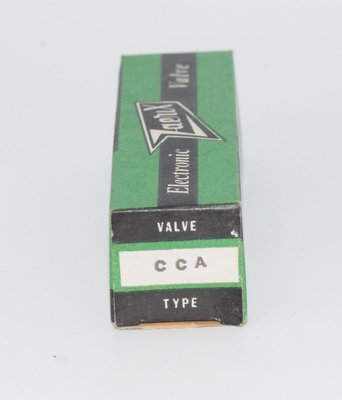
| CCA | Siemens premium-grade designation for their E88CC production. Highly prized by audiophiles. Direct replacement. |
| CV2493 | Another UK CV-series designation within the E88CC family. Direct replacement. |
| CV10320 | Later UK military CV designation for the same tube type. Direct replacement. |
| CV8065 | Additional UK CV designation within the E88CC specification. Direct replacement. |
| E88CC-01 | Special-quality variant of the E88CC with even tighter tolerances. Fully compatible. |
| ECC868 | An alternative European designation within the same family. Direct replacement. |
Different Rating Substitutes (NOT Direct Drop-In — Use with Caution)
| Type | Notes |
|---|---|
| ECC88 | The standard commercial version of the same basic design. Same pinout and similar electrical characteristics, but manufactured to less stringent tolerances and with a shorter rated lifespan. Generally usable in the same circuits but may not meet the tighter parametric limits of the E88CC/CV2492 specification. |
| 6DJ8 | The American equivalent of the ECC88 (not the E88CC). Same basic electrical parameters and pinout, but standard commercial grade with wider tolerances. Functional in most circuits designed for CV2492/E88CC but not guaranteed to meet the same performance standards. |
| 6N23P (6Н23П) | Soviet/Russian equivalent of the ECC88/6DJ8. Same pinout and broadly similar characteristics, but manufactured to different (GOST) standards. Some variants may have slightly different operating parameters. Generally usable as a substitute but not a guaranteed identical replacement. Quality can vary significantly between production batches and factories. |
| CV5358 | UK military designation for the standard-grade ECC88 (not the premium E88CC). Same pinout but manufactured to the ECC88 rather than E88CC specification. |
Important Note: While the ECC88/6DJ8 types share the same pinout and can physically be inserted into the same socket, the CV2492/E88CC specification guarantees tighter matching between sections, lower noise, lower microphonics, and longer operational life. In critical audio applications, substituting a standard-grade 6DJ8 or ECC88 for a CV2492 may result in higher noise, poorer channel matching, or reduced tube life. Always verify that the circuit's operating conditions (particularly plate voltage and current) are within the substitute tube's ratings.
6. Notable Characteristics
- Frame-Grid Construction: The CV2492 employs frame-grid technology, where the control grid is wound on a rigid metal frame rather than using conventional wire-wound construction. This results in extremely precise grid-to-cathode spacing, yielding high and consistent transconductance (12.5 mA/V), excellent high-frequency performance, and low noise.
- Extended Lifespan: The E88CC/CV2492 specification mandates a minimum operational life of 10,000 hours — approximately ten times the rated life of standard commercial tubes. Military-grade examples often exceed this figure significantly, with many CV2492 tubes still testing strongly after decades of storage or moderate use.
- Tight Section Matching: The E88CC specification requires close matching between the two triode sections within each envelope. This is particularly valuable in differential amplifier and phase-splitter applications, and contributes to the tube's popularity in balanced audio circuits.
- Low Microphonics: Military qualification testing includes vibration and shock testing, ensuring that CV2492 tubes exhibit minimal microphonic sensitivity. This is critical in phono preamplifier and microphone preamplifier applications where mechanical vibration can introduce audible artifacts.
- Low Maximum Plate Voltage: The 130 V maximum plate voltage is notably lower than many other popular audio double triodes (e.g., ECC83/12AX7 at 300 V, ECC82/12AU7 at 300 V). This is an important design consideration — the CV2492 cannot be substituted into circuits designed for higher-voltage tubes without significant circuit modification.
- High Transconductance: At 12.5 mA/V, the CV2492 has one of the highest transconductance values among small-signal double triodes, making it exceptionally responsive and capable of driving low-impedance loads effectively.
- Gold Pin Variants: Military-grade CV2492 tubes, particularly those manufactured by Brimar/STC, frequently feature gold-plated pins. Beyond the obvious benefit of corrosion resistance and reliable contact, gold-pin variants are often perceived by audiophiles as having slightly superior sonic performance, though this may be attributable to the generally higher overall quality control applied to gold-pin production runs.
- Low Anode-to-Cathode Capacitance: The remarkably low Cak of 0.18 pF makes the CV2492 excellent for high-frequency applications and contributes to its wide bandwidth in audio circuits.
7. Usage in the Audio Community
The CV2492 occupies a revered position in the audiophile community, prized both for its sonic qualities and its association with military-grade reliability. Its usage spans a wide range of audio applications:
Headphone Amplifiers
The CV2492 is extremely popular in headphone amplifiers, where its high transconductance and low output impedance (due to low plate resistance) make it well-suited to driving headphones. Notable headphone amplifiers that use E88CC/6922-type tubes include designs from Bottlehead (Crack with Speedball upgrade, using adapter), Schiit Audio (Valhalla 2), Darkvoice, and numerous DIY designs. The tube's low noise floor is particularly appreciated in headphone listening, where the intimate nature of the experience makes any noise or hum immediately apparent.
Preamplifiers
Many high-end preamplifiers are designed around the 6922/E88CC tube type, and the CV2492 is considered one of the finest examples to use in these circuits. Notable preamplifier designs include those from Audio Research (SP series, LS series), Conrad-Johnson, BAT (Balanced Audio Technology), Sonic Frontiers (SFL series), and Audible Illusions (Modulus series). The CV2492's tight section matching makes it particularly valuable in balanced/differential preamplifier topologies.
Phono Stages
The CV2492's exceptionally low noise and low microphonic sensitivity make it an ideal choice for phono preamplifier stages, where the tiny signals from a phono cartridge (often less than 1 mV for moving-coil designs) demand the quietest possible amplification. Phono stages from EAR (Esoteric Audio Research), Manley Labs, and various boutique manufacturers frequently specify E88CC-type tubes.
DAC Output Stages
Several hybrid and tube-output digital-to-analog converters use 6922/E88CC tubes in their output buffer or amplification stages. The CV2492 is a popular upgrade tube in DACs from manufacturers such as Musical Fidelity, Jolida/Black Ice Audio, and others. The tube's wide bandwidth and fast transient response complement the precision of digital sources.
Tube Rolling
"Tube rolling" — the practice of swapping different tube brands and vintages to alter or optimize the sound of a component — is a major activity among audiophiles, and the 6922/E88CC family is one of the most actively rolled tube types. The CV2492 is considered a top-tier choice in this hierarchy. Within the community, the typical ranking of desirability (from most to least sought-after) often places NOS (New Old Stock) military-grade tubes like the CV2492 at or near the top:
- Siemens CCA / E88CC — Often considered the pinnacle
- Amperex PQ 6922 (Heerlen, Holland production) — Legendary warmth and musicality
- CV2492 (Mullard or Brimar) — Military-grade excellence, particularly gold-pin Brimar variants
- Telefunken E88CC — German precision and clarity
- Standard production E88CC / 6922 — Various manufacturers
- ECC88 / 6DJ8 — Commercial grade
- Modern production 6922 — Current manufacture (JJ, Electro-Harmonix, Genalex Gold Lion, etc.)
The Brimar/STC CV2492 with gold pins has developed a particularly strong following, with many listeners describing it as offering an ideal balance of warmth, detail, and musicality that rivals or exceeds the more famous (and typically more expensive) Amperex and Siemens variants.
Pricing and Availability
As with all NOS military-grade tubes, genuine CV2492 examples command premium prices on the vintage tube market. Depending on manufacturer, condition, and testing results, individual CV2492 tubes typically sell for significantly more than standard commercial 6922 or ECC88 equivalents. Matched pairs command additional premiums. Buyers should exercise caution, as the high value of these tubes has led to instances of relabeling, counterfeiting, and misrepresentation in the marketplace. Purchasing from reputable tube dealers who provide proper testing data (mutual conductance, noise, and matching measurements) is strongly recommended.
Practical Considerations for Audio Use
- Burn-In: NOS CV2492 tubes that have been in storage for decades may benefit from a gentle burn-in period of 50–100 hours before reaching their optimal sonic performance.
- Damping Rings: Despite the CV2492's inherently low microphonic sensitivity, many audiophiles use silicone damping rings on the tube envelope to further reduce any residual microphonic effects, particularly in phono stage applications.
- Socket Quality: Given the gold-pin construction of many CV2492 examples, high-quality tube sockets (ceramic or Teflon with gold-plated contacts) are recommended to maximize the benefit of the gold-pin interface and ensure reliable, low-resistance connections.
- Heater Supply: For the lowest possible noise in audio applications, a regulated DC heater supply is recommended, though the CV2492 performs well with AC heater supplies in most line-level applications.